The Best Coffee for a French Press: Roasts, Origins, and 3 Picks to Try
 Maryna Gray
• August 18, 2026 — last updated August 20, 2026
Maryna Gray
• August 18, 2026 — last updated August 20, 2026
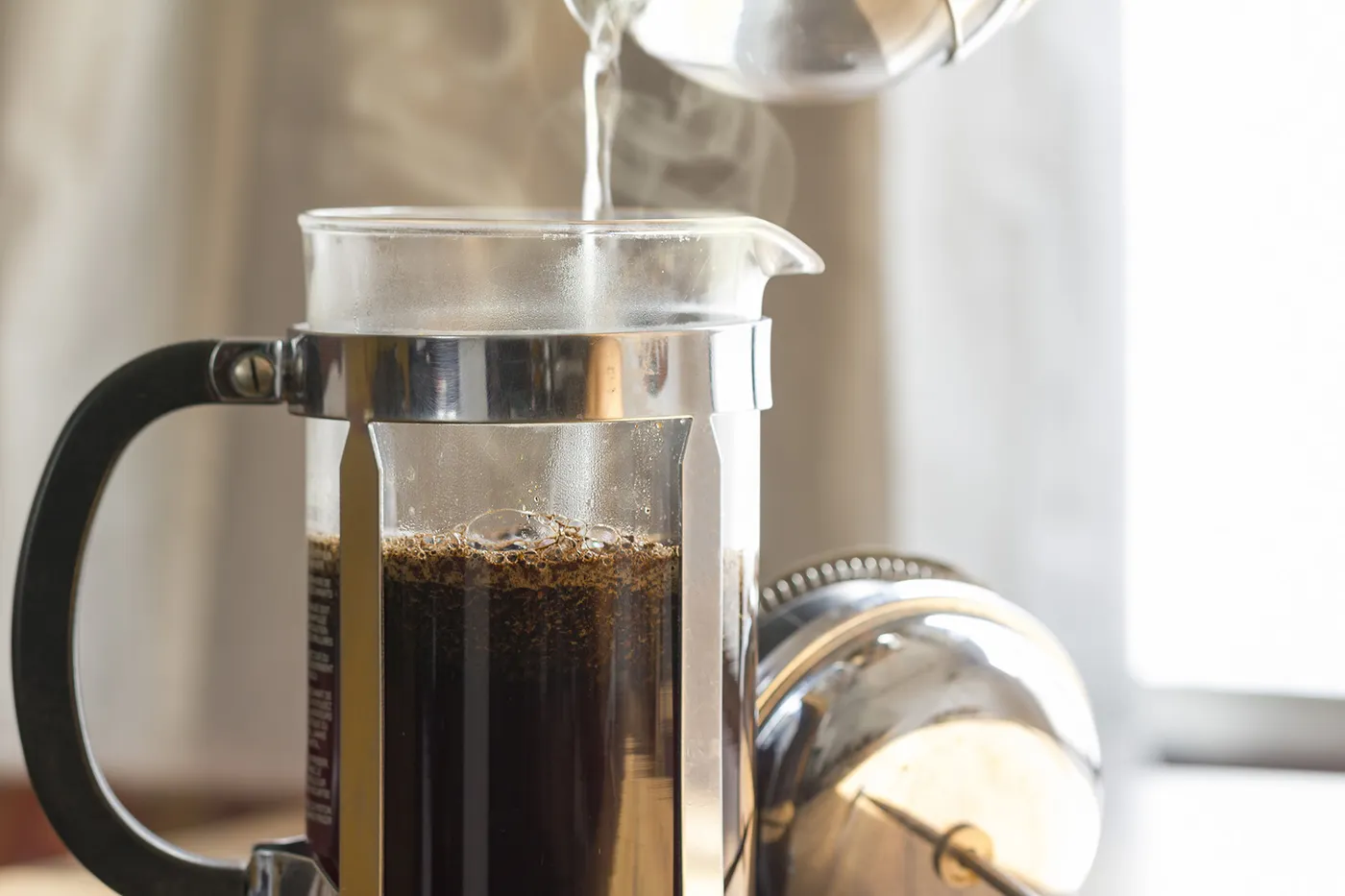
Most of us reach for the French press because it's the no-fuss ritual: no paper, no gadgets, just coffee and hot water and four minutes you don't have to babysit. And then we wonder why the cup doesn't always land. Sometimes it's thin. Sometimes it's bitter. Sometimes it's that gritty, flat thing that makes you eye the espresso machine you swore you'd never buy. Here's the secret nobody tells you when they hand you the press: the beans are doing more of the work than the gear, and the right ones give you that thick, chocolatey, low-acid cup that coats the tongue and lingers. That's full immersion's whole reason for being. I'll walk you through exactly which beans to reach for.
The thing to understand about a French press is that the metal mesh is both its signature feature and its one big constraint. A paper filter traps the coffee's natural oils on the way to your mug. The press doesn't. Those oils come straight through, and they're what give you the heavy, velvety body the method is famous for. The flip side: the brewer can't hide behind a clean filter. Whatever the bean is, that's what lands in the cup, full and unfiltered. So bean choice matters more here than almost anywhere else you brew.
This is the beans-first companion to our French press how-to. That post owns the method, the ratio, the steep, the plunge. This one answers the question that comes first: what do I actually buy? Let's get you the right bag.
The short answer
We all love the French press for its big, rich body, but you get the best cup from medium to medium-dark, full-bodied beans built for full immersion (naturals and chocolaty blends), and I'll show you which ones.
- Reach for medium to medium-dark roasts: developed enough for low-acid body, not so dark they turn ashy under a four-minute steep.
- Favor full-bodied, lower-acid origins and processes: Indonesian coffees (Sumatra, Sulawesi, Java), natural-process Brazils, and chocolaty blends.
- Buy whole bean and fresh, grind coarse, and proceed with care on delicate washed light roasts (floral Ethiopians, bright Kenyans) whose best aromatics immersion can swamp.
Why the French press rewards different beans

Start with the mesh. Because there's no paper in the way, the coffee's natural oils and a fine haze of micro-particles stay right in your mug. That's the heavy body. That's the mouthfeel. It also means the press amplifies a bean's body and texture far more than its bright top notes. A pour-over with a paper filter does the opposite: it polishes a coffee clean and lets the high, sparkly flavors ring out. The press is the other instrument entirely. It's all low end and warmth.
Which leads to the part that actually changes what you buy. Full immersion flatters a fuller-bodied, lower-acid coffee, and it can leave a delicate, high-acid washed light roast tasting thin or even a little sour. The same brightness that dances in a V60 can read as a sharp edge once the body of immersion piles in around it. The brewer can't hide behind a clean filter, remember, so the bean has to bring the body itself. Pick one that does, and the press rewards you. Pick one that's built for clarity and lift, and the press flattens the very thing you loved about it.
There's one more wrinkle in those retained oils, and I'll keep it to a sentence because it isn't the headline: the oils that give the press its body are the diterpenes (cafestol and kahweol) that Harvard Health (via Homegrounds) links to a modest LDL bump at heavy daily consumption, while paper-filter methods trap them. The oils are the point of the press, so I drink mine and move on.
Worth flagging: this same full-immersion logic is exactly why cold brew, which is also an immersion method, loves these same bean styles. If the press becomes your gateway, the best coffee for cold brew is the natural next read.
What matters most
If you want a tidy mental order for shopping, here it is, most important first: roast, then acidity and process, then freshness. Get those three right and you've basically already chosen well.

From our coffee sommelier
Maryna's weekly picks
“I taste thousands of coffees a year — I’ll only send you the few worth brewing.”
Something went wrong — please try again.
Free · Weekly · Unsubscribe anytime
Roast comes first. Full immersion amplifies body and mutes brightness, so a well-developed bean shines and a thin, under-developed one tastes hollow. Medium to medium-dark is the target. A medium roast gives you sweetness and a little forgiveness under the steep, so there's less risk of it tipping bitter; a medium-dark or dark roast piles on the chocolaty, low-acid heft people associate with the press in the first place. The one caution: pushed too far over a four-minute steep, a very dark roast can go ashy and over-bitter, all char and no sweetness. The rule of thumb I keep in my head is "developed, not charred."
So do dark roasts work? Absolutely, and they're a joy in the press; that's why our dark-roast coffees are such a popular starting point for press drinkers. Just know that medium-dark tends to be the sweet spot, which is where browsing our medium-roast coffees earns its keep. Reassuring math on this front: roughly 235 of 315 live coffees on the Bean Box menu (about 75%) are medium or dark roast, so the press's wheelhouse is most of the catalog. You are not hunting for a needle here.
Acidity and process come second. Because the mesh passes the oils and fines, a bright washed coffee that sings in a pour-over can read sour or thin in a press. Natural-process beans, dried with the fruit still on, tend to do the opposite: they bring a fruit-forward sweetness and a rounder body that complement the oil-rich cup beautifully. (The where, the actual countries, comes in the next section. Here we're just establishing the order of operations.)
Freshness comes third, and it's the quiet multiplier. As Armadillo Roasters puts it, two to three weeks after roasting the magic fades, and after a month it's a ghost. Buy whole bean with a recent roast date, and grind coarse right before you brew. That's the whole game on freshness.
Which is also where a coffee subscription quietly does you a favor. If chasing down a fresh, press-friendly bag every few weeks sounds like one more errand, our coffee subscription configurator lets you set roast and flavor preferences once and keeps full-bodied roasts arriving on a cadence you choose, so the freshness piece just stays handled. The press does the rest.

Best origins for French press
If roast is the what, origin is the where, and a couple of regions are practically purpose-built for the press.
Indonesia (Sumatra, Sulawesi, Java). This is the classic, almost cheating-it's-so-good answer. Indonesian coffees tend to be heavy-bodied and low in acidity, with earthy, cedar, dark-chocolate flavors, and they're often wet-hulled, a processing quirk that lends a thick, syrupy texture immersion adores. JayArr Coffee calls Indonesians tailor-made for this method, and I'm not going to argue. A Sumatra in a press is the textbook earthy, brooding cup. Browse our Indonesia coffees if you want to start exactly where the method is strongest.
Brazil (naturals). If Sumatra is the brooding one, a natural-process Brazil is the easygoing everyday bean: smooth, nutty-chocolatey, low in acid, and forgiving of small mistakes. The dry-process sweetness plays right into the press's oil retention. It's the kind of cup nobody at the table complains about, which is exactly what you want from a daily driver. Our Brazil coffees are a soft landing if "earthy Indonesian" sounds like a bigger swing than you're ready for.
Single origin or a blend? Both win here, so don't agonize. A blend is engineered for balanced, forgiving body, which makes it a great default if you'd rather not pick a country at all. A single-origin Indonesian gives you that classic, unmistakable earthy heft. Choose by the flavor you're after, not by the method.
One soft caution, and I mean soft, not "never": delicate washed light roasts, the floral Ethiopians and bright, juicy Kenyans, can have their best aromatics swamped by all that immersion body. They're some of my favorite coffees on earth. The press just isn't where they show off. Here's a shelf rule you can use in any store: if the bag says chocolate, caramel, nut, spice, molasses, or dried fruit, it's a press-pot natural. If it says jasmine, bergamot, or white grape, save that one for the pour-over.
And there's stock to back it up: about 9 live coffees on our menu reference Sumatra, Indonesia, Sulawesi, or Java, and 8 reference Brazil, so the two canonical press origins are both well-covered when you're ready to shop.

Three Bean Box picks to try
Theory's lovely, but you came here for a bag to buy. Here are three I'd hand a friend who just got a press, each for a slightly different drinker. Got your beans already? Pop over to our French press how-to for the ratio and the steep.
The do-it-all blend: Tough as Nails, Middle Fork Roasters. A medium blend around $18, with notes of black pepper and spice riding on a chocolate-syrupy body. The clever part is the build: it pairs Guatemala with Sumatra, so you get two canonical press origins in a single bag. If you want one coffee that nails the classic press profile and you'd rather not think too hard about it, this is the one.
The classic single origin: Sumatra Reserve, Vashon Island Coffee Roasterie. A dark single origin around $23.40, tasting of butter, dried fruit, and cocoa. This is the textbook earthy-Sumatra press cup, the kind that reminds me why I love Indonesians in a press. Brew it on a slow morning when you want the coffee to be the whole event.
The crowd-pleasing dark blend: Banner Dark Blend, Sightglass Coffee. A dark blend around $21.45, with graham cracker, toffee, and cocoa. Pure dessert-leaning daily driver. Because it leans dark, keep your steep right at four minutes so it stays sweet and round instead of tipping ashy. Treated gently, it's the most likable cup in this trio.
Notice the throughline: chocolate and cocoa show up in all three, because that's the flavor the press loves best. If you want to keep pulling that thread, our chocolaty coffees are full of more in this vein. And if you'd like to push toward the dark end without ever landing in burnt-cup territory, our guide to the best dark roast coffee goes deeper on what "developed, not charred" really looks like.

Best clean & classic: Costa Rica Reserve, Vashon Island Coffee Roasterie
Clean, sweet, and classic, this Costa Rican tastes like coffee, only better. In a French press that full body really fills out: caramel, a nutty roundness, and a soft chocolate finish. Easy to love, easy to make, hard to mess up.
Tastes like: caramel, nutty, chocolate. Get Costa Rica Reserve
Best chocolatey: Fitzroy's Blend, Zoka Coffee
Zoka built this as a nod to the worldly spirit of coffee, both a bon voyage and a welcome home. It's bold and chocolaty with a creamy milk-chocolate sweetness, and the French press gives it a plush, velvety weight. A mug that feels like a hug.
Tastes like: chocolate, milk chocolate, cream. Get Fitzroy's Blend
Best nutty comfort: Back Pedal Brew, Middle Fork Roasters
A nutty, comforting medium-dark from Middle Fork that was made for the press pot. Toasted cashew up front, a molasses richness in the middle, and a buttery body that goes silky in a French press. Pure cozy, the coffee equivalent of a flannel shirt.
Tastes like: toasted cashew, molasses, buttery. Get Back Pedal Brew
Best bold & smoky: Bonfire Blend, Dapper & Wise
Dapper & Wise's best-selling dark roast, and a French press lets all that smoke breathe. It drinks like a bonfire under a starry sky: smoky and warm, with a merlot-toned sweetness keeping it clear and layered. Bold without ever going bitter.
Tastes like: tobacco, smoky, merlot. Get Bonfire Blend
Best crowd-pleaser: Cafe Carmelita, Tony's Coffee
An all-time bestseller and the coziest coffee I know, the drip that thinks it's a mocha. In a French press the caramel and cocoa go full and round, with a toasty finish that everyone at the table nods along to. Brew a pot and watch it disappear.
Tastes like: caramel, cocoa, buttery. Get Cafe Carmelita
Frequently asked questions
What is the best roast for French press? Medium to medium-dark. Full immersion amplifies body and low acidity, which well-developed roasts deliver. Very light roasts often underextract over the steep and lose their delicate aromatics.
Can you use light roast in a French press? You can, but proceed with care. Delicate washed light roasts (floral Ethiopians, bright Kenyans) can taste thin, or have their best aromatics swamped by the heavy body of immersion brewing. They're beautiful coffees; they just show off better in a pour-over.
Single origin or blend for French press? Both work. Blends are engineered for balanced body and forgiveness, so they make a great default. Single origins like Sumatra deliver a distinctive heavy, earthy cup. Pick by the flavor you want, not by the method.
What is the best coffee-to-water ratio for French press? 1:15 by weight (1 gram of coffee to 15 grams of water), about 60 grams per liter. For the full method, see our French press how-to.
How long should you steep French press coffee? About four minutes with water just off the boil (around 93°C). Dark roasts: stay near four minutes so they don't tip bitter. Our French press how-to walks through the whole process.
Does French press coffee raise cholesterol? The metal mesh lets the coffee oils (the diterpenes cafestol and kahweol) through, and those can modestly raise LDL. At typical daily consumption the effect is minor for most adults, and paper-filter methods trap those compounds. Treat it as a fact about the method, not a reason to put the press down.
Don't overthink it
Here's the whole thing in one breath: the press rewards body over brightness, so buy a fresh, medium to medium-dark, full-bodied bean (a Sumatra, a natural Brazil, or a chocolaty blend), grind it coarse, and let the press do the rest. The bean matters more than the gear here, and that's genuinely freeing, because it means a good cup is a shopping decision, not a skill you have to grind out over months.
So pick a lane. Start with one of the three picks above, or wander our dark-roast coffees and trust the chocolate-and-cocoa shelf rule to steer you. Keep it fresh, keep it coarse, give it four minutes. Then plunge, pour, and go have the kind of morning the French press was made for.
We want to help you make better coffee at home. Our recommendations are our own, and never sponsored. If you see something you love and buy it through our links, we may receive an affiliate commission (thanks for that!).
From our coffee sommelier
Maryna's weekly picks
“I taste thousands of coffees a year — I’ll only send you the few worth brewing.”
Something went wrong — please try again.
Free · Weekly · Unsubscribe anytime