The Best Coffee for Pour Over: Washed Single Origins That Reward a Slow Pour
 Maryna Gray
• August 13, 2026 — last updated August 20, 2026
Maryna Gray
• August 13, 2026 — last updated August 20, 2026
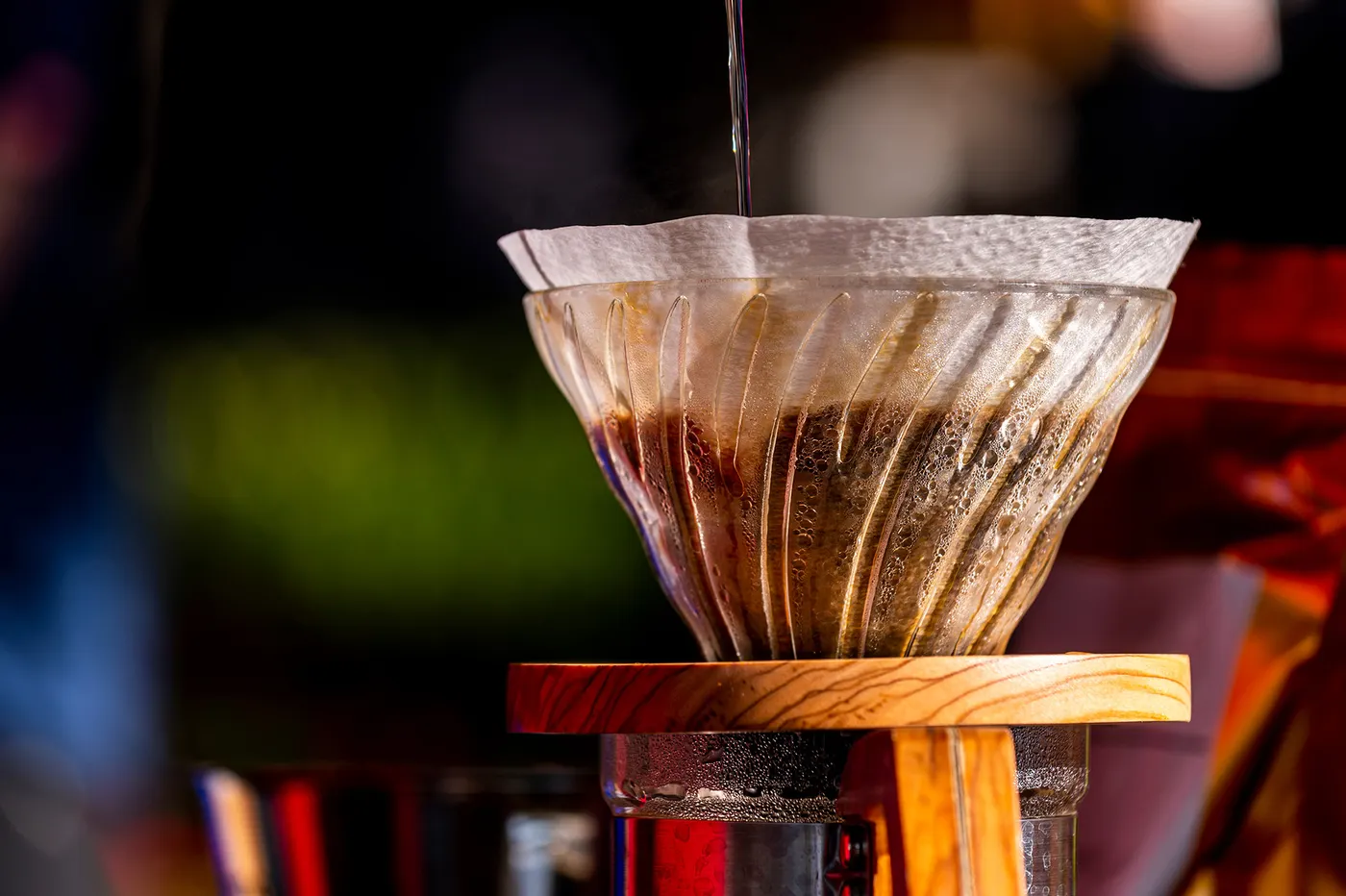
We've all had that pour-over that came out flat. Same kettle, same careful spiral, same patient little circles, and the cup still landed muddy or thin and you couldn't taste a thing the bag promised. I know that disappointment. But there's a better cup waiting on the other side of one decision, and it isn't a fancier kettle. It's the kind of clean, bright, layered brew where you can actually taste the peach or the citrus the roaster wrote on the label, the kind that makes you stop scrolling and just sit there with the mug. Pour over is my daily method, so let me show you exactly what to buy, and what I reach for.
Here's the thing nobody tells you when you buy your first cone: pour over is a revealing brewer. As Podium Coffee Club puts it, great beans become transcendent in a pour over, and mediocre beans become flat, muddy, or bitter. There's no body, no crema, no oily richness to hide behind, just coffee and water and a thin sheet of paper. So when the cup disappoints, the brewer usually isn't the problem. The bag is. I drink single origins almost every morning, and I'm one of those people who leans over the cone just to smell the grounds bloom. After enough mornings, you learn that the slow pour doesn't forgive a so-so coffee. It puts it under a spotlight. The good news: pick the right bag and that same spotlight makes a $22 coffee taste like a special occasion.
The short answer
We all want that clean, fruit-forward pour-over cup, and the fastest way there is a fresh, washed, single-origin light or medium roast. A better kettle won't get you there. The bag will.
- Buy washed, single-origin, light-to-medium. Clarity is the whole point of pour over, and the paper filter does part of the curating for you.
- Freshness beats price. A clean bag around $20 to $25, used within a few weeks of roast, outperforms a stale premium one every single time.
- Match the brewer loosely. V60 and Chemex want the same family of beans; the Chemex's thicker filter just rewards leaning even lighter and cleaner.
Why pour over is so picky about beans
Start with the paper. That little filter is doing more than holding grounds out of your mug. It catches the oils and the fine suspended solids that a metal filter lets through, which is why pour over tastes so clean and bright next to a French press or a moka pot. That transparency is the gift and the catch. A cup with nowhere to hide shows you everything, including a bag that's past its prime or never had much going for it.
It gets more interesting. The filter isn't just clarifying, it's actually selecting which flavors reach you. In a peer-reviewed filter-extraction study, researchers found that paper-filter brewing pulled out more of the caramel and flowery, sweet-leaning compounds, while metal filters skewed toward fruitier, roastier, nuttier ones. Think of the paper like a pastry chef's fine-mesh sieve, sifting out the heavy stuff so the delicate, sugary notes float up on top. That's the whole reason a clean, lightly roasted coffee sings here: the method is built to spotlight exactly the delicacy that washing and a gentle roast preserve.
One more surprise from that same research. The shape of the filter, conical versus flat-bottom, mattered more to the final flavor than what the filter was made of. Hold onto that. It's the reason a V60 and a Chemex pull in the same direction even though they look nothing alike, and it's why you don't need to fall down a gear rabbit hole to brew a gorgeous cup. The bean is the lever. The shape is a nudge.

What matters most when you're choosing the bag
Four things, in order. Get the first two right and you're most of the way to a great cup.
From our coffee sommelier
Maryna's weekly picks
“I taste thousands of coffees a year — I’ll only send you the few worth brewing.”
Something went wrong — please try again.
Free · Weekly · Unsubscribe anytime
Processing comes first. This is the one most buyers skip, and it's the one I'd start with. Washed coffees, where the fruit is stripped off the seed before drying, are the clean, bright, beginner-safe default. They're easy to dial in and they pour clear. Honey-processed coffees leave a little fruit on for a rounder, balanced sweetness. Naturals, dried whole inside the cherry, go bold and jammy and fruit-forward, but they're pickier and less forgiving when your technique wobbles. For your everyday pour over, reach washed. (If the fruity wild side is calling you, that's a real lane worth exploring once you're comfortable, and here's how processing changes what you should buy next.)
Roast level is next: light to medium. Slow extraction through paper is built to reveal fruit, citrus, and floral notes, and a light or medium roast leaves those notes intact. Push into dark-roast territory and the bag turns flat, thin, or a little smoky through a paper filter, the oils that give a dark roast its richness get caught in the paper and you're left with the ash. Save the dark roasts for your espresso machine or your French press, where they belong.
Then single origin over a blend. Clarity is the reason you bought a coffee from one specific place. A single-origin Kenyan tastes like that Kenyan, blackcurrant and bright. The moment you blend it with three other lots, you smooth out the very character you were chasing. Blends are built for body and consistency. Pour over flattens that and rewards a distinct voice, so let it have one. Browse our single-origin coffees and you'll see what I mean: 218 of our 657 live coffees are light or medium single origins, carried by 53 different roasters. That's the curated breadth no affiliate roundup can promise, and it's the pool every pick below comes from.
Freshness is the tiebreaker. Coffee is at its best roughly 5 to 21 days off the roast, once that first rush of carbon dioxide settles, and ideally within a month. Pour over punishes a stale bag harder than any forgiving method, because there's nothing in the cup to mask it. This is the part I get evangelical about. A clean, fresh, modest bag beats a stale fancy one, no contest.
If re-deciding the perfect bag every couple of weeks sounds like more homework than fun, that's exactly what a curated plan is for. You can build a coffee subscription tuned to fresh, pour-over-friendly single origins, arriving on your schedule, so the freshest thing in your kitchen is always the coffee.

Recommendations by use case
I'm not going to hand you a single SKU, because the best single origins rotate fast and I'd rather you learn to spot the right bag than memorize one name. Here's how I'd shop by what you're after.
The classic clarity pick
If you want the cup the whole pour-over world keeps pointing back to, shop three origins. Kenya gives you that berry-and-blackcurrant acidity with bright, almost sparkly sweetness. Ethiopia brings florals and citrus, jasmine and lemon and tea. And a washed Colombia rounds out the trio with balanced, everyday clarity, the one I'd hand a friend who's brewing pour over for the first time. These three are the origins the SERP and just about every curator I know name first, and they run deep here: among our light and medium single origins, we're carrying 69 Colombia, 29 from Ethiopia, Yirgacheffe, and Guji, and 11 Kenya. Start with our Kenya coffees if you love a punchy, fruit-bright morning, or our Ethiopia coffees if you're after something delicate and floral.
The everyday sweet spot, and when to splurge
Here's the reassuring math. Our light and medium single origins average about $24 for a 12-ounce bag, with most landing between roughly $17 and the low thirties. That's your everyday pour-over zone, and a fresh, clean, washed coffee in that range will out-brew a stale premium bag every time. Freshness and clean processing matter more than the price tag, full stop.
When you want to treat yourself, the top shelf is a different animal: rare lots and showpiece varietals that climb past $40, even toward $90 for the true unicorns. Those are the special-occasion bags, the ones you brew slow on a Sunday and savor like dessert wine. Worth it as a celebration. Not the bag I'd reach for on a Tuesday.
Match the brewer to your taste
If you're chasing the brightest, most aromatic cup you can build, hunt for fruity and floral tasting notes on the bag, peach, jasmine, citrus, berry. That's exactly what the paper filter amplifies, the sweet, flowery compounds the science points to. Our fruity coffees are a fast way to find that lane. And if you've got your technique dialed and you're feeling adventurous, naturals and anaerobics can absolutely sing in a pour over, big, jammy, wild. They're just less forgiving, so I'd save them for after you've nailed the clean stuff.

Best overall: Brazil Canaan Estate, Middle Fork Roasters
Our single most-reviewed coffee, and a pour-over natural. It's a smooth, easygoing medium with toasted nuts and a gentle stone-fruit lift, plus low acidity that keeps everything calm and round. The cup that makes a careful pour-over sing without any fuss.
Tastes like: toasted nut, stone fruit, nutty. Get Brazil Canaan Estate
Best all-rounder: Thesis, Ceremony Coffee Roasters
Ceremony's house-blend hero, a light-medium Colombian and Brazilian mix from Annapolis. Simple sugars at their most complex, they say, and in a pour-over you get every layer: sweet, chocolaty, with brown-sugar warmth. Reliable morning after morning.
Tastes like: sweet, chocolate, brown sugar. Get Thesis
Best for clarity: Pacific Wonderland, Coava Coffee Roasters
Coava is a celebrated Portland roaster, and clarity is their whole religion. Brewed as a pour-over this one opens right up: date sweetness, candied pecans, a tiramisu richness in the middle. Clean and dessert-like, with every note in sharp focus.
Tastes like: date, tiramisu, candied pecans. Get Pacific Wonderland
Best balanced: Caffe Del Sol Espresso, Caffe Vita
Don't let the espresso name fool you, this Caffe Vita blend is gorgeous as a pour-over. It's balanced and chocolaty, with a pop of cherry brightening the caramel base. The kind of even, well-mannered cup that never tips too sweet or too sharp.
Tastes like: caramel, cherry, chocolate. Get Caffe Del Sol Espresso
Best easy-drinking: Catapult Blend, Roseline Coffee
An easy-drinking sweet number from Portland's Roseline, and a friendly pour-over. Caramel and brown sugar with a cozy dusting of cinnamon, like a snickerdoodle in liquid form. Nothing to overthink here, just pour and enjoy.
Tastes like: caramel, cinnamon, brown sugar. Get Catapult Blend
Does the brewer change the pick? V60 vs Chemex
Mostly no, and that's freeing. A V60 and a Chemex both want the same thing: light-to-medium washed single origins. Same family, same instinct. The difference is a small lean, not a different shopping list.
The Chemex filter is the thick one. Per The Golden Lamb's Chemex guide, it runs roughly 20 to 30 percent thicker than a standard paper filter, so it strips out even more oils and gives you a lighter body with clearer, crisper acidity. The practical takeaway: if you brew Chemex, lean a touch lighter and cleaner still. A washed Ethiopian or Kenyan on a Chemex tastes like pure, tea-like clarity. On a V60 you'll get that same clarity with a hair more sweetness, acidity, and fruit. And if you ever reach for a flat-bottom brewer like a Kalita, it's the most forgiving of the bunch, with a touch more body, which makes it a friendly place to land if precision stresses you out.
Once the right bag is in your grinder, the brewing itself is simpler than the internet makes it look. Roughly a 1:16 to 1:17 ratio gets you there, about 30 grams of coffee to 500 grams of water, the same neighborhood James Hoffmann's V60 method lives in. Water just off the boil, grind on the finer side of medium-coarse, total brew time around three to four minutes. That's the skeleton. For the full, low-stress recipe, the one I actually use on a groggy weekday, head to my forgiving V60 recipe.

Pour over questions, answered
What roast level is best for pour over? Light to medium. The slow filter extraction reveals the fruit, citrus, and floral notes that darker roasts mask. Dark roasts tend to read thin and bitter through paper.
Is washed or natural process better for pour over? Washed, for clarity and easy dialing-in. It's the forgiving, beginner-safe choice. Naturals are fruit-forward but pickier, so treat them as a step up once your technique is dialed.
Does the Chemex need different beans than the V60? Same direction: light-to-medium washed single origins. The Chemex filter is roughly 20 to 30 percent thicker, so it strips more oils and rewards clarity-forward beans even more.
How fresh should pour-over beans be? Use them about 5 to 21 days off the roast, after the first rush of carbon dioxide settles, and within a month. Pour over exposes staleness faster than any other method.
Should I use single origin or a blend for pour over? Single origin. Pour over's clarity lets you taste one place's character. Blends are built for body and consistency, and the brewer tends to flatten exactly what makes a blend a blend.
What coffee does James Hoffmann use for V60? He brews light-roasted single origins at a 1:17 ratio (30 grams of coffee to 500 grams of water), water just off the boil. His through-line is that the beans matter more than the gear.
Don't overthink it
Here's the whole thing in one breath: fresh, washed, single-origin, light-to-medium is about 90 percent of a great pour-over cup. The brewer and the spiral and the gooseneck are the last 10 percent. The bag is the lever you pull, because no kettle on earth can rescue a tired bag, and a great one barely needs your help. So buy fresh, buy clean, and brew it before it fades.
If you take one thing from me, take this: I'd rather you brew a fresh, clean bag a little sloppily than a stale, fancy one with perfect form. The freshness wins. Every time. Once you've got the right beans in hand, go grab the easy forgiving V60 recipe, and when you're ready to fill the grinder, browse our single-origin coffees and pick the one whose tasting notes make you a little hungry. That's the one. Brew it. Trust me.
We want to help you make better coffee at home. Our recommendations are our own, and never sponsored. If you see something you love and buy it through our links, we may receive an affiliate commission (thanks for that!).
From our coffee sommelier
Maryna's weekly picks
“I taste thousands of coffees a year — I’ll only send you the few worth brewing.”
Something went wrong — please try again.
Free · Weekly · Unsubscribe anytime