The Best Coffee for a Moka Pot: Why Medium Roast Wins (Grind, Roast & Picks)
 Maryna Gray
• August 20, 2026 — last updated August 20, 2026
Maryna Gray
• August 20, 2026 — last updated August 20, 2026
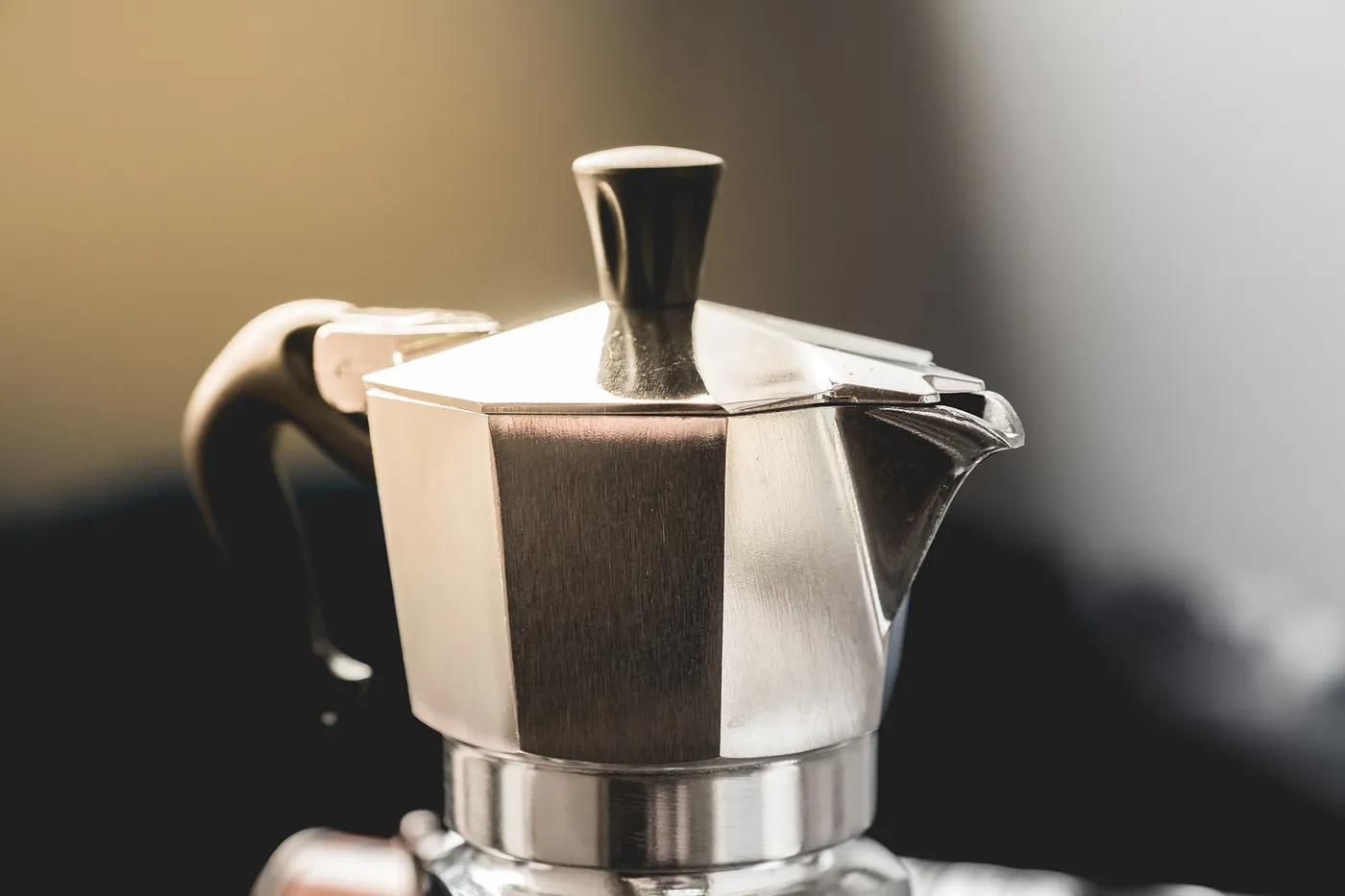
If you've got a moka pot on the stove, you've probably also got a half-finished bag of dark, oily "espresso" beans sitting right next to it. Because that's what everyone tells you to buy. Darker, oilier, more "Italian," the logic goes, the better the moka does its thing.
Here's the cup you're actually after: chocolaty, round, a little sweet, with enough body to stand up to a splash of milk and none of that scorched, ashy bite. And that cup almost always comes from a roast most guides talk you right out of.
The moka pot has earned its reputation. Alfonso Bialetti invented the Moka Express in 1933, around 220 million of them have sold since, and Bialetti's own history of the pot claims it lives in nine out of ten Italian households. Beloved, iconic, and badly misunderstood on the one question that actually changes your cup: what beans to put in it.
People call it "stovetop espresso," and I'll be precise about why that's a loose label without getting pedantic about it. Mostly, though, I want to save you a few wasted bags. So here's the roast, the flavor notes, and the specific kind of beans I'd reach for, with the grind-and-ratio fiddliness routed off to where it belongs.
The short answer
We all reach for the darkest "espresso" bag for the moka pot, but you'll get a sweeter, more chocolaty cup with a balanced medium roast, and I'll show you exactly what to look for and which bags I'd buy.
- Roast: Medium is the most forgiving and the specialty default. Origin character stays legible and the bitterness risk drops. Dark works fine; light is the hard-mode option.
- Flavor: Lean chocolaty, nutty, caramel and brown-sugar. The concentrated brew amplifies body and sweetness, so those notes land big while delicate florals get muddied.
- Beans, not species: 100% Arabica gives you a sweeter, more nuanced cup. You do not need a robusta blend to get body out of a moka pot.
Grind, ratio, and bitterness fixes all live in our moka pot how-to. This guide is about which bag to put in.
What matters most when you're buying for a moka pot
Three levers, in the order they actually change your cup.
Roast level is the big one. Start with medium. The moka pot brews at low pressure, roughly 1.5 to 2 bar versus a real espresso machine's 9 bar, so it doesn't need a charred dark roast to pull body the way an espresso machine sort of does. A medium gives you the body anyway, and it keeps the bean's natural sweetness readable instead of torching it. This isn't a fringe opinion anymore. Specialty Italy is leaning the same direction: Sprudge reports that roasters like Agust are putting out medium-light, single-origin, 100% Arabica moka-specific roasts, aiming for "a sweeter and more aromatic cup with a mellowed out acidity."
Medium isn't some niche corner of what we carry, either. It's the default. Of our 315 live coffees, 161 (about half) are medium roast, the single largest roast band, with light at 80 and dark at 74.
Then choose by note, not by darkness. A bag's tasting notes tell you more than its color does. Chocolaty, nutty, caramel and brown-sugar profiles flatter the concentrated cup; bright florals tend to muddy in it. More on that below.
Freshness beats the species debate. Fresh-roasted whole bean, ground right before you brew, matters more than chasing down a robusta blend for crema you'll barely notice. 100% Arabica is plenty. A burr grinder set to medium-fine will do more for your cup than any robusta hunt.
If picking a fresh bag every few weeks feels like one decision too many, this is exactly the kind of thing a Coffee Plan takes off your plate. Tell it you brew on a moka pot and lean chocolaty-medium, and fresh bags that fit show up on a schedule you set. No more guessing in the grocery aisle.
When you do want to browse and pick yourself, start with our medium-roast coffees. It's the differentiator for moka, and the deepest shelf we've got.

The roast that flatters a moka pot
Let me make the medium-roast case in plain terms. When the roaster builds a coffee, they're aiming for something specific: the fig-and-cocoa of a natural Ethiopian, the brown-sugar nuttiness of a washed Colombian, whatever the bean wants to be. A medium roast lets that survive the brew. Push the same bean to a dark, oily roast and most of that intention flattens into a generic "strong." The moka pot's concentration then makes "strong" even louder. Medium keeps the character; dark trades it for intensity.
From our coffee sommelier
Maryna's weekly picks
“I taste thousands of coffees a year — I’ll only send you the few worth brewing.”
Something went wrong — please try again.
Free · Weekly · Unsubscribe anytime
I'm not here to take dark roast away from anyone. Italian-style dark in a moka is a real, beloved cup, and plenty of people I respect drink it every morning. It just asks for a little more care: a slightly coarser grind, because a darker roast's open cell structure gives up its flavor faster, and lower heat so it doesn't scorch. That's technique, and the how-to covers it.
Light roast is the honest hard mode. It wants a finer grind and a careful hand, and it's quick to read sour or harsh if you rush it. Fun to experiment with, not the forgiving choice for a Tuesday morning. As Perfect Daily Grind notes, even filter-roast profiles can brew beautifully in a moka pot with good technique, so the door's open. Just know what you're signing up for.
When you're ready to buy for it, browse our medium-roast coffees and read the notes before you read the color.

Tasting notes that shine in the cup
The moka pot is a concentrator. It pushes water through the grounds once, under steam, and what comes out is two to three times stronger than drip. That concentration is a magnifying glass: body gets bigger, sweetness gets louder, and the bag's headline flavors arrive in bold.
So you want notes that reward being turned up. Milk chocolate, hazelnut, brown sugar, toffee, a little dried fruit. Those land like dessert in a moka cup. Read the bag: "milk chocolate, hazelnut, brown sugar" is a green light. "Jasmine, bergamot, white peach" is a harder sell here, because the delicate, perfumey stuff that sparkles in a pour-over can turn muddy or flat under all that pressure and heat.
Naturals (coffees dried with the fruit still on the bean) and balanced blends tend to over-deliver on exactly this body-and-sweetness brief. They come loaded with the fruit-and-chocolate richness the moka pot loves to amplify. If you want a shortcut to the right shelf, our chocolaty coffees are built for this cup.

My recommendations, by the cup you want
Good news: most of our mediums already fit the brief. Of those 161 medium roasts, 102 (about two-thirds) carry chocolate or cocoa notes, which is the moka-friendly sweet spot. So I'll point you at three kinds of bag rather than three exact SKUs, because the catalog rotates and you should buy what's fresh on the day. Each one names the roast, the notes, and the cup it makes.
The everyday chocolaty workhorse. This is the bag I'd keep in steady rotation: a balanced medium blend that leans cocoa and toasted nut, with a brown-sugar sweetness underneath. Something built for body. It pulls a round, comforting cup black, and it's plush with a splash of milk, the kind of morning coffee you don't have to think about. Look for a medium blend whose notes read like a candy bar more than a fruit basket. You'll find a deep bench of them in our medium-roast coffees.
The origin-character single origin. For the mornings I want a specific place to read through, I reach for a washed or balanced-natural medium single origin: a Colombian with caramel and cocoa, a Brazilian with peanut and milk chocolate, a Guatemalan with baking spice. Single origins are the smaller, more adventurous lane within our mediums, and the moka pot concentrates that origin signature instead of flattening it. The bean's accent comes through, just turned up a notch.
The "stovetop cappuccino" pick. If your moka cup mostly becomes a milk drink, go a touch darker: a developed medium-dark with enough body to punch through steamed or frothed milk without going bitter. Toffee, dark chocolate, a little roasty depth. That's the bag that'll hold its own under foam. Milk technique (and yes, you can froth at home without an espresso machine) is over in the how-to.

Best dark classic: Diablo Dark Roast, Ladro Roasting
Caffe Ladro's best seller is built for the moka pot. It's devilishly dark and spicy with a big velvety body, all earthy dark chocolate, cinnamon, and burnt caramel, and that intensity stands up beautifully to the pressure brew. A bold, classic shot from the stovetop.
Tastes like: dark chocolate, brown sugar, walnut. Get Diablo Dark Roast
Best chocolatey dark: Request Line Blend, Broadcast Coffee Roasters
Broadcast made this by popular request, for Seattle cafe regulars who wanted a rich, toasty dark roast. The moka pot pulls every bit of that out: deep chocolate and dark chocolate, with a toasted-walnut edge. Concentrated and cocoa-heavy, exactly what you want stovetop.
Tastes like: chocolate, dark chocolate, toasted walnut. Get Request Line Blend
Best traditional Italian: Gran Miscela Carmo, Caffe Lusso Roastery
A sticky bun in a mug, made in the classic Italian tradition. It's a big, chocolaty, Brazilian-forward medium with milk chocolate, caramel, and a praline sweetness, and the moka pot is its natural home. A perennial bestseller for a reason.
Tastes like: milk chocolate, caramel, praline. Get Gran Miscela Carmo
Best for milk drinks: Jebena Blend, Boon Boona Coffee
A rich, buttery medium-dark blend of Ethiopian and Tanzanian beans, from a PNW roaster steeped in Ethiopian coffee culture. It has a lingering caramel sweetness with nutmeg and bittersweet chocolate, and that body cuts right through steamed milk. Made for a stovetop latte.
Tastes like: caramel, nutmeg, bittersweet chocolate. Get Jebena Blend
Best value: Espresso Ecstasy, Vashon Island Coffee Roasterie
A rich, chocolaty espresso-style dark from Vashon Island that punches well above its price. Deep chocolate with a molasses tone, and it brews into a thick, satisfying moka shot. Easygoing on the wallet, generous in the cup.
Tastes like: chocolate, molasses. Get Espresso Ecstasy
If you want the traditional dark route
Maybe you grew up on Italian-style dark and that scent off the stove is the whole point. I get it, and I'm not going to argue you out of a cup you love.
If that's you, buy a developed dark, not a charred one. The difference is real: a good specialty dark is roasted deep but stopped before the beans go bitter and ashy, so the origin's still faintly legible under the cocoa-and-toast. Pair it with a slightly coarser grind and lower heat (the how-to has the settings) and you'll get the rich, classic cup without the burnt edge. We go deep on picking a dark that isn't just scorched.
Don't overthink it
Here's the whole thing in one breath: medium roast, chocolaty or nutty notes, fresh whole bean, ground medium-fine. That's about 90% of a great moka cup. The rest is technique, and the moka pot how-to has every knob you can turn.
Any of the bags I pointed you at will get you there. You don't need a special "moka" label on the bag, and you don't need a robusta blend. You need fresh coffee you'd actually want to drink, brewed with a little care.
And if you get curious how these same beans behave under real 9-bar pressure, that's its own rabbit hole, and we dig into the best espresso beans separately. For now, if you just want the easy button, our coffees for espresso are full of the chocolaty, medium-bodied bags that make the moka pot sing. Grab your bag and put the kettle on.
Moka pot coffee, answered
Does a moka pot make espresso? No. A moka pot brews at about 1.5 to 2 bar of pressure, versus espresso's 9 bar (per the SCA's 2024 standards), so it makes strong, concentrated coffee but no true crema, the golden foam you get from a real espresso machine. "Stovetop espresso" is a nickname, not a category.
What roast is best for a moka pot? Medium roast is the most forgiving: balanced acidity and body, with origin character still legible. Dark roast works but wants a slightly coarser grind and low heat. Light roast is the hardest to extract cleanly.
What grind size should I use for a moka pot? Medium-fine, about the texture of table salt. Finer than pour-over, coarser than espresso. Too fine over-extracts and turns bitter; too coarse runs weak and watery. Full grind and ratio details live in our moka pot how-to.
Why does my moka pot coffee taste bitter? Usually the grind is too fine or the heat too high. Coarsen the grind a notch, brew on low-to-medium heat, and pull the pot off the burner as the top chamber fills. The how-to walks through every fix.
Is 100% Arabica or a robusta blend better for a moka pot? Both work. 100% Arabica gives a sweeter, more nuanced cup; a robusta blend adds body and crema. Specialty moka brewing leans Arabica for clarity, and that's where my picks land.
How long should a moka pot take to brew? About 3 to 4 minutes once it's on heat. Under 2 minutes means the grind is too coarse; loud sputtering means it's too fine.
We want to help you make better coffee at home. Our recommendations are our own, and never sponsored. If you see something you love and buy it through our links, we may receive an affiliate commission (thanks for that!).
From our coffee sommelier
Maryna's weekly picks
“I taste thousands of coffees a year — I’ll only send you the few worth brewing.”
Something went wrong — please try again.
Free · Weekly · Unsubscribe anytime