The Best Espresso Beans to Buy in 2026: A Specialty Roaster's Picks (Not the Italian Blends)
 Maryna Gray
• June 30, 2026 — last updated July 21, 2026
Maryna Gray
• June 30, 2026 — last updated July 21, 2026
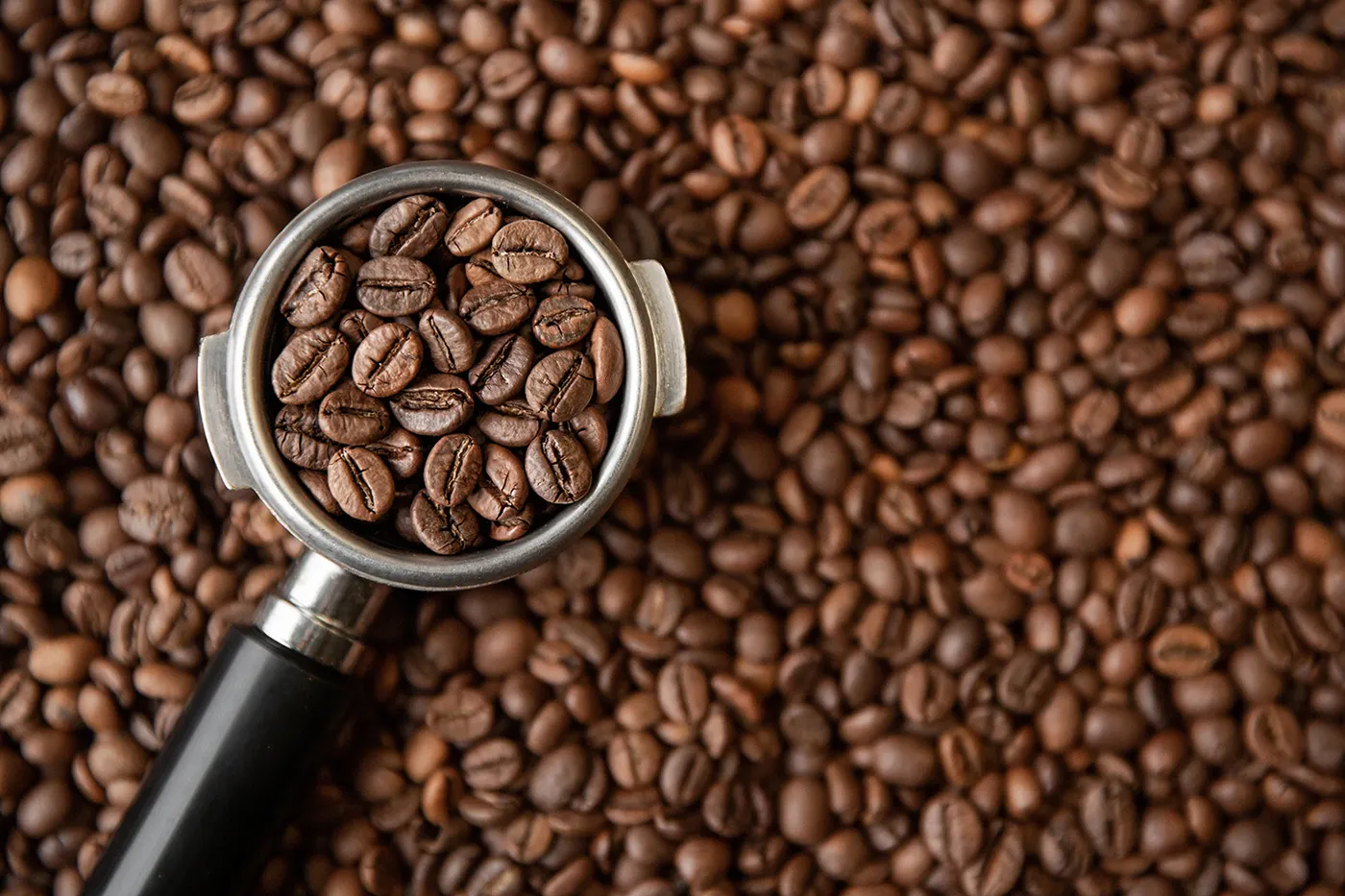
We all picture the same thing when someone says "espresso beans": a glossy, near-black Italian tin that's been sitting on a pantry shelf since who-knows-when, oily to the touch, no date anywhere on it. That tin is what most of us learned espresso was supposed to taste like. Scorched, bitter, a little punishing. But the most chocolatey, caramel-sweet shot you'll ever pull at home probably won't come from that tin. It'll come from a fresh medium roast with a roast date stamped on the bag, pulling a crema (the golden foam that floats on top of a good shot) that smells like a bakery instead of an ashtray. I've poured through our entire espresso shelf, and the picks below are the ones I'd hand a friend.
Here's the thing nobody tells you at the grocery store: there is no such thing as an espresso bean. None. Espresso is a brewing method, hot water forced through finely ground coffee under pressure, not a species of bean grown for the purpose. Any good coffee can be pulled as espresso. The word "espresso" on a bag is a roaster telling you how they profiled the beans, usually for balance and sweetness under that pressure, and that's all it means. You can pull a bright Ethiopian as espresso. You can pull a fudgy Brazilian. The bag's label is a suggestion, not a category.
Instead of hunting for one mythical "right" bean, you get to pick by how you actually drink your coffee. And you get options. On Bean Box alone, 35 different specialty roasters offer espresso coffees, with bags running from $17.95 to $26.45 and landing around $21.25 on average. That's a marketplace, not one house blend, which is exactly the point. The "best" espresso bean isn't a single product to chase. It's the one that fits your machine, your milk habit, and your morning.

The short answer
We all assume espresso means a dark Italian blend, but you'll get a sweeter, more chocolatey shot from a fresh medium roast built for balance, and I'll show you exactly which ones to buy.
- There's no such thing as an "espresso bean." Any good coffee can be pulled as espresso; the label just signals a roaster's profile choice, not a different kind of bean.
- Medium roast is the modern baseline. Most of our espresso coffees are actually medium, not dark, so pick by how you drink it: straight shots, milk drinks, organic, or single-origin adventure.
- Freshness is the real moat. Buy from roasters who print a roast date and rest the beans about 5 to 14 days. A supermarket tin has no date because the answer would embarrass it.
Our top-rated picks, by how you drink it
These are the espresso beans our customers reorder and rave about, ranked from real ratings and thousands of reviews. Every one is a current Bean Box roast that's in stock right now, grouped by what it's best at.
Best overall: Bearded Lady, Longshoreman's Daughter
This is the one our customers come back for more than any other espresso we carry, and it's easy to taste why. Bearded Lady is a dark, decadent roast that drinks like a chocolate-covered cherry with a kick. It's rich and a little smoky, with a bright cherry punch that keeps it from ever feeling flat. The espresso for people who love espresso: bold, classic, just a touch off-the-wall.
Tastes like: cherry, vanilla, cocoa powder. Get Bearded Lady
Best classic: Breaker One 9 (Johnson House Blend), Broadcast Coffee Roasters
Toffee coffee! Broadcast's homage to the big, bold cup their founder's father used to drink, and a perennial bestseller. It's a medium roast that drinks like a Heath bar, all fudgy chocolate and toffee, with enough stone-fruit brightness to keep it interesting. Pure nostalgic joy in a shot.
Tastes like: stone fruit, chocolate, jasmine. Get Breaker One 9
Best for lattes and milk drinks: Milk Money, Stamp Act
The name isn't an accident. Milk Money has a honey-like body of cocoa and caramel with a balanced note of black cherry. It's light enough to stay elegant, but rich enough to punch right through steamed milk instead of disappearing into it. If most of your espresso ends up under a cloud of foam, this is your bean.
Tastes like: caramel, black cherry, chocolate. Get Milk Money
Best traditional Italian-style: Gran Miscela Carmo, Caffe Lusso
A sticky bun in a mug? You better believe it. Caffe Lusso's perennial bestseller is a chocolaty, Brazilian-forward medium blend built in the classic Italian espresso tradition: all toasted-sugar sweetness wrapped in a velvety body. If you want the cup you'd get at a great corner bar in Rome, start here.
Tastes like: milk chocolate, caramel, praline. Get Gran Miscela Carmo
Highest-rated: Thesis, Ceremony Coffee Roasters
The top scorer on this list, and a masterclass in why simple can be the most complex. Ceremony's Colombian-Brazilian blend, from historic Annapolis, makes a strong case for the ideal house espresso: deeply sweet, brown-sugar smooth, and equally happy with or without cream. If you want one bean that does everything well, this is it.
Tastes like: sweet, chocolate, brown sugar. Get Thesis
Best light roast: Bright Blend, Kuma Coffee
If you think espresso has to be dark and bitter, this one will change your mind. Kuma is a Seattle roaster obsessed with clarity, and Bright Blend pulls a shot that actually tastes like the fruit in the bean: berries, florals, and a clean citrus snap. It's espresso for the modern crowd, bright and lively and nothing like the burnt stuff you grew up on.
Tastes like: berry, floral, citrus. Get Bright Blend
Best for iced drinks: Jebena Blend, Boon Boona Coffee
Caramel cold brew lovers, this one's for you. Boon Boona, a beloved Pacific Northwest roaster steeped in Ethiopian coffee culture, built Jebena from Ethiopian and Tanzanian beans into a rich, buttery, medium-dark blend with a lingering caramel sweetness. It's gorgeous hot, but it's downright addictive over ice.
Tastes like: caramel, nutmeg, bittersweet chocolate. Get Jebena Blend
Best cozy and chocolatey: Creamery Blend, Ruby Coffee Roasters
With a name like Creamery, it had better taste cozy, and it delivers. Ruby's full-bodied medium roast greets you with warm, spiced aromas, then flows into fresh figs and bing cherries over a base of dark chocolate as velvety as hot cocoa. This is the espresso for a slow weekend morning.
Tastes like: cherry, fig, almond. Get Creamery Blend
Best organic and fair trade: Leftist Espresso, Gimme! Coffee
Proof that doing it right tastes good too. Gimme!'s Leftist is certified fair trade and organic, and it doesn't trade an ounce of flavor for the credentials: cherry, toffee, and chocolate in a smooth, easygoing medium roast. The bean to reach for when you want your espresso to feel as good as it tastes.
Tastes like: cherry, toffee, chocolate. Get Leftist Espresso
What matters most
Four things decide whether a bag pulls well. I've ranked them by how much they actually move the cup, so if you only read one section, read this one.
From our coffee sommelier
Maryna's weekly picks
“I taste thousands of coffees a year — I’ll only send you the few worth brewing.”
Something went wrong — please try again.
Free · Weekly · Unsubscribe anytime
Roast level comes first, and the conventional wisdom is wrong. The short espresso window rewards a medium roast. The Specialty Coffee Association and its barista survey put a typical shot at 25 to 30 seconds of water on the grounds, count it out, and that tight stretch of time is exactly what a medium roast is built for. As Perfect Daily Grind puts it, medium profiles give more balanced acidity and let you pull more of the coffee's flavor in that window. Sixty percent of our espresso coffees (43 of 72) are medium roast, not dark, which surprises most people. Only 21% are dark and 19% are light. So much for "espresso equals dark." If you want a place to start, browse our medium-roast coffees and you'll see how deep that bench runs.
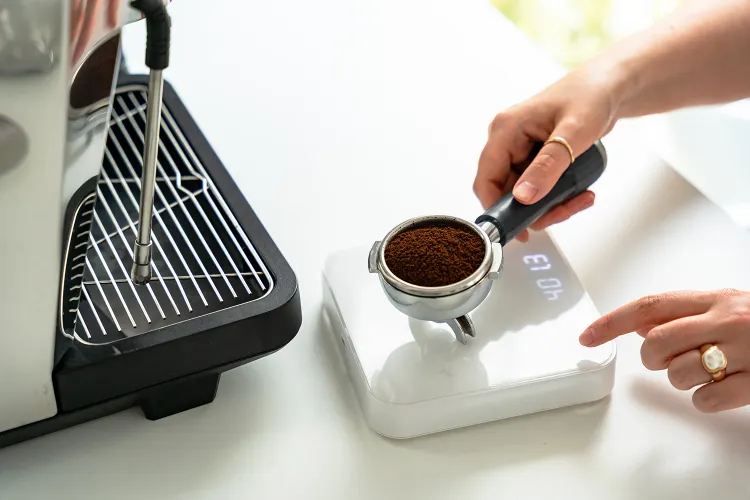
Freshness is the moat, and it's the one thing a supermarket tin can never give you. Coffee keeps releasing carbon dioxide for days after it's roasted, and in that first week the gas turns into carbonic acid under espresso pressure, which is what gives a too-fresh shot that harsh, astringent bite. The fix is rest. Clive Coffee puts the minimum at about 5 to 7 days, with the sweet spot landing somewhere around 7 to 11, and the exact window shifts with roast level: darker beans settle faster, lighter ones want longer. There's a twist most people get backwards, too. Pull a shot from beans roasted yesterday and you'll get a gorgeous head of crema, which looks like a quality signal but isn't. As coffee writer Scott Rao has documented, very fresh beans throw all that foam while actually extracting less, so the prettiest shot can be the weakest one. Specialty roasters print a roast date so you can time the rest. That oily Italian tin? No date, because the answer would scare you. If you want the full story on why fresh-roasted coffee tastes like a different drink entirely, it's worth a read.
Blend or single-origin is a preference, not a ranking. A blend is built for year-round consistency and the kind of round, milk-cutting body that holds up in a latte. A single-origin gives you the character of one harvest from one place: more personality, more dialing in. Neither is better. They're different pleasures.
Specialty espresso leans on Arabica, and skips robusta, gently. A 2017 Barista Guild survey of 275 baristas, reported by the Specialty Coffee Association, found that 96% don't use robusta. That's not a swipe at the Italian tradition that gave us espresso in the first place. Robusta delivers that thick crema and caffeine kick for a reason, and there's real romance to a Roman bar shot. Specialty roasters just chase a different goal: the sweetness and clarity that high-grade Arabica brings to the cup.
If you'd rather commit to one bag and let discovery do the work, a curated coffee plan rotates espresso-friendly roasts to your door so you can taste your way to a favorite. Build your own coffee plan and let the beans come to you. Otherwise, browse the full set of coffees for espresso and meet me in the sections below, sorted by the cup you're after.

For the purist: straight-shot picks
This one's for you if you drink espresso neat, or pulled short into a macchiato with barely a spoonful of milk. You want complexity and sweetness right there in the cup, not a coffee that only blooms once you've drowned it in steamed dairy. The shot has to stand on its own two feet.
My pick here is Stamp Act's Milk Money, a medium-roast espresso blend that's quietly one of the best-reviewed espresso coffees on our shelf, with a 4.5 rating across 78 cups. It pours caramel and chocolate up front, then a lift of black cherry underneath that keeps the whole thing from ever reading as flat or one-note. It's the rare shot that lands as dessert and cocktail at once: the caramel and chocolate are the dessert, the dark cherry is the wine-like edge. The first time I pulled it short and drank it black, I caught myself slowing down between sips, which I almost never do with a straight shot.
If you want a sense of what this category looks like beyond our shelf, the iconic American specialty espresso blends — Stumptown's Hair Bender, Intelligentsia's Black Cat Classic — live in the same neighborhood: developed, chocolaty, balanced blends built to pull sweet. (Those aren't on Bean Box; I mention them as the reference points the whole category is measured against.)
What makes a coffee work straight is simple. It has to be developed enough that the sugars have come forward, balanced enough that no single note spikes sour or bitter, and sweet enough that you never reach for the milk to fix it. A good purist shot is finished the moment it lands in the cup. If you've never drunk espresso neat before, give it ten seconds before the first sip and let the crema settle into the body. That's the moment when the chocolate and the citrus stop competing and start reading as a single, layered flavor instead of two. The shot that tastes a touch sharp the instant it's pulled is often perfect thirty seconds later, which is a lesson I had to learn the slow way, over a lot of cups I drank too fast.

For lattes and milk drinks: the chocolate-and-caramel picks
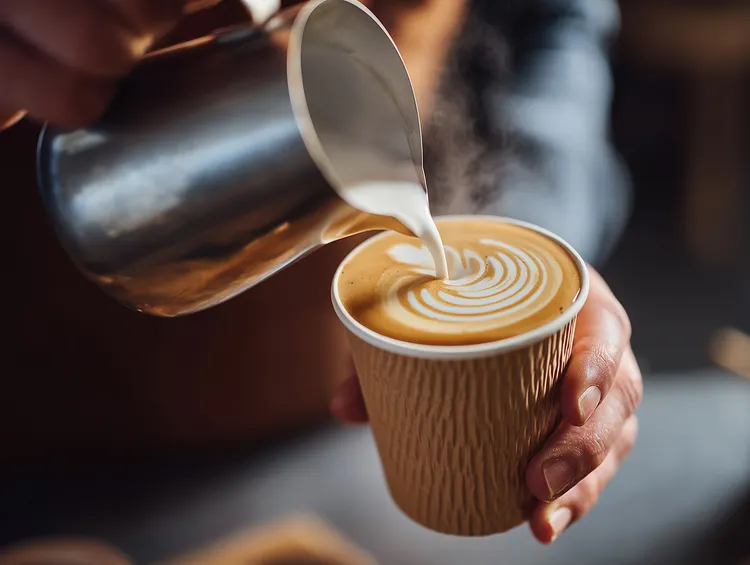
If your espresso almost always disappears into steamed milk, you need different beans than the purist does. Milk is sweet and fatty and it muffles delicate, bright notes. What survives the pour, and gets better for it, are the deep, dessert-leaning flavors.
Our espresso shelf skews exactly that direction, and I can prove it with our own tasting-note data. The most common notes across our espresso coffees are chocolate (25 coffees), caramel (18), and dark chocolate (18), trailed by cherry (10) and brown sugar (6). That's a lineup practically built for a latte. Chocolate, caramel, and nutty notes read as sweetness through dairy, the way a chocolate-dipped biscotti tastes more chocolatey, not less, with a glass of milk beside it.
My hero pick for milk is Onyx Coffee Lab's Monarch. Onyx built it on purpose for this: an Ethiopian natural blended with a Latin American washed coffee, roasted to their most-developed profile and, in their words, intentionally designed to work well with milk. It pours dark chocolate, red wine, molasses, and dried berries into a body so thick and syrupy it practically coats the cup. Steam it into a flat white and the molasses turns into something like a salted-caramel sauce. Onyx is a B Corp out of Rogers, Arkansas, and they cup every roast for quality, which is the kind of detail that shows up in the consistency of the bag.
A couple of runners-up that also play beautifully with milk, and that lead nicely into the next section: Sightglass Crown Point (butterscotch, raspberry, chocolate, and certified organic) and Gimme! Coffee's Leftist (cherry, toffee, chocolate, and both Fairtrade and Organic certified). Both are sweet, both are sturdy enough to stand up in a cappuccino.
Why does medium-to-medium-dark win the milk game? Developed sugars and chocolate notes read as sweetness right through the dairy, while bright, fruity light roasts can thin out and vanish. Save the sparkly light roasts for your pour-over, where their fruit can sing without the milk in the way. For a latte, you want the coffee that already tastes like a warm dessert before the steam even hits it.
For the ethically minded: organic and values picks
Let me be honest about one thing before the picks, because plenty of guides aren't: an organic certification tells you about how the coffee was grown, not about how good your shot will taste. It's an ethical-sourcing signal, full stop. Specialty-grade Arabica from a certified farm and from a non-certified one can both pull a gorgeous espresso. So buy organic because the sourcing matters to you (and for a lot of us, it genuinely does), not because the label promises a better cup.
With that said, the number is real and it's bigger than you'd guess: 13 of our espresso coffees carry an organic certification. That's a proper shelf to shop, not a token corner. A few I keep recommending: Zoka Coffee's Cuatro Espresso Blend (graham cracker, nutty, cocoa, a soft and easygoing organic medium); Caffe Vita's Organic Fiore (chocolate, brown sugar, blueberry); the Sightglass Crown Point I mentioned above, which is certified organic; and Gimme!'s Leftist, which carries both Fairtrade and Organic seals. You can see the whole certified set among our organic coffees.
One more callout for the evening crowd, because it comes up constantly: yes, you can pull a real shot without the caffeine. We carry 4 decaf espresso coffees, including Equator's Decaf Eye of the Tiger, a proper after-dinner espresso so you can have a martini's worth of ritual without lying awake until 2 a.m. Browse our decaf coffees if a nighttime shot is your thing. (It's mine, more often than I'll admit.)
The values story behind these beans belongs to the roasters who built those relationships, not to me. What I can tell you is that the cup quality is there. You're not trading flavor for conscience.
For the adventurer: single-origin espresso
This section is for the tinkerers. If you like terroir, if you want to taste one place in one harvest, if you genuinely enjoy fiddling with your grinder on a Sunday morning until the shot dials in, pull up a chair.
Here's what makes single-origin espresso a small thrill: it's rare. Only 8% of our espresso coffees are single-origin (6 of 72) because 92% are blends, and for good reason. Blends are easier to keep consistent batch to batch and tend to behave under milk. So when a roaster decides to put one coffee, from one origin, into an espresso bag, they're making a statement: this bean is interesting enough to stand alone.
My pick is Vashon Island Coffee Roasterie's Guatemalan Reserve. Cherry, chocolate, and cocoa powder. It drinks like a slice of something off a holiday dessert table, and at a 4.0 rating across 34 cups it's the most-reviewed single-origin espresso on our shelf. Vashon Island has been roasting in small batches out of the Puget Sound for decades, and a single-origin espresso is exactly the kind of move a roaster with that kind of patience earns the right to make.
Third-wave roasters have been moving toward lighter, single-origin espresso for years now, chasing the individual character of one bean over the milk-cutting consistency of a dark blend. That's the actual story behind "not the Italian blends." Espresso quietly stopped meaning one scorched profile and started meaning whatever a thoughtful roaster wants to show you. One fair warning: single-origins, especially lighter ones, ask for more dialing in. Expect to chase the grind a little before it sings. That's part of the fun, if it's your kind of fun. Want more of this? Start with our single-origin coffees.
Don't overthink it
Pick by how you drink it: straight, milky, organic, or adventurous. Buy fresh, from a roaster who prints a roast date. And trust that almost any good medium roast will reward you. There's no secret "espresso bean" out there to hunt down; there never was.
The one honest caveat: the bean is only half of the shot. Your grind does the heaviest lifting once the coffee's in the basket, and a great bag through a bad grinder will still pull sour and thin. If you're upgrading anything, upgrade that first: a good burr grinder beats a better machine. And once a fresh bag actually lands on your counter, the next job is getting it dialed in fast, which is its own quick project.
Ready to shop? Go meet the whole lineup of coffees for espresso and pick the one that matches your morning. Pull it short, pull it long, drown it in milk. There's no wrong answer here, only the cup you like best.
Frequently asked questions
Is there such a thing as an espresso bean?
No. Espresso is a brewing method, not a bean type, so any coffee can be pulled as espresso. Roasters label a bag "espresso" to flag a profile built for balance and solubility under pressure, not because the beans are a separate category.
What roast level is best for espresso?
Medium is the modern baseline. Perfect Daily Grind notes that it gives more balanced acidity and lets you pull more of the coffee's flavor in the short espresso window. Dark roasts want a lower temperature and a shorter shot; light roasts want a hotter, longer one. Most of our espresso coffees are medium-roast, not dark.
How long should espresso beans rest after roasting?
About 5 to 14 days, depending on roast level: roughly 5 to 7 days minimum, 7 to 11 the sweet spot. The first week's CO2 buildup turns into carbonic acid under pressure, which is what gives a too-fresh shot that harsh, astringent edge.
What espresso beans are best for lattes and milk drinks?
Medium to medium-dark coffees with chocolate, caramel, and nutty notes cut through steamed milk best. Brazilian and Colombian-leaning blends are reliable go-tos. Bright, fruity light roasts tend to wash out under dairy.
Do I need organic espresso beans?
Organic certification is an ethical-sourcing signal, not an extraction-quality one. Specialty-grade Arabica from a certified or non-certified farm can both pull an excellent shot. Buy organic because the sourcing matters to you, not because the label alone promises a better cup.
Why do specialty roasters skip robusta?
A 2017 Barista Guild survey of 275 baristas found 96% don't use robusta. Specialty espresso leans on high-grade Arabica for sweetness and clarity rather than raw crema and caffeine. It's a flavor choice, not a knock on the Italian tradition that built espresso.
We want to help you make better coffee at home. Our recommendations are our own, and never sponsored. If you see something you love and buy it through our links, we may receive an affiliate commission (thanks for that!).
From our coffee sommelier
Maryna's weekly picks
“I taste thousands of coffees a year — I’ll only send you the few worth brewing.”
Something went wrong — please try again.
Free · Weekly · Unsubscribe anytime