The Best Coffee Beans to Buy in 2026: From Roasters Who Actually Matter
 Maryna Gray
• July 07, 2026 — last updated July 21, 2026
Maryna Gray
• July 07, 2026 — last updated July 21, 2026
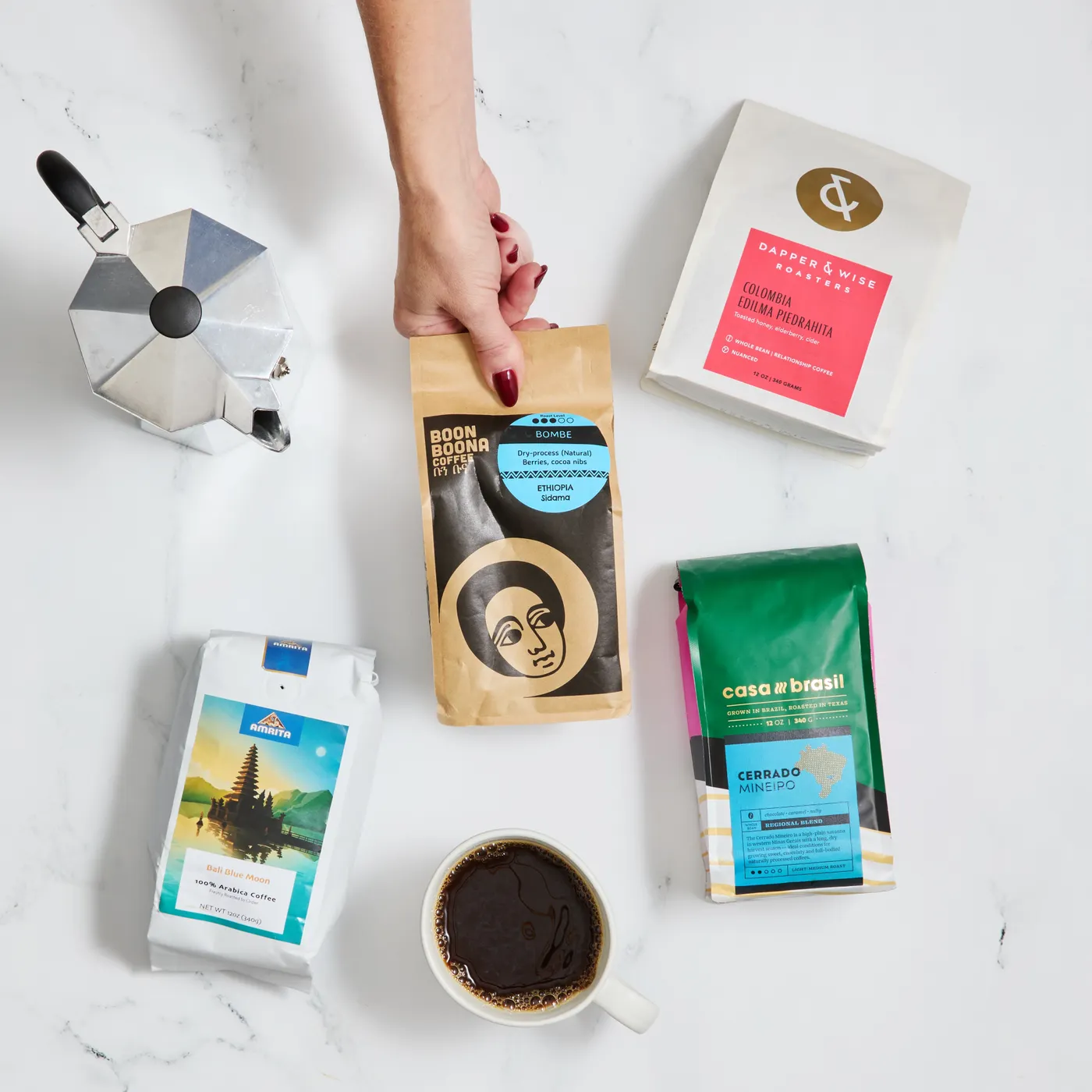
We've all stood in the coffee aisle, or in a browser tab with forty others open, trying to work out which bag is actually the best one. The labels all shout the same things. Bold. Smooth. Award-winning. And none of it tells you whether the cup you carry home will smell like ripe fruit before you even taste it, with a chocolatey body that lingers past the last sip. That's the cup I want for you. So let me save you the aisle-paralysis. I've sat on Cup of Excellence juries, and I'll walk you through what "best" actually means, then hand you the roasts I'd put in your cart this week.
Here's the thing most of those "best coffee beans" lists quietly skip: they're ranking the best of what's already on a grocery shelf. And that's the wrong tier to be shopping in to begin with. What you're really after isn't which bag. It's how good the bean was, who roasted it, and when. Get those three right and the bag almost picks itself.
So that's how this guide is built. Three decision points, in order: is it specialty or not, is it roasted for the way you brew, and is it from a roaster you can actually trust. Then the fun part, the roasts I'd reach for myself.
The short answer
We all want the "best" beans, but the honest truth is there's no single winner. You get a genuinely better cup by buying specialty-grade beans, roasted for how you brew, from a roaster who shipped them this week. Here's how to do exactly that.
- There's no single "best" bean. Match the roast to your brew method and your own taste, then let your tongue do the ranking.
- "Specialty grade" (SCA 80+, roughly the top 5% of coffee worldwide) is the tier worth buying. Most grocery coffee never clears it.
- Freshness beats almost everything else. Store beans can sit 6 to 18 months past roast, so buy from a roaster who stamps the roast date and ships soon after.
And you don't have to lock yourself into anything to do this. A single bag works. A gift works. A subscription is just the easy button. I'll point all three paths out as we go.
What "best" actually means: specialty grade
Let's start with the word everyone uses and almost nobody defines. "Specialty."
It's not marketing fluff. It's a measurable tier. The Specialty Coffee Association grades coffee on a 100-point cupping scale, scored across ten sensory attributes: fragrance, flavor, aftertaste, acidity, body, balance, sweetness, uniformity, clean cup, and the grader's overall impression. Score 80 or higher and the coffee is specialty grade. The way the industry frames it, that's roughly the top 5% of coffee grown anywhere on earth. Land in the 85 to 89.99 range and it's called Excellent. Crack 90 and it's Outstanding.

Here's why that number reframes the whole "best beans" conversation. When a roundup tells you it found the ten best beans of the year, you have to ask: the best out of what? If the field is grocery-shelf coffee, the winner might never have cleared 80 in the first place. You're being handed the tallest kid in a short class.
And that 80 is a tightrope, not a floor you stroll across. A coffee can drop from an 86 to a 79 over something as small as an uneven roast or a hint of under-ripe cherry that slipped into the lot. The flavor you're chasing, that ripe-fruit-and-chocolate cup, lives in a narrow band, and it takes care at every step to land there. Those ten attributes aren't a checklist you skim, either. Sweetness, balance, clean cup, the way the aftertaste lingers or thuds, a trained grader can feel a quarter-point of difference between two cups that taste identical to most of us. That's how fine the margins are at the top of this scale.
This is the scale I score against. When I sit at a Cup of Excellence table, those ten attributes are exactly what's in front of me, cup after cup, spoon after spoon. I'm not telling you that to flex. I'm telling you so you know that "specialty" has teeth behind it, and so you can use that one number, 80, as your first filter. If you want a head start, our top-rated coffees are the ones that consistently win with the drinkers who go back for more.
What matters most #1: freshness, the real differentiator
If I could make you fix one thing about how you buy coffee, it wouldn't be the origin or the roast level. It'd be the age of the beans.
From our coffee sommelier
Maryna's weekly picks
“I taste thousands of coffees a year — I’ll only send you the few worth brewing.”
Something went wrong — please try again.
Free · Weekly · Unsubscribe anytime
Picture a vacuum-sealed bag at the store, stamped with a "best by" date a year out. That date isn't a roast date. It's a sell-by promise, and it means the beans inside could have been roasted six to eighteen months ago. You're buying coffee that's been quietly fading since before you started thinking about it. That's the part the grocery aisle never advertises. By the time a typical grocery bag reaches your kitchen, it has often spent months in a warehouse, then more months on a shelf, all of it counted from a roast date you were never shown. The bag looks the same on day three hundred as it did on day three. The cup does not.
So why does age matter so much? Oxygen is coffee's enemy. The moment a bean comes out of the roaster, its aromatics, the very compounds that give you that fruit-before-the-first-sip moment, start slipping away. Slowly while the bean is whole, much faster once it's ground. The flavor doesn't vanish overnight, but it thins. The high notes go first, and you're left with something flat and woody where there used to be fruit and caramel. This is exactly why roasters who are proud of their freshness stamp the roast date right on the bag. Freshness is the point, not a technicality.

Here's a tip you can use tomorrow morning, no equipment required. Pour a little hot water over fresh grounds before you brew and watch the bed. Fresh coffee puffs up and domes, foaming as it releases trapped carbon dioxide. That's the bloom, and it's the bean telling you it still has life in it. Little or no bloom? Those beans are tired. It's the most honest freshness test there is, and it costs you nothing.
Most specialty roasters will tell you the peak flavor window runs roughly 4 to 14 days after roast, with a meaningful slide after three or four weeks. That's a tight runway. Which is the whole structural argument for buying differently than the grocery shelf trains you to. Instead of grabbing a bag that's been sitting since who-knows-when, you want a steady supply of beans roasted days ago and shipped soon after. That's the case for a subscription in one sentence, and I'll get into the how a little later. (If you want the deep mechanics of the freshness window and how to be sure you're actually getting it, there's a whole piece on why fresh-roasted coffee tastes different.)
If you'd like to browse coffees set up to arrive on a fresh cadence rather than one-and-done, start with our subscribable coffees.
What matters most #2: bean type and origin
Two pieces of jargon get thrown around on every bag, so let me make them quick and useful.
First, Arabica versus Robusta. These are the two species you'll meet. Arabica makes up around 60% of the world's coffee supply, and it's the species specialty grade is built on, sweeter, more complex, the one capable of those fruit and floral notes. Robusta is the rest. It's hardier and carries roughly double the caffeine, about 2.2% against Arabica's 1.1%, and it shows up mostly in commodity and budget blends and some traditional Italian espresso. Specialty-grade Robusta exists, but it's rare. When you buy specialty, you're almost always buying Arabica. So you can mostly stop worrying about this one and move on.
The choice that matters more for your morning is single-origin versus blend. Neither is better. They're different pleasures. A single-origin coffee comes from one place, one farm, one cooperative, one region, and it shows you the personality of that spot: the altitude, the soil, the way the cherry was processed. It's a postcard from somewhere specific. A blend is built, on purpose, to balance a few coffees into something rounder and more consistent cup to cup. Think of single-origin as tasting a place and a blend as tasting a profile the roaster designed for you.

We carry both lanes, deep. Across our live coffees right now there are 250 single-origins and 407 blends, so whichever way your taste leans, there's range to play in. Browse our single-origin coffees when you want a sense of place in the cup, and our coffee blends when you want a profile that lands the same way every morning.
Last thing, and this is the actual buying skill: learn to read a bag. The good ones tell you four things. A roast date (an actual date, not just "best by"). A named origin or farm. The process (washed, natural, honey, and so on). And a roast level. The red flags are the opposite of all that, vague origins like "South American blend" with no specifics, missing roast dates, and the dreaded "100% coffee" label that tells you precisely nothing. A roaster hiding the roast date is usually hiding the age.
What matters most #3: a roaster worth trusting
Now the part the bucket-listicles skip entirely.
There are something like 3,212 coffee roasters in the US, a figure Coffee Bros. cites to make the same point I'm about to. The market is enormous and noisy. At that scale, "what's the single best bag" isn't a question anyone can honestly answer. The useful unit was never the bag anyway. It's the roaster you can keep coming back to.
I love the way Pact Coffee frames the buying decision: finding the best beans, they say, comes down to three things, the brilliance of the grower, your brew method, and your personal taste. That's a clean frame and they're right as far as it goes. But there's a fourth thing the other three quietly depend on: who roasted it, and when. A brilliant lot from a brilliant grower, roasted carelessly or shipped stale, isn't the best anymore. It's just a sad story about a coffee that could have been.
That's the entire case for curation, and it's the case for Bean Box. We don't roast coffee. We taste a great deal of it and choose. Out of those thousands of roasters and the river of beans they put out, what you actually want is a vetted shortlist, roasts picked for how they taste, with real notes and real roast dates, not a wall of SKUs you have to gamble on. We're a specialty coffee subscription that connects you to independent roasters across the US, and the whole job is doing that filtering so you don't have to. As of this writing, that shortlist is 657 live coffees from 61 roasters, every one of them chosen on cup quality rather than on what a brand paid to be there.
A good roaster also keeps you near the front of what's happening in coffee without you having to chase it. A few things are worth tracking in 2026, and the right roaster will already be on them. Anaerobic fermentation, where the cherry ferments without oxygen to coax out wild, almost boozy fruit flavors, is showing up on more bags and it's genuinely delicious when it's done well. Direct-trade transparency keeps getting better, too: more roasters now publish what they paid the grower and where the lot came from, which is exactly the kind of receipt I want to see. And specialty has finally come for ready-to-drink cold brew, so the bottled stuff is getting a lot less sad. You don't have to chase any of that. A roaster worth trusting brings it to you.
Matching roast to your brew method
Roast level is a starting point, not a verdict. A "dark roast" label tells you how the beans were developed, not whether they're any good, and a great dark roast is developed, never charred. But roast does pair sensibly with how you brew, so here's the shorthand I use.

For pour-over and drip, I lean light to medium. The slow filter draws out clarity and high notes, and a washed single origin will reward you with all the brightness it's got. Pour-over is my daily method, and there's something about smelling a single origin bloom in the cone that wakes me up before the caffeine does.
For full-immersion brewing, French press and cold brew, where the grounds steep instead of trickle, I go medium to medium-dark. The longer contact wants a little more body, and a medium-dark natural-process coffee will give you a syrupy, forgiving cup that holds up beautifully, especially cold. Body for days.
For espresso, the traditional pick is medium-dark, because those roasts tolerate the pressure and pull a sweet, even shot. But espresso is a brew method, not a bean type. Any well-roasted bean can be pulled as espresso, and plenty of roasters pull bright light single origins through the machine with gorgeous results. I won't go deep here, because the espresso lineup deserves its own walk-through, and it gets one in our guide to the best espresso beans.
Maryna's picks: best-selling roasts worth tracking
These come straight from our best-sellers, the roasts customers keep reordering, which is its own kind of cupping score. One pattern jumps out when I look at what wins. Across our catalog the most common tasting notes are chocolate (95 coffees), caramel (59), and dark chocolate (40), and that tracks: drinkers reach, again and again, for the cozy, dessert-y, comforting end of the spectrum. So that's where most of these picks live, with one bright detour for the explorers.
A quick note on how I want you to read this list. Each of these is a roaster worth tracking, not a one-time bag. Find one whose style clicks with you and you've found a doorway, not a destination.

The everyday crowd-pleaser. Coava's S.O. Blend is the cup I'd hand someone who says "I just want a really good coffee." Medium and cozy, with caramel, toffee, and chocolate, it's creamy and easygoing and impossible to dislike. If you want it a touch more dessert-forward, Methodical's Blue Boy lands in the same comfortable lane with graham cracker, chocolate, and brown sugar, like a s'more in a mug.
The bright explorer. When I want clarity instead of comfort, I reach for Coava's Pacific Wonderland. It's light and balanced, with date, tiramisu, and candied pecans, the kind of cup that's sweet and layered without ever turning sour. The first sip of a coffee like this made me put the kettle down and just smell it for a second.
The organic pick. Sightglass's Owl's Howl is certified organic, medium and toasty, with candied orange peel, stone fruit, and orange. There's a sunny citrus lift running through it that keeps it from ever feeling heavy.
The espresso-leaner. If your machine is the centerpiece of your kitchen, Caffe Vita's Caffe Del Sol Espresso and Middle Fork's Full City Espresso are both built to pull beautifully. I'll send you to the espresso guide above for the full lineup rather than repeat myself here.
Dark, but never burnt. For the dark-roast crowd who's been burned (literally) by charred grocery beans, Blossom's Dark Side of the Moon is the antidote. Dark and roasty, with caramel, chocolate, and dark chocolate, it's deep and bittersweet and clean, not ashy. Proof that dark can be done with care.
Every one of these lives on our best-selling coffees page, which is the easiest place to see what real drinkers keep reaching for.
Best overall: Brazil Canaan Estate, Middle Fork Roasters
Our single most-reviewed coffee, full stop, and it earns it. Middle Fork's Brazil Canaan Estate is a smooth, easygoing medium roast built on toasted nuts and gentle stone fruit. It's the everyday cup nobody at the table complains about, which is harder to pull off than it sounds.
Tastes like: toasted nut, stone fruit, nutty. Get Brazil Canaan Estate
Highest-rated: Cloud City Blend, Cloud City Coffee
A toasty s'more in a cup, and our highest-rated everyday blend. While it brews, the aroma is straight chocolate syrup; in the cup it's smooth, rich, and low-acid, with graham-cracker sweetness and a marshmallowy softness. Impossible not to like.
Tastes like: graham cracker, marshmallow, chocolate. Get Cloud City Blend
Best dark roast: Diablo Dark Roast, Ladro Roasting
Devilishly dark, exactly like the name promises. Ladro's best-selling Diablo is spicy and bold with a big, velvety body and toasty notes of earthy dark chocolate, cinnamon, and burnt caramel. The dark roast for people who actually love dark roast, not just strong coffee.
Tastes like: dark chocolate, brown sugar, walnut. Get Diablo Dark Roast
Best light roast: Bright Blend, Kuma Coffee
If you like your coffee bright and fruit-forward, start here. Kuma is a Seattle roaster obsessed with clarity, and Bright Blend delivers exactly that: berries, florals, and a clean citrus snap, light and lively from the first sip. A great cup for pour-over.
Tastes like: berry, floral, citrus. Get Bright Blend
Best single-origin: Colombia Del Campo, Broadcast Coffee Roasters
For when you want to taste a place, not a blend. Broadcast's single-origin Colombia is delicate and sweet, with cherry, a hint of marzipan, and a soft chocolate finish. Proof that a beautifully grown Colombian needs no help from anything else.
Tastes like: cherry, marzipan, chocolate. Get Colombia Del Campo
Best chocolatey crowd-pleaser: Cafe Carmelita, Tony's Coffee
The drip that thinks it's a mocha. Tony's Cafe Carmelita is an all-time bestseller for good reason: caramel richness, cocoa-forward flavor, and a toasty, buttery finish. Just as good hot as it is over ice, and the easiest coffee on this list to love.
Tastes like: caramel, cocoa, buttery. Get Cafe Carmelita
From a celebrated roaster: S.O. Blend, Coava Coffee Roasters
From one of the most respected names in specialty coffee. Coava's S.O. Blend is SO rich, SO chocolaty, SO good: chocolate layer cake and toffee in a smooth medium roast, with a hint of bright fruit up front and a pleasantly spicy finish. A roaster's roaster.
Tastes like: caramel, toffee, chocolate. Get S.O. Blend
How to keep buying the best
So you've got the logic now. Specialty grade, roasted days ago not months ago, matched to your brew, from a roaster who's earned your trust. The only thing left is the part nobody loves: doing it again next month, and the month after, without re-running the whole decision every time.
That's exactly what a curated plan solves. You tell us how you like your coffee, and we keep freshly roasted, specialty-grade roasts coming on a cadence you set, matched to your taste, so the freshness window stays on your side instead of against you. If you'd like a curated path through everything we just covered, set up your Coffee Plan and we'll handle the filtering from here.
But hear me clearly: you do not have to commit to anything. Grab a single bag of whatever sounded like your kind of cup from the picks above. Send one as a gift to the coffee person in your life. The plan is the easy button for people who want to stop thinking about it, not the only door in. Walk in whichever one suits you.
Don't overthink it
Here's what I'd leave you with. "Best" was never a single bag you have to hunt down and capture. It's a tier (specialty), a habit (roasted this week), and a roaster you trust. Get those three things right and almost any bag in front of you is going to be a genuinely good cup.
So don't agonize. Pick the one roast above that sounds the most like your kind of morning, brew it fresh, taste it with attention, and let your own tongue do the ranking from there. That's the only ranking that's ever really mattered. Your move.
We want to help you make better coffee at home. Our recommendations are our own, and never sponsored. If you see something you love and buy it through our links, we may receive an affiliate commission (thanks for that!).
From our coffee sommelier
Maryna's weekly picks
“I taste thousands of coffees a year — I’ll only send you the few worth brewing.”
Something went wrong — please try again.
Free · Weekly · Unsubscribe anytime