Latte, Flat White, Cortado, Macchiato: The Espresso Drink Menu, Translated
Maryna Gray
• July 02, 2026 — last updated July 02, 2026
We've all stood at a cafe and scanned the offerings: flat white, cortado, macchiato, piccolo (???) and wondered if anybody behind the espresso machine actually agrees on what those drinks are. Order a macchiato in Rome and you get a 2-oz espresso with a dot of foam. Order one at a Starbucks drive-through and you get a 16-oz sweet milky drink under a caramel drizzle. Actually, both are correct! ...which is the whole problem.
I want you to walk out of this piece able to read any espresso menu the way you'd read a wine list: knowing roughly how much milk is hiding behind each name, where the foam sits on your lip, and how espresso-forward the first sip is going to taste. We'll group every drink by what's actually in the cup, not by alphabetical order. So you can get the drink of your dreams!
My everyday brew is a pour-over, but a perfectly-frothed cappuccino is my favorite "fancy cafe" drink (preferably with something to dunk into it!). I'll walk you through the menu the way I wish someone had walked me through it the first time.
The thesis is short: there are four families of espresso drinks, organized by what the milk is doing (or not doing). Once you see the families, the alphabet soup resolves.
The short answer
We all want a menu translator that handles every espresso drink without memorizing twelve ratios, and the honest version groups every drink into one of four families by what the milk is doing.
The four families: no milk (espresso, ristretto, Americano, long black, lungo), espresso-forward milk (macchiato, cortado, Gibraltar, piccolo), microfoam milk (flat white, latte), foam-cap milk (cappuccino). Pick the family first, the drink second.
Cup size is the giveaway. 2 to 3 oz is espresso-forward. 4 oz is cortado-family balance. 5 to 6 oz is microfoam. 12 to 16 oz is a latte or an American-cafe reinterpretation of any of the above.
Three traps to know about. Starbucks's flat white uses ristretto shots, not a double espresso. Starbucks's caramel macchiato is a latte macchiato (mostly milk), not the Italian 2-oz espresso macchiato. The Gibraltar and the cortado are the same drink — Blue Bottle just named it after the glass.
The four families, at a glance
The whole menu, mapped to one table.
FamilyTotal volumeEspresso to milkFoamExamples | No milk | 1 to 8 oz | espresso, or espresso + water | none | espresso, ristretto, Americano, long black, lungo | Espresso-forward milk | 2 to 4.5 oz | 1:1 to 2:1 espresso-to-milk | tiny dot or none | macchiato, cortado, Gibraltar, piccolo | Microfoam milk | 5 to 16 oz | 1:3 to 1:5 espresso-to-milk | thin (3 to 5 mm) microfoam | flat white, latte | Foam-cap milk | 5 to 6 oz traditional | 1:1:1 espresso, milk, foam | thick macrofoam cap | cappuccino
Every drink on every specialty cafe menu in the country fits in one of those rows. The rest is regional vocabulary (cortado versus Gibraltar), historical convention (cappuccino before 11 a.m. in Italy, by custom), or the Starbucks effect, where a drink's definition shifts the moment it crosses an ocean. Volumes wobble a little roaster to roaster — Methodical Coffee calls the flat white one-third espresso to two-thirds milk, while Coffee Bros on latte vs flat white breaks it as closer to 1:3. Both are right, depending on whether the espresso underneath is a normal double or a ristretto pair. Don't worry about exact ratios. Worry about the family.
Family 1: No-milk espresso drinks
Five drinks built on espresso alone or espresso plus hot water.
Espresso. One ounce, pulled in 25 to 30 seconds under pressure. The base of every other drink on the menu. A single is one shot; a double is the standard at most specialty cafes. The crema on top — the golden foam that pulls up out of the puck — is bitter on its own, sweet when it mingles with what comes after.
Ristretto. A "restricted" pull. Same dose of grounds, less water, same time. Roughly half the volume, more concentrated, syrupier. The most espresso-forward drink on the list. Many specialty cafes use a ristretto pair as the base for milk drinks because the higher solids hold up against the milk's sweetness.
Lungo. The opposite. Water keeps passing through the same puck, pulling longer. More volume, more bitterness. Its own fans, not a substitute for a watered-down shot.
Americano and long black. Both are espresso plus hot water at roughly 1:2. The difference is the order. Americano: water first, espresso on top, which breaks the crema. Long black (Australian and New Zealand): espresso first, water on top, which preserves the crema cap, per Drink Morning on Americano vs long black vs lungo. That's why the same espresso-and-water drink tastes watery at one cafe and richer at another.
When you'd order from this family: you want to taste the coffee, full stop. The bean is the entire drink. Dozens of our partner roasters' current coffees are tagged for espresso, mostly blends built to hold up across milk drinks and straight pulls; coffees for espresso is where they live. Once you've picked a coffee, dialing it in is its own craft — how to dial in a new bag of espresso walks the full protocol.
Family 2: Espresso-forward milk drinks
The small-volume, espresso-led family. Italian and Spanish entries plus the American and Australian remixes — five drinks total, three of them roughly the same drink with different vocabulary. macchiato.jpg 292.46 KB
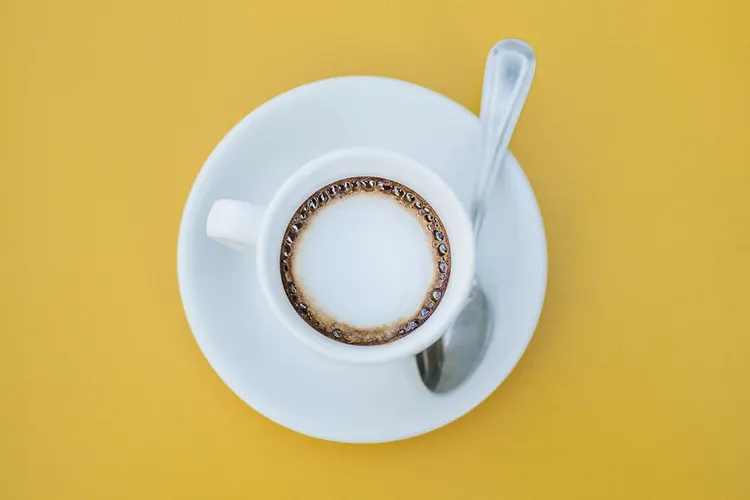
Espresso macchiato. 2 to 3 oz total. A shot of espresso "marked" — what macchiato means in Italian — with a teaspoon or two of steamed milk foam, per Wikipedia on caffè macchiato. The milk is a dot, not a drink. If you've only ever ordered a caramel macchiato at a chain, the Italian version will surprise you — tiny, espresso-forward, foam as garnish.
The macchiato trap. Starbucks's caramel macchiato is a latte macchiato, the inverse drink. A tall glass of steamed milk, "marked" with espresso poured through the top, then drizzled with caramel. The milk is the body, the espresso is the dot. Same Italian word, opposite recipes, per Tasting Table on macchiato vs latte macchiato. Knowing which version your cafe means is the entire game.
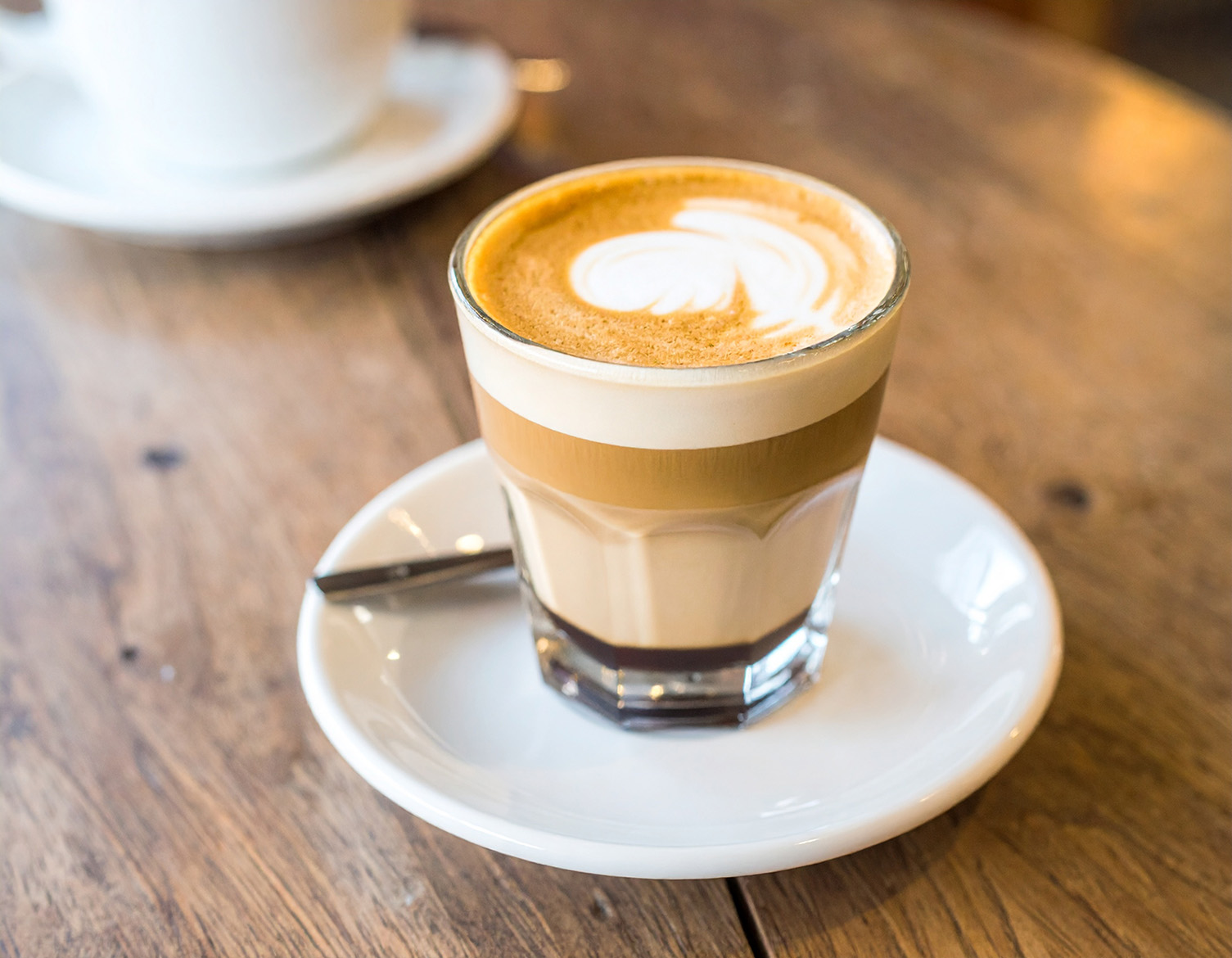
Cortado. Roughly 4 oz total. Espresso "cut" — what cortado means in Spanish — with steamed milk at 1:1, minimal foam, per Wikipedia on the cortado. The family's diplomat: espresso-forward enough to taste the bean, smoothed enough that the acidity sits down. Barista Magazine on the cortado describes the spec as "exactly 4 ounces, no mini, no large." Regional variations exist — Spain pulls it tighter (1:0.5), Costa Rica adds 1 oz of milk to a single shot — but the U.S. specialty-cafe standard is the 4 oz, 1:1.
Gibraltar. Same drink, different glass. A 4.5 oz cortado served in a Libbey Gibraltar glass — Blue Bottle Coffee popularized the name in San Francisco around 2005, per Wikipedia on the cortado. The glass came first, the drink name second.
Piccolo. Australian. A single shot of espresso in a roughly 4 oz glass topped with steamed microfoam, per The App Barista on cortado vs piccolo. Same volume as a cortado, milk textured instead of flat. If the latte's velvety surface is what you love and the latte's volume is too much, the piccolo is the move.
Order from this family when you want to taste the bean and take the edge off. Small cup, big espresso, a little dairy. The first sip lands as coffee with a sweet rounded edge, not milk with a coffee accent. I order cortados more often than any other milk drink for that balance — espresso I can still identify with the bean it came from, plus enough warm milk to round the crema.
Family 3: Microfoam milk drinks
The textured-milk family. Same technique — steam milk into glossy, paint-like microfoam — different volumes. Two drinks, one Starbucks asterisk.
Microfoam, defined. Milk steamed into tiny, uniform bubbles. Glossy, paint-like, roughly a 5 mm layer. The opposite of the visible-bubble macrofoam cap on a cappuccino. Microfoam has a satin surface; macrofoam has a pillowy dome, per Wikipedia on microfoam. Same milk, same wand, different technique.
Flat white. Roughly 5 to 6 oz total. A double espresso (about 50 ml) plus 130 ml of steamed milk with a 5 mm microfoam layer. Australian cups are 200 ml; New Zealand cups are 175 ml, per Wikipedia on the flat white. The flat white is the family's espresso-forward end — less milk than a latte, no thick foam cap. The origin is contested in good faith: Alan Preston added a flat white to his Sydney cafe's permanent menu in 1985, the most-documented Australian claim, but Auckland and Wellington cafes have unsettled counterclaims from the same period. The debate isn't going to settle in my lifetime, and I've stopped picking a side.
The flat white trap. Starbucks introduced the flat white to U.S. stores on January 6, 2015, and made one quiet change — two ristretto shots instead of a double espresso, per Starbucks at Home on caffè latte vs flat white. The ristretto pair is more concentrated, which keeps the espresso flavor present against the milk in a way a normal double doesn't always manage. A U.S. Starbucks flat white and a Melbourne specialty-cafe flat white aren't quite the same drink. Microfoam quality starts with the grind, not the steam wand — the burr-grinder-vs-blade guide is the companion piece if you're building a home setup.
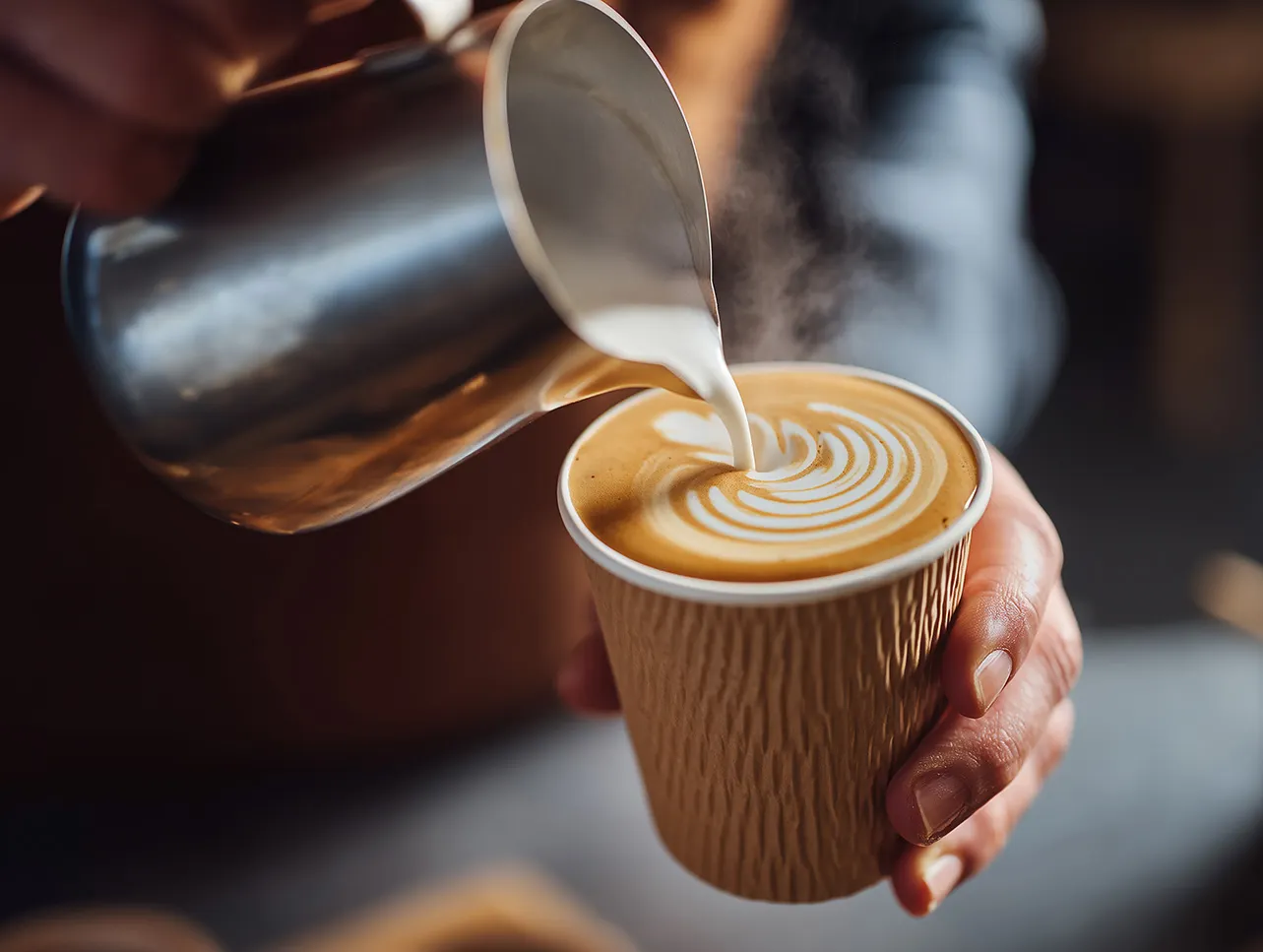
Latte. Roughly 8 to 16 oz total. Same microfoam technique, more steamed milk, with a thin foam cap (often thicker in American chain versions). Where most American cafe drinkers start. Order one at a specialty cafe and the cup feels small (the traditional 8 to 10 oz). Order one at a chain and it feels enormous (the American reinterpretation). Both are lattes. The milk-to-espresso ratio is the difference. Most espresso designed for milk drinks is a medium-roast blend — our medium-roast coffees lane is where the catalog's milk-drink workhorses live.
Family 4: Foam-cap milk drinks
The smallest family on the menu. One drink, but with the strictest convention.
The rule of thirds. A traditional Italian cappuccino is 25 ml of espresso, then equal parts steamed milk and foam, in a 150 to 180 ml cup, per Wikipedia on cappuccino. Pillowy macrofoam cap on top. Espresso underneath. Steamed milk in the middle. Three layers, equal parts. The foam isn't a garnish here. It's a third of the drink.
The 11 a.m. custom. Italians typically drink cappuccino exclusively at breakfast, before about 11 a.m. — milk-based drinks are considered too heavy later in the day, per Wikipedia on cappuccino. The flat white is the family's afternoon-friendly answer in most cities outside Italy.
Cappuccino versus flat white. Same size cup, opposite foam. Cappuccino: thick, pillowy macrofoam cap, which you taste separately before the milk-and-espresso hits, like the head of a Guinness. Flat white: thin, paint-like microfoam, integrated with the espresso from the first sip. Similar milk volumes. The texture is the entire story. A perfectly-frothed cappuccino is my favorite drink beyond the basics — the foam carries the espresso aroma like a wine glass carries Burgundy, and the smell is half of why I'm there. Most espresso in our catalog is a blend rather than a single origin, built specifically to hold up across these milk drinks; coffee blends is the lane to browse for the espresso-built-for-milk workhorses.
Where you land usually depends on…
Where you land on the menu usually depends on three things. How much you want to taste the bean (more bean = no-milk or espresso-forward family). How much you want the milk to soften the edges (cortado for a little, latte for a lot, cappuccino for a foam cap on top). And what time of day it is (cappuccino at breakfast, flat white at 3 p.m., per the Italian custom that traveled). Pick the family. The drink takes care of itself.
If you'd rather not spend the next year auditioning roasters for your espresso machine, your moka pot, and the cappuccinos you make on Sundays, our Coffee Plan does the curation for you. A few quick questions about your preferred roast, brew methods, and frequency, and fresh coffee from the right roaster for each method shows up on a cadence that matches your kitchen. I'm Bean Box's curator, so the bias is obvious. Once you can read the menu, the next question is what's in the bag — that's the part we can help with.
We want to help you make better coffee at home. Our recommendations are our own, and never sponsored. If you see something you love and buy it through our links, we may receive an affiliate commission (thanks for that!).
MG
Maryna Gray
Cup of Excellence Juror
From our coffee sommelier
Maryna's weekly picks
“I taste thousands of coffees a year — I’ll only send you the few worth brewing.”
Maryna Gray is Head Curator at Bean Box, a juror for the Cup of Excellence, and Chairwoman of the Alliance for Coffee Excellence. She is one of the most credentialed Specialty Coffee tasters in the US. Over the past decade she has professionally evaluated thousands of coffees from the world's top roasters and writes exclusively about the ones genuinely worth drinking. Find her specialty coffee recommendations on our blog, or build your own coffee subscription and let her curate your morning cup.
Show you relevant coffee and offers across the web.
About cookies on this site
Our site uses cookies, tracking tools, and similar technologies that enable us and third parties
to collect information about you online, including IP address, browser and device info, referring
URLs, online interactions, and other usage and activity data.
Some of these technologies are necessary for our site to function properly. Others may be used to
enable third-party features and functionality, such as social media and chat, analyze traffic and
usage, record user sessions, detect and remember user settings, personalize experiences, and
measure and target content and ads, here and on third-party sites.
Click "Accept All Cookies" to use this site with all cookies enabled, or click "Limit Cookies" to enable
only necessary cookies. You can also click "Cookie Settings" below or in our site footer to review
and manage your cookie preferences at any time.
Unlock a Free Coffee ($19 Value)
when you sign up for email and texts
By entering your email and submitting this form, you consent to receive marketing emails from Bean Box, Inc., including promotions and offers. Your email will be shared with our email service provider to deliver these messages. See our Privacy Policy. Unsubscribe anytime via the link in any email.
Unlocked! Claim Your Free Coffee ($19 Value) via Text
Enter your number to sign up for our SMS list.
By submitting this form and signing up for texts, you consent to receive marketing text messages (e.g. promos, cart reminders) from Bean Box, Inc. at the number provided, including messages sent by autodialer. Consent is not a condition of purchase. Msg & data rates may apply. Msg frequency varies. Unsubscribe at any time by replying STOP or clicking the unsubscribe link (where available). Privacy Policy & Terms.
You're All Set!
Your free coffee is unlocked — claim it now, or find the link in your inbox. Happy brewing!
A FREE BAG FOR YOUR THIRD DELIVERY
START A PLAN, GET A BAG ON US
Leave your email for the link: start a 12 oz coffee plan and the bag in your third delivery is free (a $19 value). You'll also hear which roasters Maryna is excited about each month.
By entering your email and submitting this form, you consent to receive marketing emails from Bean Box, Inc., including promotions and offers. Your email will be shared with our email service provider to deliver these messages. See our Privacy Policy. Unsubscribe anytime via the link in any email.
WANT IT BY TEXT TOO?
Add your mobile number and the link comes to your phone as well.
By submitting this form and signing up for texts, you consent to receive marketing text messages (e.g. promos, cart reminders) from Bean Box, Inc. at the number provided, including messages sent by autodialer. Consent is not a condition of purchase. Msg & data rates may apply. Msg frequency varies. Unsubscribe at any time by replying STOP or clicking the unsubscribe link (where available). Privacy Policy & Terms.
CHECK YOUR INBOX
Your link is on its way. Or start your plan now; the bag in your third delivery is free.
 Maryna Gray
• July 02, 2026 — last updated July 02, 2026
Maryna Gray
• July 02, 2026 — last updated July 02, 2026