Café-Style Coffee Drinks You Can Make at Home (No Bottled Syrup Required)
 Maryna Gray
• September 24, 2026 — last updated September 22, 2026
Maryna Gray
• September 24, 2026 — last updated September 22, 2026
We've all done the math at the café counter. Six dollars for a drink we could basically build in our own kitchen, standing there while somebody half our age froths the milk we already have in the fridge. And most of us walk away thinking the same thing: I could make this. The catch is that "café-style at home" usually arrives with a shopping list a mile long, a chrome machine the size of a microwave, and a row of bottled syrups gathering dust by the toaster.
You don't need any of that. You need real beans, one little jar of syrup you stir up in five minutes, and a couple of moves you'll have memorized by the weekend. The reward is the same velvety, chocolate-edged latte or a cold brew smooth enough to drink black — built from fresh coffee and pantry sugar, not a bottle of flavoring. (And while we're at it: a home café drink runs around a dollar; a large café latte runs closer to $5.75, per one home-versus-café cost breakdown. A daily habit adds up to roughly $1,755 a year.)
Here's the whole café menu, then: which drinks are genuinely easy at home, where the flavor really comes from, and where to go deeper on each one. Grab your bag and clear a little counter space.

Here's the deal
We all love a café drink, but you can get the same rich, milky, chocolaty cup at home with fresh beans and a five-minute pantry syrup, and I'll walk you through every drink on the list.
- Start from fresh, real beans. A medium or medium-dark roast pulls bold and stands up to milk and sweeteners. These recipes assume you've got good coffees for espresso on hand, ground a little finer than your drip habit.
- Skip the bottled syrup. A 1:1 brown-sugar-and-water simple syrup with a splash of vanilla covers most flavored drinks, tastes like caramel instead of "flavoring," and costs pennies a jar.
- No machine? No problem. Strong moka-pot or AeroPress coffee plus a jar-shaken milk foam unlocks most of the menu. The fancy equipment is optional; the fresh beans are not.
What you'll need (and what you can skip)
Here's the whole kit, and it's shorter than you'd guess.
The beans. Fresh, chocolaty, on the darker side of medium. The same bag works across every method in this post; you just change the grind. Of the 315 live coffees in our catalog, 74 are dark-roasted, which is exactly the corner you want to shop for milk drinks. Finer grind for moka or AeroPress, coarser for cold brew. One bag, the whole menu.
The espresso stand-in. A real machine is lovely, but a stovetop moka pot, an AeroPress, or even very strong drip will get you 90% of the way there. If you're starting from scratch, our how to make espresso at home and how to use a moka pot guides walk you through both.
The frother substitute. A sealable jar. That's it. Heat your milk, screw the lid on, shake like you mean it, and you've got foam. Whole milk froths thickest; oat milk is my dairy-free pick because it holds its bubbles. (More on the jar trick below.)
A small saucepan. For the syrup. And honestly, that's the whole list.
The 5-minute pantry syrup
This is the part competitors skip, and it's the part that makes "no bottled syrup" an actual promise instead of a slogan. A homemade syrup beats the bottle three ways: you control the sugar, it tastes like toffee instead of artificial vanilla, and a jar costs roughly what a single pump at the café marks up to.

Here's the brown-sugar version I keep in the fridge, start to finish:
- Combine the sugar and water. Equal parts dark brown sugar and water in a small saucepan. Half a cup of each makes plenty for a week of drinks.
- Heat until dissolved. Medium-low, stirring, until the sugar melts fully into the water, about three to four minutes. Don't let it boil hard; you want it dissolved, not caramelized.
- Stir in the vanilla off the heat. Pull the pan off the burner, then add a teaspoon of vanilla extract. Off-heat matters: vanilla cooks off fast if you add it while the pan's still hot.
- Cool and bottle. Let it cool, pour into a clean jar, refrigerate. A 1:1 syrup keeps about a month; if you double the sugar to 2:1, it'll hold up to six. The dark brown sugar is doing the heavy lifting here: the molasses in it is what gives you that caramel depth, per Sugar and Soul's brown sugar syrup guide.
Want a plain vanilla syrup instead? Swap white sugar for the brown and follow the same steps. For a chocolate sauce to build mochas, whisk a little cocoa powder and sugar into hot water with a pinch of salt. But I'll point you to the full version in a minute, because the mocha deserves its own walkthrough.
The drinks: hot milk classics
These are the ones people picture when they say "café drink." Each one is simpler than the menu board makes it look, and if the names blur together, the whole espresso drink menu gets translated in its own piece.

From our coffee sommelier
Maryna's weekly picks
“I taste thousands of coffees a year — I’ll only send you the few worth brewing.”
Something went wrong — please try again.
Free · Weekly · Unsubscribe anytime
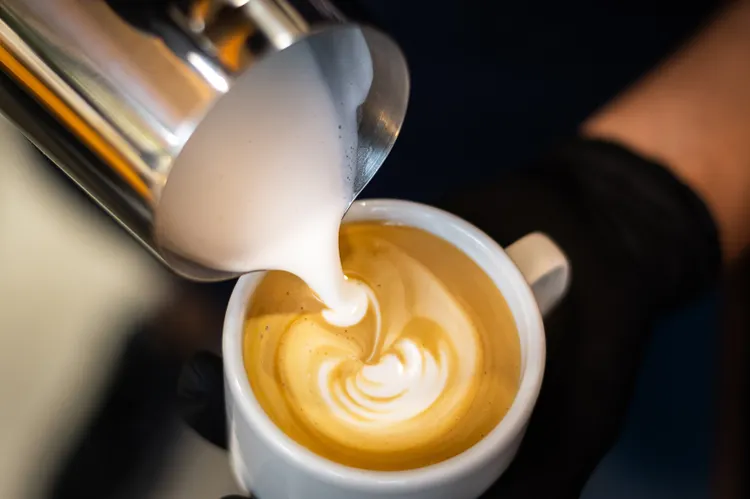
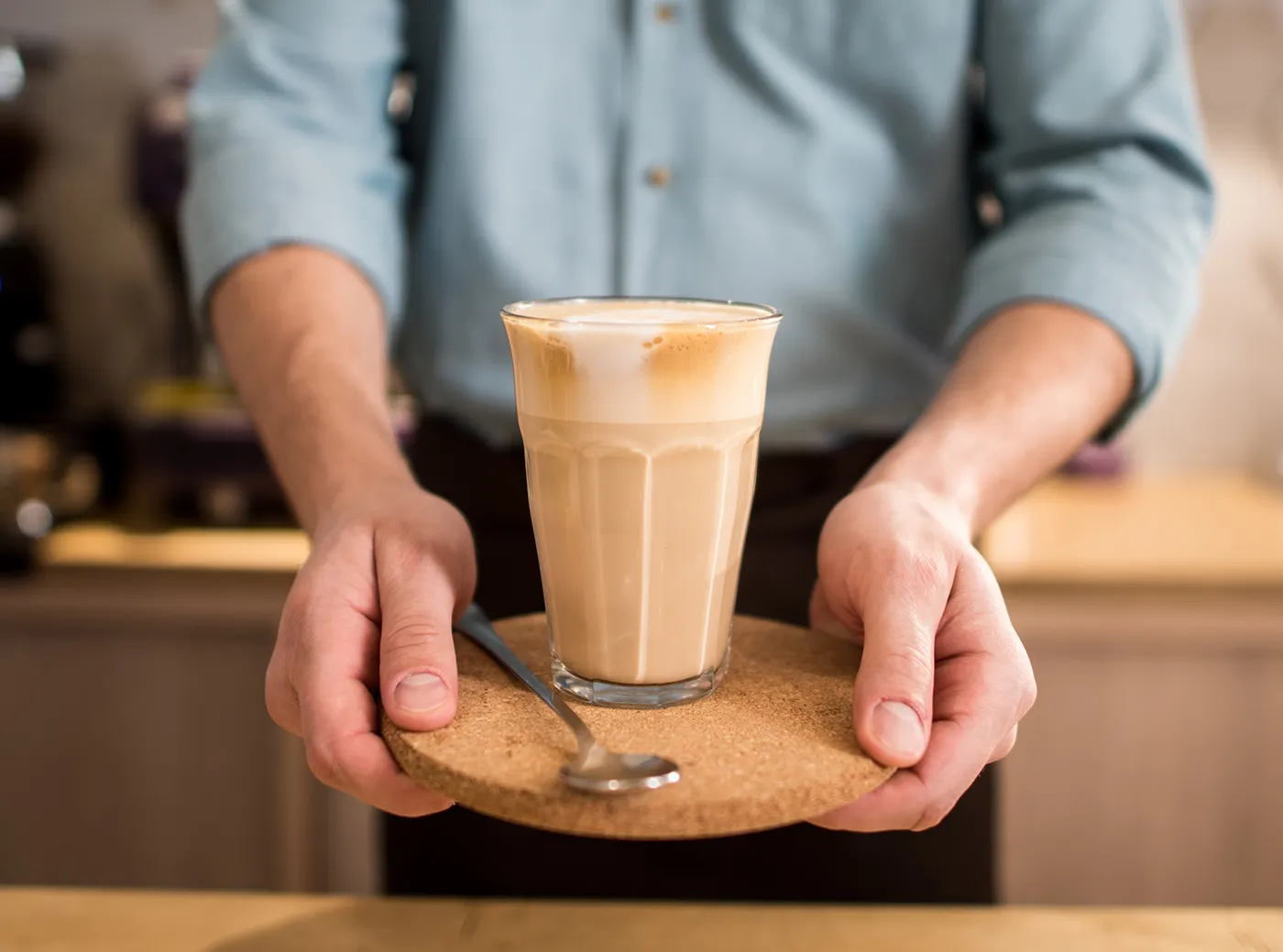
Latte. One part espresso (or strong coffee) to about two or three parts steamed milk, with a thin layer of foam on top. The milk should taste sweet and silky, never scalded. That's the whole trick. Full pour, ratios and all, in how to make a latte at home.
Cappuccino. Roughly equal parts espresso, steamed milk, and foam, so it's drier and airier than a latte, with a real cap of foam you could float a spoonful of cocoa on. (The name comes from the brown robes of Capuchin monks, which feels about right once you see the color.) The step-by-step lives in how to make a cappuccino.
Macchiato. The minimalist of the bunch: a shot of espresso just "marked" with a dab of milk foam. Bold, small, and over in three sips. Here's the three-step macchiato recipe if you want to nail the dab.
The drinks: chocolate and sweet
Now we're in dessert territory, and this is where good beans do something a bottle can't.

Mocha. Melt about two tablespoons of real chocolate into a hot shot of espresso, then top with around six ounces of frothed milk from your jar. Real chocolate, not bottled syrup — that's the entire point, and it's the difference between a mocha that tastes like a brownie and one that tastes like a vending machine. Most recipes won't tell you this: you barely need to add chocolate flavor at all, because the right bean already brings it. Of our 315 live coffees, 226 carry chocolate, cocoa, nutty, caramel, or toffee notes. The cocoa backbone is baked in. Go deep with the full how to make a mocha at home, including the chocolate sauce I teased above.
And those "fancy" flavored drinks, a brown-sugar latte or a vanilla latte? They're just a milk classic plus a pump of the pantry syrup you stirred up earlier. You already know how to make them. YUM.
The drinks: easy and iced
If you want café-style with the least possible fuss, start here.
Americano. The easiest drink on the whole list. One or two shots of espresso (or a strong moka brew) plus four to six ounces of hot water. No milk, no syrup, no foam. Legend has it American GIs invented it in Italy during World War II, watering down espresso to something closer to the drip they missed back home. The how to make an americano post has the hot and iced ratios.
Cold brew. This is a weekend-batch situation, not a per-cup one. Coarse grind, a 1:11 to 1:12 coffee-to-water ratio, steep 12 to 24 hours, then strain. About 12 ounces of grounds to a gallon of water yields roughly 16 servings, so one batch pours all week. It comes out smoother and less acidic than hot coffee, which is why I reach for it black on a hot morning, no milk needed. The full method is in Pull & Pour's cold brew method. And if you're wondering how much of a kick a tall cold brew actually packs, there's a real, drink-by-drink caffeine number for every cup.
What usually goes wrong (and the quick fix)
Four things trip people up the first week. None of them are your fault, and all of them have a one-move fix.
Flat foam, no bubbles. Your milk wasn't hot enough before you shook it, or it's skim. Cold milk and low-fat milk both refuse to hold air. Heat it first, and use whole milk or barista oat.
Weak, watery drink. Your espresso stand-in wasn't strong enough. Regular drip drowns under milk. Brew a concentrated moka or AeroPress shot instead, more grounds and less water than you'd use for a mug of black coffee.
Bitter or harsh. Almost always stale or over-roasted beans, not your technique. Freshness does more work than any gadget on your counter. If a drink tastes scorched no matter what you do, the bag is the suspect.
Syrup crystallized or too thin. A heat-and-ratio issue. Re-warm it gently to dissolve the crystals, and next batch, resist the urge to hard-boil it.
What to brew with all this
Here's the takeaway I'd want a friend to leave with: a café morning at home isn't about gear. It's fresh beans, a five-minute syrup, and one or two simple moves. The chrome machine is a luxury; the good bag is the whole game.
If you're picking one all-rounder for this entire menu, reach for a medium-to-medium-dark roast with chocolaty, caramel notes. That single bag pours hot, iced, milky, or black, and it stands up to milk and sweetener without disappearing. The simplest way to always have fresh, café-worthy beans waiting on the counter is to let a rotating pick come to you, which is what our Coffee Plan is built for. You set the roast and roominess, we ship the freshness, and your kitchen stays stocked.
So pick the drink you were eyeing at the counter this morning, and make that one first. Heat the milk, shake the jar, and trust your beans. You've got this.
We want to help you make better coffee at home. Our recommendations are our own, and never sponsored. If you see something you love and buy it through our links, we may receive an affiliate commission (thanks for that!).
From our coffee sommelier
Maryna's weekly picks
“I taste thousands of coffees a year — I’ll only send you the few worth brewing.”
Something went wrong — please try again.
Free · Weekly · Unsubscribe anytime