Espresso Martini, Affogato & Tiramisu: 3 Coffee Recipes Where the Bean Actually Matters
 Maryna Gray
• September 29, 2026 — last updated October 01, 2026
Maryna Gray
• September 29, 2026 — last updated October 01, 2026
We've all had the sad version. The espresso martini that tastes like cold coffee and regret. The affogato that turns into bitter ice soup before you've found a spoon. The tiramisu that's basically wet cake under a sad dusting of cocoa. Done right, though, these three are the most rewarding things you can make with coffee: a silky, foam-capped cocktail, a hot-and-cold rush of melting gelato and bright espresso, and a "pick me up" dessert that genuinely picks you up.
Here's the thing almost every recipe skips. In all three, the vodka, the vanilla gelato, and the ladyfingers are nearly flavorless on their own. The coffee is what you actually taste. So the single biggest upgrade isn't a fancier shaker or a better gelato. It's the bean. And if you've ever wondered why espresso martinis are suddenly on every menu and every feed, you're in good company: one search-trend tracker pegs them at roughly 1.4 million monthly searches, up about 34% year over year (directional, but the line points one way). I make all three of these at home, and the trick is the same every time. Start with the right coffee. Let me hand you the recipes and the exact roast for each.
Here's the deal
We all love these three coffee classics, but the secret isn't the vodka or the gelato. It's the bean, and I'll give you the recipe and the right roast for each. Quick version before we get into it:
- Espresso martini: 2 oz vodka, 1 oz cooled espresso, 1/2 oz coffee liqueur, 1/2 oz simple syrup. Shake hard for 10 to 15 seconds to build the foam. Reach for a fresh medium roast, not a dark one.
- Affogato: one scoop of vanilla gelato, one shot (40ml or less) of hot espresso, poured over tableside. The espresso has nowhere to hide here, so use your best single-origin.
- Tiramisu: quick-dipped (never soaked) ladyfingers, mascarpone cream, a dusting of cocoa, an 8-hour chill. A chocolaty medium roast carries the whole thing.
One more reason to trust the medium-roast call: of our 315 live coffees right now, 161 are medium roast, about 51% of the catalog. That's not an accident. It's the exact range the cocktail pros point you toward, and it's where I spend most of my own brewing. Browse our medium-roast coffees if you want to see the lane I mean.
Why the bean does the work
Here's the case, because it carries the rest of the post.
Vodka is built to taste like almost nothing. Vanilla gelato and plain ladyfingers are blank canvases by design. So in all three of these recipes, the coffee is doing 90% or more of the flavor lifting. Tom Baker of Mr Black puts it plainly in Tasting Table's piece on why the coffee matters: "It's called an espresso martini. If you're making it with vodka, all the flavor is coming from coffee." Same logic runs straight through the affogato and the tiramisu.
Which brings me to the one call people get wrong: roast level. The default move is to grab the darkest, most "intense" bag on the shelf, on the theory that a cocktail or a dessert needs a big, bruising coffee. I'd steer you the other way. A very dark roast goes flat and one-note in these recipes, all char and bitterness, and it flattens everything you layered around it. A fresh medium or medium-light keeps its sweetness, its clarity, and its little fruit-and-cocoa lift, the exact qualities you want peeking through foam or melting gelato. That's the lane I curate to, and it's the lane I drink.

And freshness. Beans roasted within the last two to four weeks, ground right before you brew. That's not a luxury standard, it's the baseline these recipes need, and it's the same standard we curate to at Bean Box.
Recipe 1: the espresso martini
A quick origin note, because it's a good one. The espresso martini was born in London in 1983, when bartender Dick Bradsell mixed up what he called the Vodka Espresso for a customer who wanted something to wake them up and pick them up. It picked up the "martini" name during the 1990s martini craze and never looked back. If you want the full story, A Beautiful Mess tells it well alongside the recipe.

From our coffee sommelier
Maryna's weekly picks
“I taste thousands of coffees a year — I’ll only send you the few worth brewing.”
Something went wrong — please try again.
Free · Weekly · Unsubscribe anytime
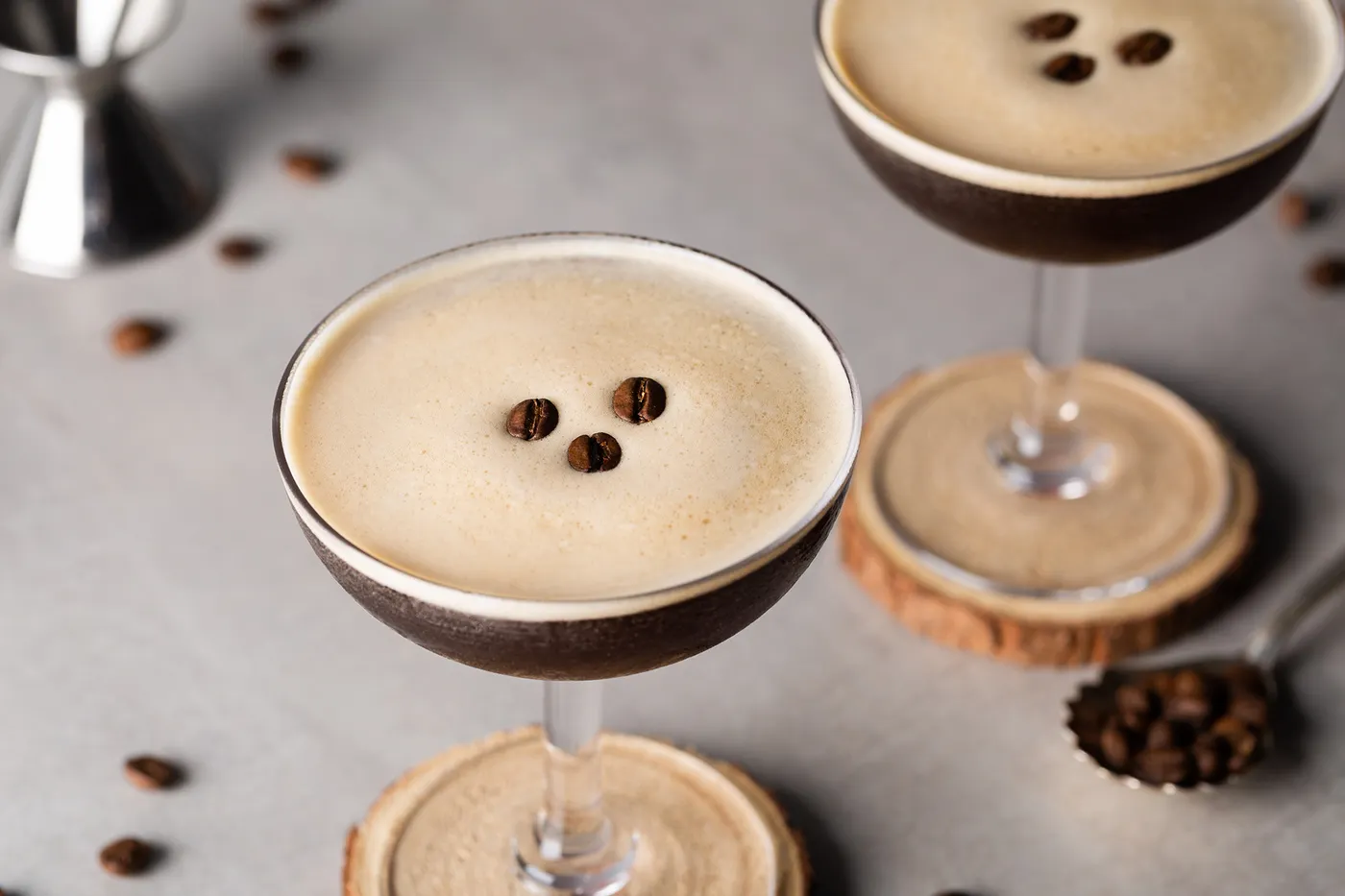
What you'll need: 2 oz vodka, 1 oz fresh espresso (cooled), 1/2 oz coffee liqueur (Kahlua is the classic), 1/2 oz simple syrup, ice, a chilled coupe glass, and three coffee beans to garnish.
How to make it:
- Chill the coupe in the freezer for 5 to 6 minutes. A cold glass keeps the foam intact longer.
- Pull your espresso and let it cool to room temperature. This is the step everyone rushes. Hot espresso melts the ice and kills the foam before it forms.
- Add the vodka, cooled espresso, coffee liqueur, and simple syrup to a shaker over ice.
- Shake hard for 10 to 15 seconds. Really commit. The foam is functional, not just pretty, and this vigorous shake is the only thing that creates it.
- Double-strain into the chilled coupe.
- Float three coffee beans in the center of the foam.
The bean note. Since the vodka contributes essentially nothing, the espresso IS the drink. A fresh medium roast gives you a cap of foam with actual flavor under it: caramel, a little cocoa, a clean finish. No espresso machine? Cold-brew concentrate stands in fine, though you'll get less foam, so plan for a flatter, mellower glass. Plenty of our roasters flag their beans as espresso-suitable, so you've got options. If you want to go deeper on choosing the right shot, here's our guide to the best espresso beans.
Trouble in the glass? No foam almost always means the espresso went in warm, or you didn't shake long or hard enough. Fix one of those and you'll get your cap. Start with one of our coffees for espresso and you're halfway there.

Recipe 2: the affogato
The affogato is the five-minute, two-ingredient dessert that looks like you fussed for an hour. "Affogato" means "drowned" in Italian, and that's exactly what's happening: a scoop of gelato drowned in a shot of hot espresso. It's the simplest of the three. It's also the most revealing, because there is nowhere for a bad shot to hide.
What you'll need: one generous scoop of quality vanilla gelato (vanilla bean ice cream works too), one fresh single shot of hot espresso (40ml or less), a chilled glass or small bowl, and a spoon.
How to make it:
- Scoop the gelato into a chilled glass. Cold glass, slower melt.
- Pull the espresso fresh, right before you serve.
- Pour the hot shot over the gelato tableside, so whoever you're serving gets to watch it "drown."
- Serve immediately, while the contrast of hot and cold is at its best.
A tip I love from Inside the Rustic Kitchen's affogato recipe: eat the gelato first, then drink the coffee that's pooled at the bottom. Two desserts in one glass. Want to dress it up? A splash of Frangelico, amaretto, or grappa is lovely, and chopped hazelnuts or grated dark chocolate on top never hurt. One rule: skip fruit-flavored ice cream bases. They fight the coffee instead of carrying it.
The bean note. This is where bean quality is nakedly exposed. A single-origin medium with some clarity, think soft florals or a bright berry note, will sing right through the melting gelato and turn two ingredients into something you remember. A stale or scorched shot does the opposite, fast. We've got 96 single-origin coffees live right now, so there's plenty to choose from in our single-origin coffees. And since freshness shows most starkly in a two-ingredient drink, it's worth understanding why fresh-roasted coffee tastes different.

Recipe 3: the tiramisu
"Tirami su" means "pick me up," a wink at the lift you get from espresso and cocoa. Most accounts trace the dessert to Treviso, in Veneto, around 1969 at a restaurant called Le Beccherie, though the origin is genuinely disputed, with a competing claim from the Friuli-Venezia Giulia region. Either way, you're about to make the good version.
What you'll need: ladyfingers, mascarpone, eggs (a cooked-egg, double-boiler method works if raw eggs give you pause), sugar, strong espresso (cooled), cocoa powder, and an optional splash of liqueur (Kahlua, dark rum, or amaretto, or leave it out).
How to make it:
- Brew your espresso and let it cool. Warm coffee will slacken the cream.
- Whip the mascarpone with the eggs and sugar into a smooth, pillowy cream.
- QUICK-dip each ladyfinger in the espresso. This is the single most important move in the whole recipe. A long soak gives you mush; a one-second dip gives you a cookie that's moist but still holds its shape.
- Layer the dipped ladyfingers and the cream, repeating until you run out.
- Dust the top with cocoa powder.
- Chill at least 8 hours, ideally overnight. It keeps about two days in the fridge and freezes for roughly a month, which makes it the perfect make-ahead.
The bean note. A chocolaty medium roast is your friend here; it carries the cocoa and the cream without turning ashy. Espresso is traditional, but a strong brewed coffee works in a pinch. Fun proof that the right profile exists: one of our live coffees, Coava Coffee Roasters' Pacific Wonderland, literally lists date, tiramisu, and candied pecans as its tasting notes. A coffee that already tastes like the dessert. You can find that whole register in our coffees with chocolaty notes.

When something goes wrong
A quick field guide, because these three fail in predictable ways:
- Espresso martini, flat or no foam: the espresso wasn't cooled, or you under-shook it. Cool the shot, shake harder. Too sweet? Cut the simple syrup back.
- Affogato, watery: the gelato was too soft, or the shot was too hot or too big. Keep it to one shot of 40ml or less, and pre-chill the glass.
- Tiramisu, soggy: you over-dipped the ladyfingers. Runny cream means the mascarpone got over-whipped, or the whole thing didn't chill long enough.
Notice the pattern. Nine times out of ten, when one of these goes sideways, the real culprit is the coffee. Stale or scorched beans show up worst in exactly these recipes, where there's nothing else to blame.
What to brew with all three
Here's the takeaway, one more time, because it's the whole point: the bean is the drink. One well-chosen, fresh medium roast can pull off all three of these, from the foam-capped cocktail to the drowned gelato to the cocoa-dusted slice. Pick a good one and you've solved most of the recipe before you've measured anything.
If you'd rather not stand in front of a wall of bags guessing which one, we can do that part for you. Build a plan with our coffee subscription configurator and we'll send you a rotating set of fresh medium roasts dialed to exactly these profiles, the kind that taste great black AND make a serious espresso martini. Or just start browsing our best-selling coffees and grab whatever calls to you. Hungry for more? Our roundup of the best coffee desserts has a few other ways to put a good bean to work.
One last thing on the martini: it's a cocktail, so enjoy it responsibly. Then make the affogato and the tiramisu, and call it a night. Treat yourself.
We want to help you make better coffee at home. Our recommendations are our own, and never sponsored. If you see something you love and buy it through our links, we may receive an affiliate commission (thanks for that!).
From our coffee sommelier
Maryna's weekly picks
“I taste thousands of coffees a year — I’ll only send you the few worth brewing.”
Something went wrong — please try again.
Free · Weekly · Unsubscribe anytime