Buy a Burr Grinder, Not a Blade: The $100 Upgrade That Changes Every Cup
 Maryna Gray
• June 09, 2026 — last updated June 05, 2026
Maryna Gray
• June 09, 2026 — last updated June 05, 2026
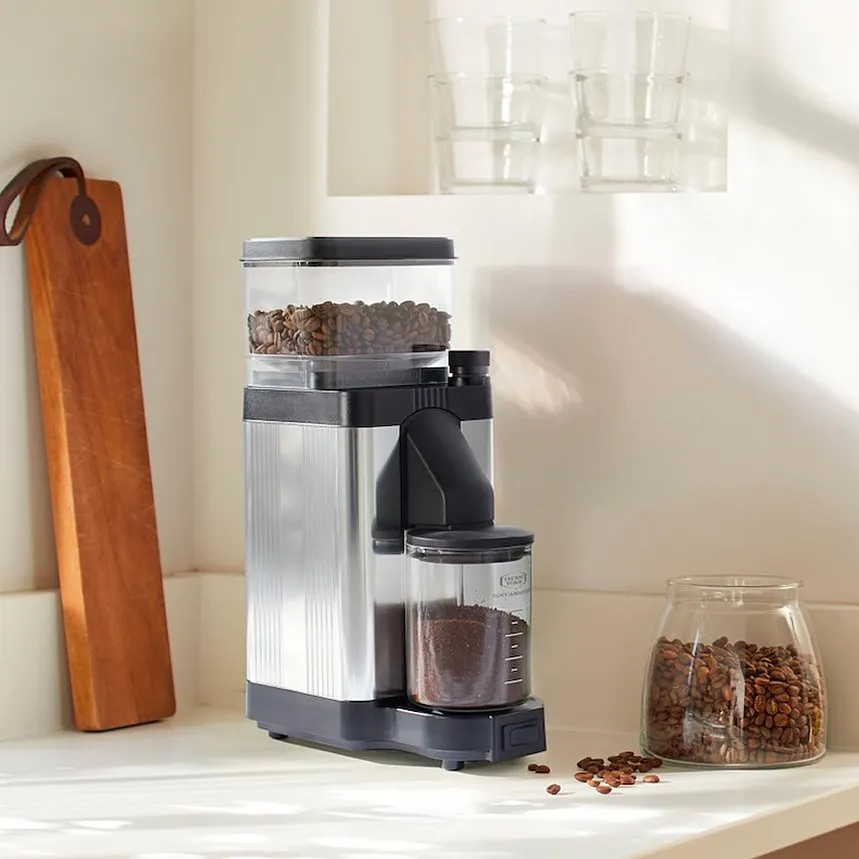
Most of us, when the home coffee starts tasting flat, go shopping for a better brewer. A nicer drip machine. A fancier pour-over setup. A pricier kettle. And we walk right past the one piece of gear that would actually fix the cup: the grinder. Not even an expensive grinder. Just the right kind.
Here's the whole post in one line. The single best upgrade you can make to home coffee is a burr grinder instead of a blade grinder, and it matters more than the brewer, no matter how you make your coffee. Drip, pour-over, French press, espresso — all of it. And the entry point isn't the $300 the espresso internet wants you to believe. It's about $100.
One credibility thing before we go: Bean Box doesn't sell grinders. We carry Moccamaster drip brewers and that's it on hardware. Which is the whole reason I can be honest here. There's no affiliate link I'm trying to land. Just the call.
The short answer
If you read nothing else, here it is.
- The one rule. Buy a burr grinder, not a blade grinder. This is the upgrade. Everything else is fine-tuning.
- Why it works. A burr grinder mills your coffee to a uniform size. A blade grinder chops it into a chaos of dust and boulders. Uniform grind is what lets water extract evenly, and even extraction is the difference between a clean cup and a muddy one.
- The price. About $100 starts you off for real. A Timemore C2 hand grinder runs around $60; an OXO Brew electric sits right around $100. Both beat any blade grinder at any price.
- The one exception. Espresso is the demanding case. It needs a finer, more uniform grind, so the floor is higher there. We'll get to it.
- What the cup tastes like. When the grind is right, you start tasting the chocolate, caramel, cherry, and brown sugar that a good medium-roast is actually carrying, instead of a flat, bitter wash.
The rest of this is the walk-through.
What a burr grinder actually does
Most guides tell you "burr good, blade bad" and move on. The reason takes two paragraphs, and once you have it, every buying decision after this gets easy.
A burr is the pair of metal plates or cones inside the grinder that mill the beans down to a set size, the way a pepper mill works. You pick a setting, and every particle comes out close to the same size. A blade grinder is a little propeller that chops. Run it longer and you don't get a finer grind, you get a wider mess: some powder, some gravel, all jumbled together. As Breville on burr vs blade lays it out, the burr mills to a consistent size while the blade just chops whatever it happens to hit.
Why uniformity is the whole game: water pulls flavor out of coffee at a speed set by particle size. Small particles give up their flavor fast; big ones give it up slowly. So when your grounds are a chaos of fines and boulders, the fines over-extract into bitterness while the boulders under-extract into sour, thin nothing, in the same cup. You taste both at once, and it reads as muddy and harsh. A uniform grind means every particle extracts at the same rate, and the cup comes out clean, sweet, and balanced. That's it. That's the magic.
This holds for every way you brew, not just one:
- Pour-over needs an even medium-fine grind so water flows through at a steady rate. Blade dust clogs and channels, and you get a sour, uneven cup.
- French press is where the difference is most obvious. It needs a coarse, even grind. Blade grinders throw off fine dust that slips right through the mesh filter, and you end up with a gritty, over-extracted, muddy pot. A burr grinder set coarse gives you a clean, full-bodied press.
- Drip is the most forgiving, but a burr grinder still pulls noticeably more sweetness and clarity out of the same beans.
- Espresso is the strict one, which is why it gets its own section below.
Quick gut-check before you spend anything: if your current grinder has a single button and a little spinning blade, that's the thing holding your coffee back. Not the beans, not the brewer. Grind size also shifts with every brew method, coarser for the press, finer for pour-over, which is its own rabbit hole worth going down once you've got real burrs to dial in.
The $100 starter tier: where almost everyone should begin
This is where most readers should land, and the good news is the answer is cheap and settled.
From our coffee sommelier
Maryna's weekly picks
“I taste thousands of coffees a year — I’ll only send you the few worth brewing.”
Something went wrong — please try again.
Free · Weekly · Unsubscribe anytime
You've got two honest paths at this price, and neither is a compromise.
The hand grinder: around $60. A Timemore C2 is the one I'd point a first-timer to. It's about $60, it has real 38mm steel burrs, and it grinds beautifully uniform for pour-over and French press. The trade-off is you crank it by hand, roughly 20 to 30 seconds for a single pour-over dose. For a one-or-two-cups-a-morning person, that's a pleasant little ritual, not a chore. It's quiet, it travels, and it punches so far above its price it's almost unfair.
The electric: around $100. If you'd rather push a button, the OXO Brew Conical Burr grinder sits right at $100 and is the consensus best electric under that line, per CoffeeGeek's budget grinder guide. Step up to about $140 and the Baratza Encore is the one that's been the go-to first electric burr for filter coffee for years. Reliable, easy to dial, consistent across drip, pour-over, and the press. Plenty of people buy an Encore and never need another grinder.
The trap to avoid: anything sold cheap with a spinning blade, no matter how the box is branded. A $20 "coffee grinder" from the grocery-store aisle is a blade grinder, and it will undo the work of whatever good beans you put in it. The whole point of this post is to skip that shelf entirely.
What the upgrade actually feels like: brew a pour-over with a fresh medium-roast on a blade grinder, then brew the same beans on a $60 Timemore the next morning. The blade cup tastes flat and a little harsh, like coffee-flavored water with a bitter edge. The burr cup smells like brown sugar before you sip it, lands sweet up front, and finishes clean with no muddy aftertaste. Same beans, same brewer, same you. The grinder is the only thing that changed. That's the whole argument in one side-by-side.
One more thing the grinder can't do on its own: the grind controls how the coffee tastes, but the bean controls what it can taste like. A perfectly uniform grind off beans that have sat open on the counter since last month still pours flat. If you'd like to spend your bean budget on something that actually shows what a real grinder can do, our coffee subscription configurator lets you pick the roast level, the cadence, and the bag size that matches how often you brew, so the bag never sits long enough to go stale.
If you're pulling espresso, spend more
Espresso is the one place the $100 answer doesn't hold, and it's worth knowing why before you shop.
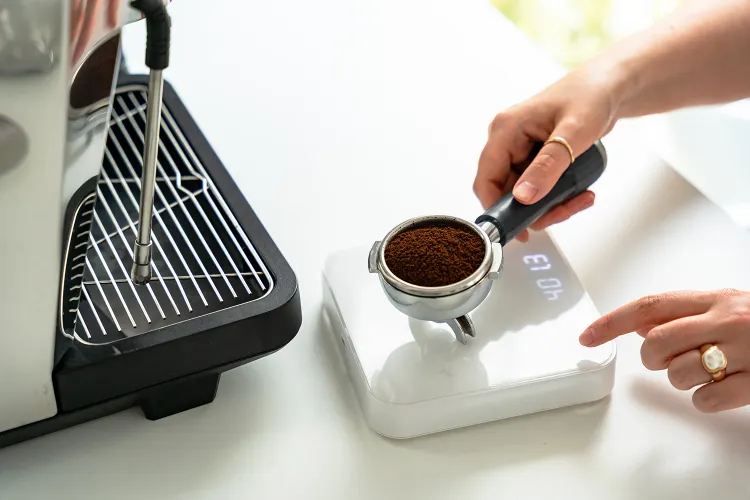
Espresso forces hot water through a tightly packed puck under pressure in 25 to 30 seconds. To make that work, the grind has to be both much finer than filter coffee and much more uniform — the dial-in window is tiny, and a few stray boulders or fines wreck the shot. Entry filter grinders can't get there. So the floor is genuinely higher.
The electric entry pick: the Baratza Encore ESP, around $200. It's the espresso-tuned sibling of the standard Encore, and Coffee Bros' espresso grinder guide treats it as the entry-tier consensus for espresso. It grinds fine enough to pull a real shot and pairs naturally with entry machines like the Breville Bambino. Figure on around $300 of grinder spend as the comfortable floor once you account for a setup that handles espresso reliably day to day.
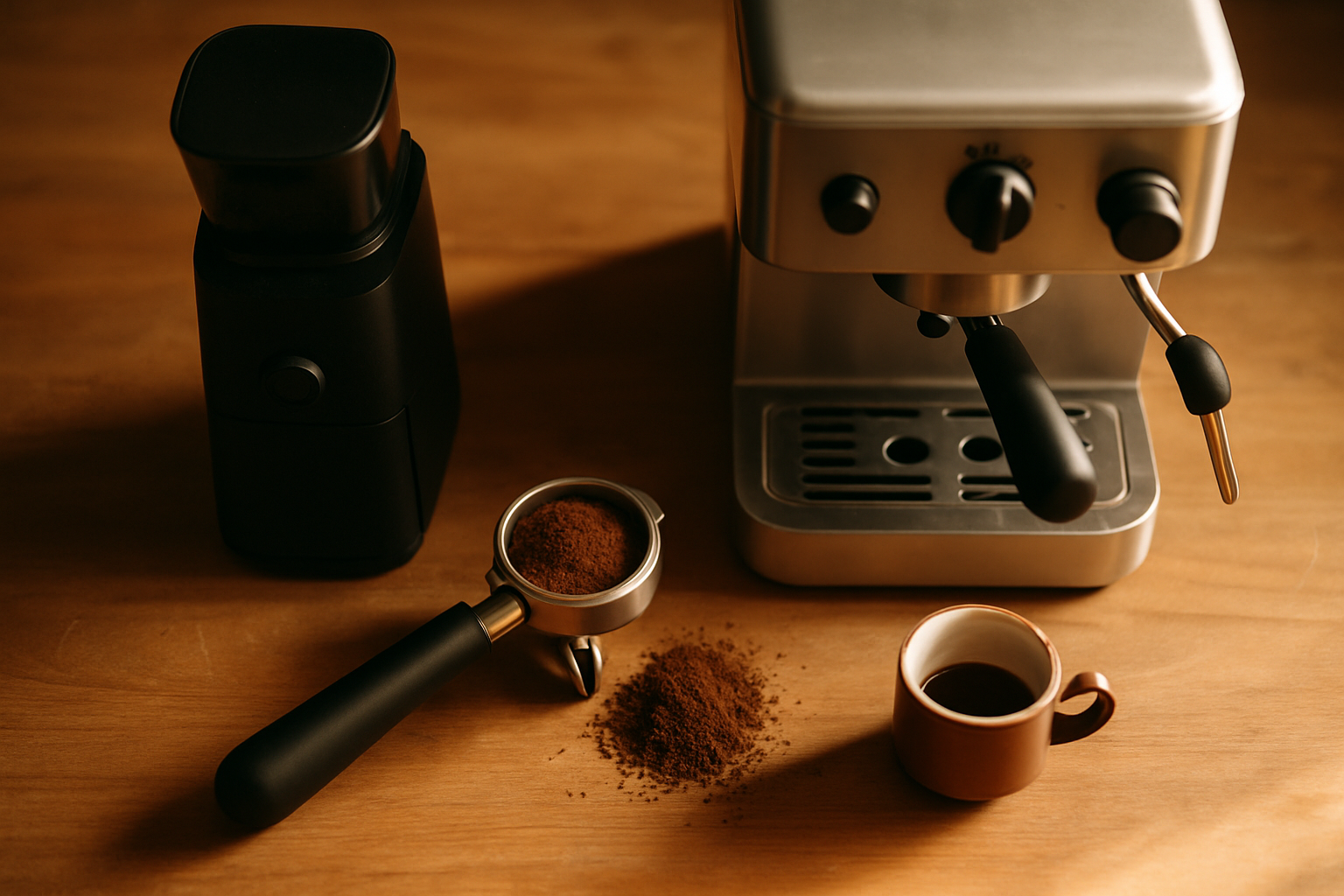
The hand-grinder route works here too, and costs less: a 1Zpresso J-Max grinds fine and uniform enough for espresso and outperforms a lot of electric grinders under $300. The trade-off is real cranking — closer to a minute for an 18-gram dose — which gets old if you pull four shots a day, but it's a genuine option for a one-shot morning.
The step-up, if you fall for espresso: the Eureka Mignon Specialita, around $650. Stepless adjustment lets you dial in between the clicks, and the bigger burrs hold a tighter, more consistent grind across different beans. Most home setups never need it. Where it earns its keep is when you're switching beans often or chasing light-roast single-origin espresso, the trickiest cup to dial.
The rule that ties the espresso tier together, from Clive Coffee on spending on the grinder, not just the machine: when you're buying an espresso setup, spend at least as much on the grinder as on the machine. A great grinder with a modest machine beats a flagship machine with a cheap grinder every time. The machine side is a whole separate conversation worth having before you buy, but the grinder is where the money works hardest.
What to brew on it
Once you've got real burrs, the next variable is the bag, and a good grinder finally lets the bean show you what it's got.
Across the Bean Box catalog, most of our 370 coffee blends sit at medium-roast (194 blends) or dark-roast (105 blends), with about 71 light-roast blends for a brighter cup. A burr grinder is what lets any of these taste like themselves: the medium-roast comes through as chocolate and brown sugar, the dark-roast as deep cocoa and toast, the light-roast as the fruit and florals it was roasted to show. On a blade grinder, all three blur toward the same muddy middle.
If you're picking a first bag to christen a new grinder, start with a medium-roast. It's forgiving on the grind, it's gorgeous across drip, pour-over, and French press, and it tastes like coffee you'd actually order. From there, a uniform grind is what makes single-origin coffees worth buying. Of our 593 live coffees, 223 are single-origin, and their whole appeal is the clean separation of flavors, which only survives if the extraction is even. That's the grinder's job.
Don't overthink it
To recap: buy a burr grinder, not a blade grinder. That's the upgrade, and it matters more than your brewer for every method. About $100 gets you there for filter coffee — a $60 Timemore hand grinder or a $100 OXO electric — and either one will outlast and outperform any blade grinder you could buy. Espresso is the one exception, where the floor climbs to around $300 because the grind has to be finer and tighter.
ONE more reminder, because it's the reason you can trust this one. I don't sell grinders. Bean Box doesn't sell grinders. So I have no skin in which one you pick. I'm telling you to buy burr over blade because that's what the cup proves every single time, on every brewer I've ever set next to a blade grinder.
The cup you're chasing tastes like brown sugar and cocoa, smells like caramel before it touches your lips, and finishes clean instead of muddy. Most of that doesn't come from a fancier brewer. It comes from grinding your coffee evenly. Get the grind right, and the rest takes care of itself.
We want to help you make better coffee at home. Our recommendations are our own, and never sponsored. If you see something you love and buy it through our links, we may receive an affiliate commission (thanks for that!).
From our coffee sommelier
Maryna's weekly picks
“I taste thousands of coffees a year — I’ll only send you the few worth brewing.”
Something went wrong — please try again.
Free · Weekly · Unsubscribe anytime