Why Your Coffee Costs More in 2026 (And What You're Actually Paying For)
 Maryna Gray
• September 15, 2026 — last updated September 22, 2026
Maryna Gray
• September 15, 2026 — last updated September 22, 2026
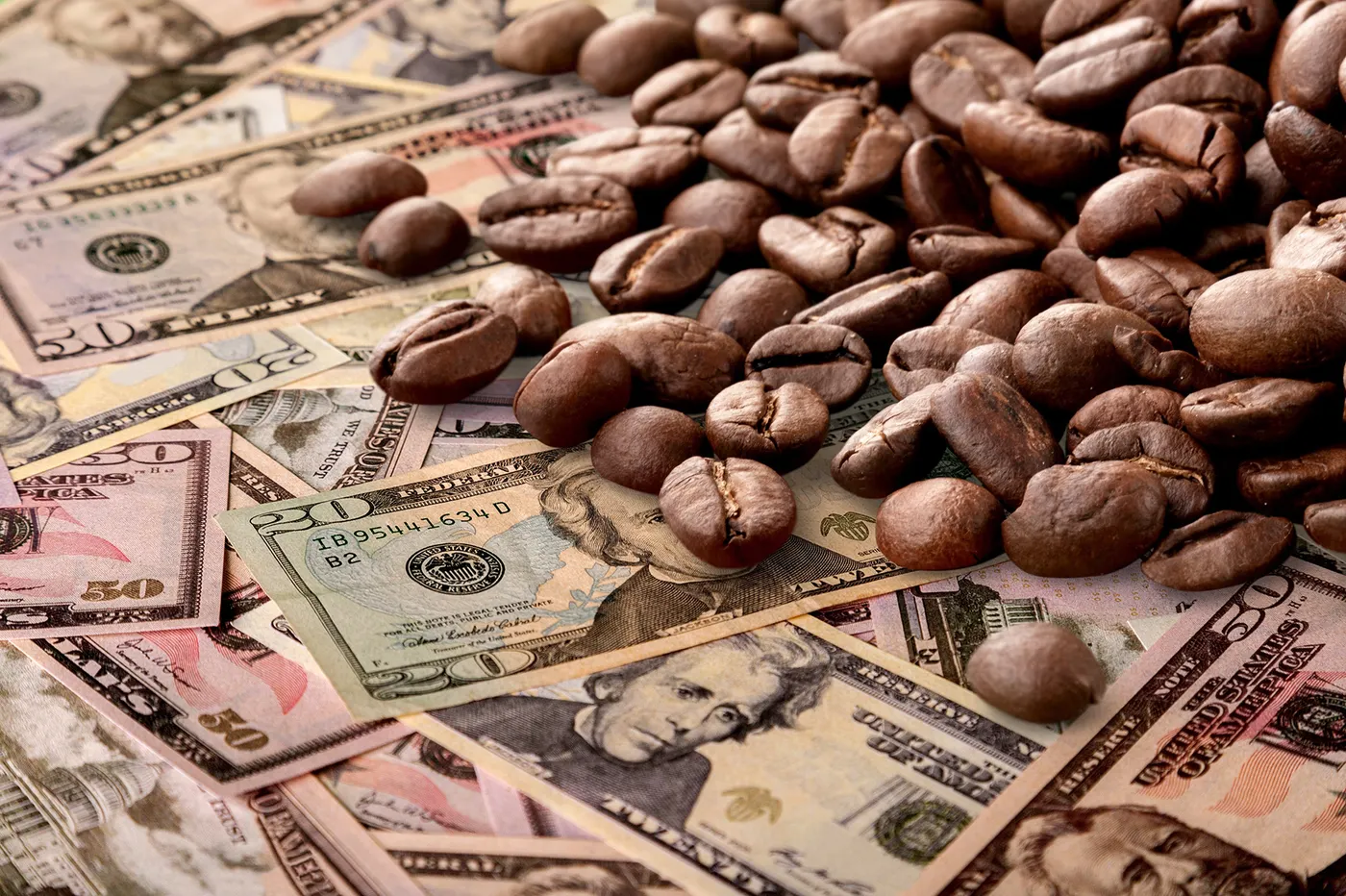
If you've winced at a coffee receipt and stared at a $22 bag wondering when that became normal, you're not imagining it. We've all felt the squeeze. By the end of this you'll know exactly where your coffee dollar goes, why your morning cup still tastes worth it, and how to find the bags that quietly punch above their price. Prices got genuinely strange over the last two years, so let me walk you through what actually happened. No spin, no doom.
Here's the scale, just so we're starting from the same place. Arabica - the bean in most of what you drink - hit an all-time high of about $4.40 per pound in February 2025, beating even the 1977 frost record, per Bellwether Coffee's analysis of the great price surge. That isn't a typical bump. That's a record.
One thing this post is not: a tally of what your daily habit costs you. That math - home brewing versus the café line - lives in its own piece on what your coffee habit actually costs. This one is about the supply side. Why the price rose in the first place.
The short answer
We all love a good cup, but the price spike isn't greed or a single villain. It's a stack of real costs hitting at once, and once you can see the stack, the bag in your cart makes a lot more sense. Let me lay it out.
- A genuine supply crunch, with bad harvests in Brazil and Vietnam, plus tariffs and speculation, pushed the commodity C-price to record highs.
- Most of what you pay isn't the bean. Supply-chain costs dominate, and the farmer keeps a surprisingly small slice.
- Specialty coffee is partly decoupled from the commodity swing, which is why a transparent $20 bag can be the honest value play.
Why "coffee" has a single price, and why that number isn't your receipt
You'll hear one number quoted whenever coffee makes the news: the C-price. It's the global benchmark for arabica futures, set on the commodity market, and it's the figure headlines mean when they say coffee got expensive. Robusta, the sturdier, more bitter bean used heavily in instant coffee and espresso blends, has its own benchmark, and it also touched a near-five-decade high during the surge.
Now the record itself. The C-price peaked around $4.40 per pound in February 2025, beating the 1977 frost record that, until then, nobody thought would fall. That frost is the right yardstick for scale. When it hit, prices roughly quintupled, US roaster output fell 35%, and consumption dropped 15%. So when I say the last two years were bigger than a blip, I mean they cleared a half-century high-water mark.
Here's the part that matters most for the bag in your hand, and the part the headlines skip. The C-price is not what you pay, and it's not what most specialty coffee trades at. It's a floor and a signal, not your receipt. Hold onto that, because it's the whole reason a careful $20 bag can shrug off some of the chaos while the commodity number whipsaws around.

The perfect storm that hit all at once
Three forces landed together. None of them is the villain on its own. Stacked, they explain the whole jump.

From our coffee sommelier
Maryna's weekly picks
“I taste thousands of coffees a year — I’ll only send you the few worth brewing.”
Something went wrong — please try again.
Free · Weekly · Unsubscribe anytime
Climate is the long, structural one. Erratic rainfall and heat have been chipping away at yields for years, and the last two harvests were brutal. Brazil, which grows about a third of the world's coffee, saw exports drop 11.3% by December 2024. Vietnam's robusta exports fell 39.5%. Indonesia came down 16.5% on too much rain. This is the force that doesn't reverse with one good season: research projects that the land suitable for growing coffee could shrink by up to half by 2050 (a projection, not a promise, but a sobering one). Heat doesn't negotiate.
Policy was the sharp shock on top. In April 2025 the US put a 50% tariff on Brazilian coffee, and Brazilian exports to the US dropped 46% almost overnight. Some roasters reported tariff fees north of $91,000 on a single shipment, as Perfect Daily Grind documented in its reporting on why roasters are explaining their price increases. Treat that as history, not a weather report: exemptions followed in late 2025, and the tariff picture keeps moving. The lesson isn't the exact rate. It's that a single policy decision can yank a third of the world's supply sideways in a month.
Speculation amplified all of it, and a lag baked it in. Commodity markets magnify swings the way a crowded room magnifies a rumor. And retail catches up slowly: there's typically a 6-to-12-month gap between what the raw market does and what lands on the shelf. That delay is why your bag can stay high even after the C-price slides off its peak. The shelf is reading last winter's news.
Want it in grocery-aisle terms? Ground coffee averaged $9.37 per pound in the US by January 2026, up about 33% year over year. That's the storm, made concrete in the one place everybody notices it.

Where your dollar actually goes, and what the premium buys
So you're holding a bag. Where does the money go? Mostly not to the bean, and definitely not all to the farm.
By one Specialty Coffee Association figure, around 65% of the price comes from supply-chain costs, with labor alone running 30 to 50% of what it takes to produce. Picture every hand and every mile between a cherry on a branch and the roasted bean in your grinder: pickers, mills, drying patios, exporters, importers, the roaster, the bag, the truck. Each link takes its cut.
Now the uncomfortable, honest fact - the one that makes the premium make sense. The farmer often keeps only about 10% of the retail price. Roughly $0.40 on a $4 filter coffee. Even back at export, as little as 60% of the FOB price reaches the farmer; the rest covers milling, processing, and getting the coffee out of the country, as Perfect Daily Grind laid out in its breakdown of what farmers actually earn. That gap is the real story behind the bag.
And here's the caveat that keeps me honest with you: the word "specialty" alone isn't a guarantee. Producer share isn't always higher in specialty than in commodity coffee. What moves the needle is transparency and direct relationships, not a label on the front. Green specialty coffee averaged about $4.39 per pound in 2024 and 2025, above the commodity floor, because specialty roasters negotiate directly with producers and pay over market. If you want the fuller definition, I've broken down what "specialty" really means.
Which brings me to the reframe I most want you to take with you. A $21.63 average 12 oz bag works out to about $1.80 an ounce of roasted, traceable coffee. Set that next to $9.37-per-pound commodity ground and it stops looking like a splurge and starts looking like value. Across the live Bean Box catalog, single-origin and blend bags run from $15.05 to $63.45 and average $21.63. Most cluster in the low $20s, not the $30-and-up zone people brace for. That low-$20s reality is exactly where direct sourcing and traceability live, and it's where I'd point a friend who wants to taste the difference - start with our single-origin coffees, where the farm and the lot are on the label.
You don't have to spend big to drink honestly, either. Right now 81 of our live bags are priced at $20 or under, averaging $18.61. Transparent specialty and an everyday budget aren't enemies. Browse our coffees under $20 and you'll see what I mean.

Prices may ease - here's the move that holds up either way
The spike was real and structural: climate, then policy, then a supply chain that takes its cut at every link. Not hype. And there's relief on the horizon. A record Brazilian harvest may push the 2026 market toward a roughly 10-million-bag surplus, and C-price futures point lower, per the Trading Economics coffee commodity tracker. But remember the lag: retail trails commodity by 6 to 12 months, so don't sit around waiting for a number on a futures screen to start drinking well.
The durable move was never timing the market anyway. It's buying transparent, fresh, fairly-sourced coffee from roasters you can actually trace, the kind that holds its worth whether the C-price climbs or slides. That's the bag that tastes the same when the headlines calm down.
If you'd like a curated path through all of this - fresh specialty coffee picked for you, from roasters who pay above the commodity floor - the Coffee Plan is the easy place to start. Tell us how you take it, and I'll handle the sourcing.
Frequently asked questions
Why did coffee get so expensive all of a sudden? A "perfect storm" - historically low 2024 and 2025 harvests in Brazil and Vietnam, a 50% US tariff on Brazilian coffee in early 2025, higher shipping and labor costs, and commodity-market speculation. Ground coffee averaged $9.37 per pound in the US by January 2026, up about 33% year over year.
What is the coffee C-price? The C-price is the global benchmark for arabica futures, set on the commodity market - it's the number news headlines quote. It peaked at an all-time high of about $4.40 per pound in February 2025, surpassing even the 1977 frost record.
How much of the coffee price goes to the farmer? Often only about 10% of the retail price - roughly $0.40 on a $4 filter coffee. Even at export, as little as 60% of the FOB price reaches the farmer; the rest covers milling, processing, and in-country transport.
Will coffee prices go back down in 2026? Possibly. A record Brazilian harvest may push the global market to a roughly 10-million-bag surplus, and C-price futures point lower. But retail prices lag commodity moves by 6 to 12 months, so your bag may stay elevated even as the raw price eases.
Why is specialty coffee more expensive than grocery-store coffee? Selective hand-harvesting, controlled fermentation and drying, cupping and quality control, and shorter, more transparent supply chains all raise costs. Specialty green coffee averaged about $4.39 per pound in 2024 and 2025, well above the commodity floor.
We want to help you make better coffee at home. Our recommendations are our own, and never sponsored. If you see something you love and buy it through our links, we may receive an affiliate commission (thanks for that!).
From our coffee sommelier
Maryna's weekly picks
“I taste thousands of coffees a year — I’ll only send you the few worth brewing.”
Something went wrong — please try again.
Free · Weekly · Unsubscribe anytime