Coffee Tasting Notes Are (Mostly) Made Up — Here's How to Actually Read Them
 Maryna Gray
• September 10, 2026 — last updated September 10, 2026
Maryna Gray
• September 10, 2026 — last updated September 10, 2026
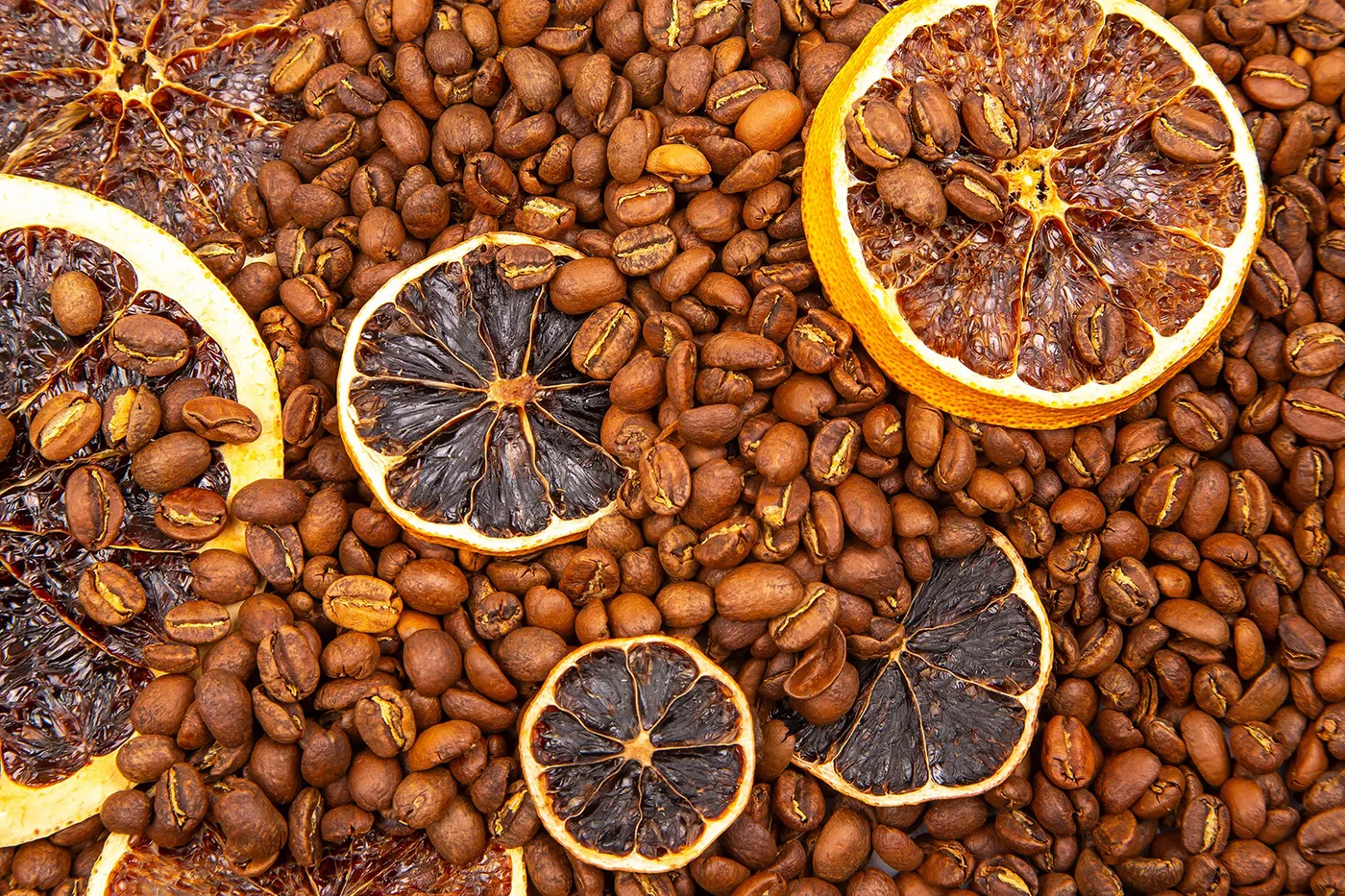
We've all stood in the aisle holding a bag that promises blueberry and jam, brought it home, brewed it with real hope, and tasted... coffee. Just coffee. And then quietly wondered whether somebody in marketing made the whole thing up. I've been on both sides of that suspicion, and on both sides of the cupping table, so I get it completely.
Here's the good news. Once you know what those words on the bag are actually pointing at, and what they're honestly not, the bag turns into a little map toward cups you'll genuinely love, the bright juicy ones or the deep chocolaty ones. So here's what's really going on. I'll show you what's real, what's personal, and how to read a bag like someone who's spent time with the people who write those notes.
I'll say the provocative part out loud, because pretending otherwise is what makes people feel deceived: tasting notes are partly made up. But "made up" is the wrong frame. The chemistry behind them is real and measurable. The perception is personal, which means your mileage genuinely varies. And the selection is a human process, which makes it honest but fallible. Three different things, and most arguments about whether notes are "real" are just people talking past those three layers. We'll take them one at a time, and I'll keep the actual mechanics of tasting light, with a pointer to the deeper guide at the end.
The honest version
We all feel a little lied to when we can't taste the blueberry. But the notes aren't fiction. They're a prediction made by real people detecting real compounds, and I'll show you how to read them so they actually help instead of making you feel like you flunked a test.
- The chemistry is real: coffee carries hundreds of aromatic compounds, and the strawberry note really is strawberry-type compounds. Nothing was added.
- The perception is personal: how your brain maps a compound to a memory depends on your own food history, so "I taste something else" is completely valid.
- The selection is human: notes are the words a group of tasters named most often at a cupping, a prediction of what you might find, not a guarantee.
What it actually means: real chemistry, chosen by committee
Let's bust the biggest myth first, because it's the one that quietly poisons trust. Tasting notes are not added flavors. A bag that reads strawberry and cocoa has no strawberry and no cocoa anywhere in it. That's a different product entirely. It's called flavored coffee, where syrups or oils get sprayed onto the beans after roasting. Tasting notes are the opposite of that. They develop on their own, out of where the coffee grew, the plant variety, how the cherry was processed, and how dark it was roasted. As Counter Culture's own explainer puts it, roasters don't flavor their coffee. The notes describe what's already there.

So why are the notes real, chemically? Because coffee is one of the most complicated things you will drink all day. Roasted coffee carries hundreds of aromatic compounds (many sources put it past 800, with some estimates climbing toward a thousand and beyond). And here's the part that makes the whole thing click: a lot of those compounds are the exact same molecules that show up in the foods we name them after. Vanillin is the compound behind vanilla. Citric and malic acids are what make citrus taste like citrus and apples taste like apples. When a taster writes "vanilla" or "green apple," they aren't reaching for poetry. They're detecting a molecule that genuinely lives in both places.
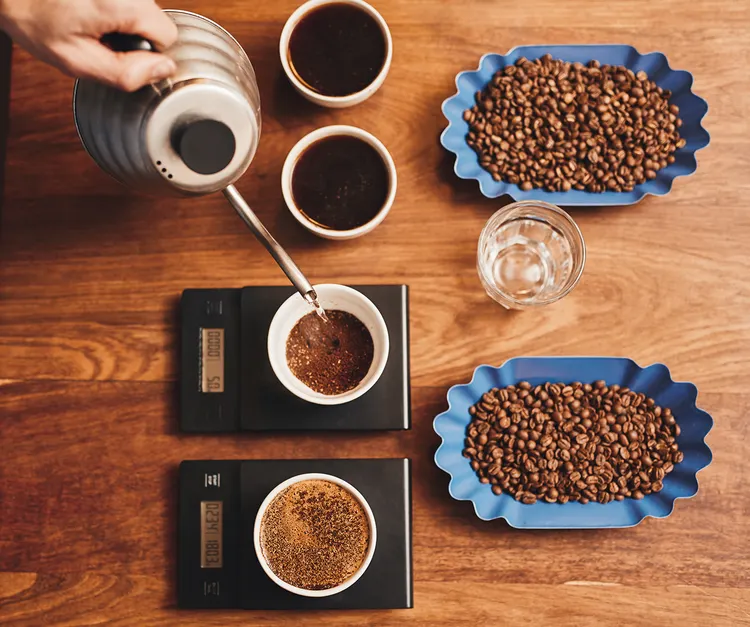
Now the committee half, which is where the "made up" feeling sneaks in. A coffee gets cupped, usually by a small group, all tasting the same brew side by side. Everyone writes down what they pick up. Then the words that come up most often across the group become the notes that land on the bag. It's a real, repeatable process, and it's also a consensus of human palates. That's exactly why I'm comfortable calling it fallible. It's a vote, not a lab readout.
And the words that win tend to be the familiar ones, not exotic poetry. In our catalog, about 334 of our 657 live coffees, a little over half, list a chocolate or cocoa note, the single most common descriptor by a wide margin. If you love that comforting, dessert-leaning lane, our chocolaty coffees are full of it. Notes skew toward the recognizable, because recognizable is what a room full of tasters reliably agrees on.
Why it matters: the same compound tastes different to everyone
Here's the layer that explains almost every "I don't taste it" moment. The same aromatic compound can read completely differently from one person to the next. There's a compound in coffee, 3-methylbutan-1-ol, that smells floral to one person, banana-like to another, and frankly a little like nail polish to a third. Same molecule, three honest answers. Penstock Coffee Roasters walks through exactly this. Your brain doesn't read a compound off a chart. It matches it to a memory, and everyone's memory library was stocked by a different childhood, a different pantry, a different set of meals. So when the bag says one thing and your tongue says another, neither of you is wrong.

It also helps to know who wrote the notes. Professional tasters are calibrated to a degree that borders on the absurd. The folks who certify as Q Graders reportedly grind through a punishing battery of sensory exams over several days, training their palates to catch things most of us sail right past. So the notes on your bag describe what a trained palate finds under quiet, controlled cupping conditions. If your morning cup, brewed in a hurry before work, surfaces something different, or nothing in particular, that isn't a failure on your part. That's the normal gap between a lab bench and a kitchen counter.

From our coffee sommelier
Maryna's weekly picks
“I taste thousands of coffees a year — I’ll only send you the few worth brewing.”
Something went wrong — please try again.
Free · Weekly · Unsubscribe anytime
And honestly, a lot of those words aren't even pointing at literal flavors. Plenty of descriptors are trade shorthand. When a roaster writes "bright" or "juicy," they're often telling you about acidity and mouthfeel as much as any specific fruit. It's a reference language roasters use among themselves to signal how a coffee grew and how it'll behave in the cup. Read that way, the notes stop being a flavor checklist you're supposed to score yourself against and become a forecast. Forecasts are useful even when the afternoon turns out a little different than predicted.
The last reason your cup differs is the most practical one: everything between the cupping bowl and your mug gets a vote. Your grinder, your water, your brew method, your temperature. Stack a few of those variables up and a delicate floral note can vanish before it ever reaches you. Missing a note rarely means you're broken. It usually means the variables are talking louder than the bean.
What about the flavor wheel?
If you've spent any time around specialty coffee, you've seen the wheel, that big colorful ring of words that looks like a paint-store sample card. That's the Coffee Taster's Flavor Wheel from the Specialty Coffee Association, first published in 1995 and redrawn in 2016 with World Coffee Research. The rings move from broad at the center (fruity, sweet, floral) out to the specific at the rim, where "fruity" splits into blackberry, raspberry, lemon. You start in the middle with a hunch and work outward only as far as you can honestly go.
It looks like vibes. It is the opposite of vibes. The wheel sits on top of the WCR Sensory Lexicon, and the work behind it is real science: professional panels logged well over a hundred hours evaluating coffees from more than a dozen countries to pin down each attribute. If you want to see how the sausage gets made, a deep dive into the WCR Sensory Lexicon lays out the panels, the samples, and the attribute list in detail.
One thing the wheel is NOT: a quality score. Reaching the rim doesn't make a coffee "better," and a coffee you can only describe as "chocolatey and smooth" isn't lesser. The wheel only hands everyone a shared set of words. You don't need to memorize it, either. Treat it like a menu you glance at when something's clearly there in the cup but you can't quite name it. Sometimes "stone fruit" is the word you were fishing for, and the wheel just hands it to you.
How to use this: reading a bag and tasting along
So you're standing there with a bag. Read the notes as a prediction, not a paragraph. A typical bag in our catalog lists about three notes. Across our 657 live coffees from 61 roasters, the average lands right around three, almost always two or three words. That short shorthand is doing one job: pointing you in a direction.

Let me read two for you. A bag that says peanut butter, dried cherry, hot cocoa is a fruit-plus-chocolate signpost: a little bright, mostly cozy, the kind of cup that's easy to love black. One that says caramel, butterscotch, cream is the classic approachable lane, sweet and round with no sharp edges. Neither is a test you pass or fail. They're each telling you which way the coffee leans.
Want to actually predict the notes before you buy? Two levers move them more than anything. Processing is the first: natural-processed coffees, dried with the fruit still on the bean, tend to push fruitier and sweeter, while washed coffees read cleaner and more origin-forward. Roast is the second: lighter roasts let fruit and floral notes through, and as the roast darkens, the cup pulls toward chocolate and nut. That's a big reason chocolate dominates our catalog: most of it lives in the medium-to-medium-dark middle. If the fruit-forward end is your happy place, our fruity coffees are where the natural-process and lighter-roast personalities cluster. Origin cues are real but soft. Most of our catalog is blended, 407 blends against 250 single-origins, so "Ethiopian means blueberry" is a lean, not a law. For the full story on how the cherry gets processed, and for how roast level reshuffles the whole deck, I get into both elsewhere.
Then taste along, and keep it gentle. Smell before you sip, because aroma carries most of what we call flavor, since your tongue alone only registers sweet, sour, salty, bitter, and umami. Let the cup cool toward the 120 to 140°F range the SCA points to for tasting; more notes wake up as the heat drops. Pour two coffees side by side, because contrast teaches faster than concentration ever will. And use the bag's notes as a prompt, never a pass/fail. The point is paying attention, not auditioning for a certificate.
Notes are an invitation, not a test
So, mostly made up? I'll stand by "mostly" only as a hook. The truer answer is that the notes are real, your palate is real too, and the gap between them isn't a failure. It's the whole fun part. It's the moment you start actually paying attention to what's in your mug. Read the words as an invitation to explore, not a checklist to ace.
If you want to genuinely train your palate against these words, my guide to tasting coffee like a pro is the natural next step. This piece was about reading the bag; that one's about reading the cup.
And if you'd like a curated path through all of this instead of guessing one bag at a time, our Coffee Plan sends a rotating handful chosen by our curators, so you can taste the notes across a whole range of styles and find the lanes you love. Or just go browse our top-rated coffees and start somewhere that already won the room. Either way, you've got the map now. Go follow it.
We want to help you make better coffee at home. Our recommendations are our own, and never sponsored. If you see something you love and buy it through our links, we may receive an affiliate commission (thanks for that!).
From our coffee sommelier
Maryna's weekly picks
“I taste thousands of coffees a year — I’ll only send you the few worth brewing.”
Something went wrong — please try again.
Free · Weekly · Unsubscribe anytime