How to Make Your Own Coffee Brew Water at Home: A Simple Starter Recipe
 Maryna Gray
• October 01, 2026 — last updated June 17, 2026
Maryna Gray
• October 01, 2026 — last updated June 17, 2026
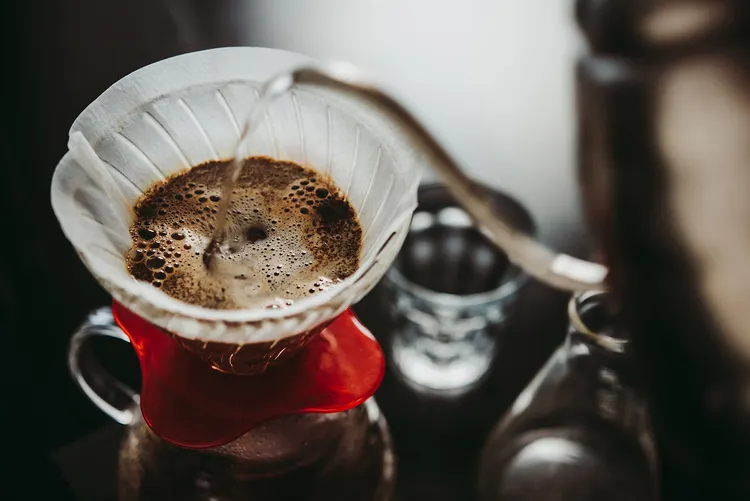
We've all chased a better cup the same way: better beans, a fancier grinder, a kettle with a gooseneck and a temperature dial. Good moves, all of them. And then most of us pour in whatever comes out of the tap and never think about it again, which is funny, because that water is almost the entire cup. Roughly 98% of a brewed coffee is the water you put in it. The beans you fussed over are a rounding error by volume.
What's at stake is the difference between a flat, muted brew and one where the fruit and the sweetness your beans promised actually show up. Clearer. Rounder. More alive on the tongue. Two waters can read the exact same number on a meter and taste like completely different drinks, because what's dissolved in the water matters more than how much.
It sounds like chemistry-class homework. It isn't. I'm going to hand you a two-ingredient recipe you can make tonight, walk you through why it works, and show you how to nudge it toward the coffees you actually drink. If your home coffee keeps losing to the cafe, water is usually the first culprit worth chasing.
The short version
We all want the fruit and the sweetness our beans promised, and the fastest, cheapest way there is to build your own water from a distilled base. Here's the whole thing.
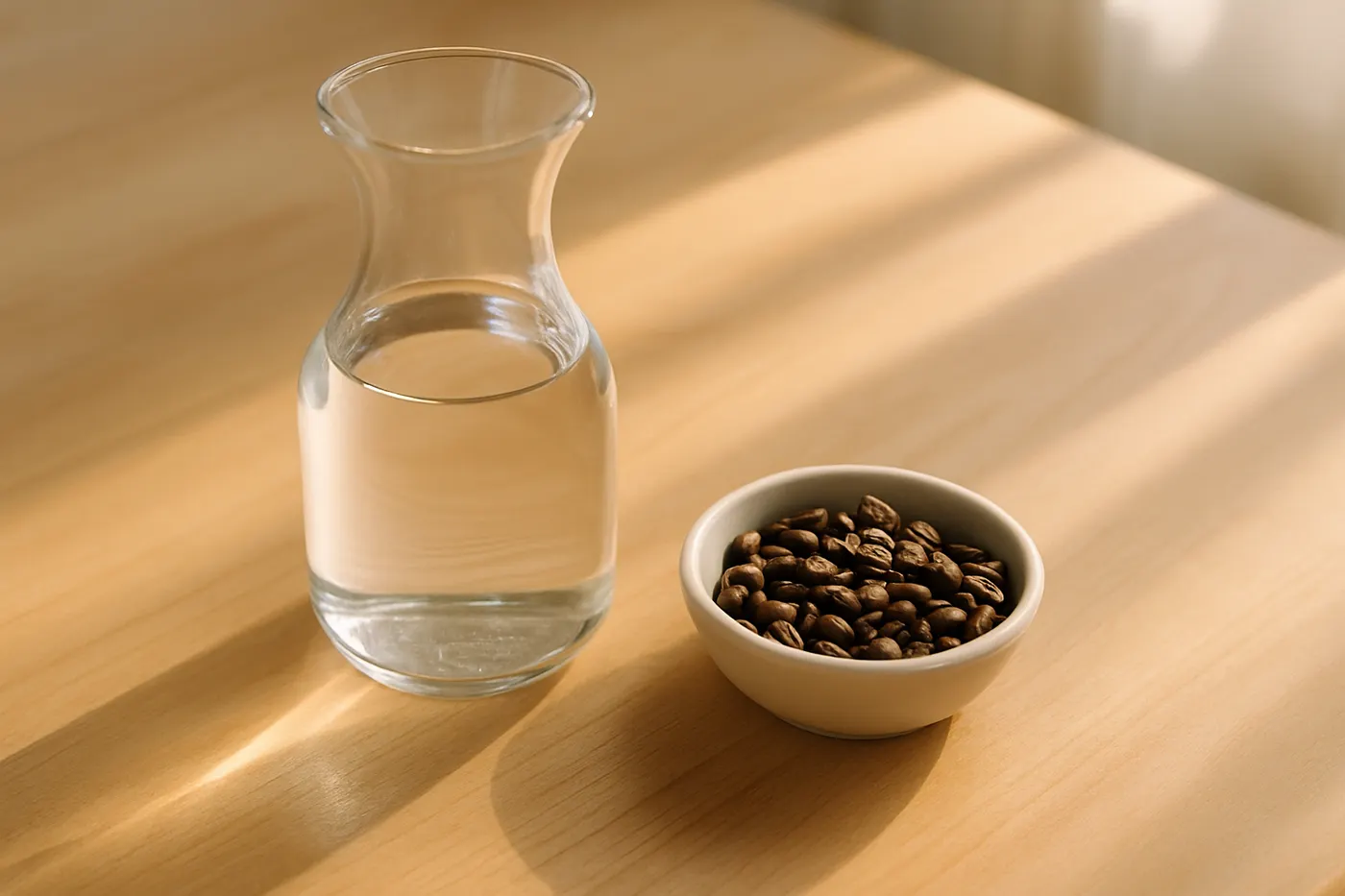
- The recipe: per 1 liter of distilled water, dissolve 0.1 g baking soda plus 0.12 g Epsom salt. It's espresso-friendly and it's the easiest possible entry point.
- The target: the SCA aims for about 150 ppm of dissolved solids, but most home filter brewers land best somewhere in the 75 to 150 ppm range. Composition matters more than the number.
- The honest caveat: there's no single universal wonder-water. This is a calibrated starting line, not a competition formula, and you tune it from here.
What you'll need
Almost nothing, which is the best part. Gear list:
- Distilled water as your base. Not filtered, not tap, distilled. You want to start from zero.
- A milligram-accurate scale (the 0.01 g kind, sold for measuring small doses). The amounts here are tiny, so a kitchen scale that reads to the gram won't cut it.
- A clean 1-liter container with a lid, so you can shake.
- Epsom salt (magnesium sulfate, the plain unscented kind, no lavender).
- Baking soda (sodium bicarbonate, the box already in your pantry).
For beans, any fresh coffee works. But the payoff is biggest on bright, clarity-driven roasts, the ones with somewhere for all that lift to go. More on tuning to your roast in a minute.
Want to know where your tap water actually sits before you start? Aquarium GH/KH test strips or a cheap TDS meter will tell you, and your city's annual water-quality report is a free starting point. Optional, not required.
One firm warning: do not run pure distilled water through an espresso machine. With no minerals to balance it, distilled water can corrode the boiler. Remineralize first, which is exactly what this recipe is for.

Why bother: what the minerals actually do
Quick detour into the why, because the recipe makes a lot more sense once you have it.

From our coffee sommelier
Maryna's weekly picks
“I taste thousands of coffees a year — I’ll only send you the few worth brewing.”
Something went wrong — please try again.
Free · Weekly · Unsubscribe anytime
Water isn't a neutral carrier. The minerals dissolved in it are what pull flavor out of the grounds in the first place. Magnesium and calcium ions travel into the bean and grab the aromatic compounds, then carry them back into your cup. Pure water has none of that, so it extracts weakly and tastes hollow. If you want the full chemistry, Jonathan Gagné lays out how the mineral ions actually pull flavor out of the bean in lovely detail.
The two minerals that matter most do different jobs. Magnesium leans toward fruit and clarity, the sparkle. Calcium leans toward body and roundness, the weight. The ratio between them shapes the cup as much as the totals, which is why two waters at the same TDS can taste so different.
Then there's the third lever: bicarbonate, the buffer. A little keeps everything stable. Too much, the way a lot of hard tap water runs, and it flattens and dulls the cup by muffling the very acids that make good coffee taste bright. Perfect Daily Grind has a clear explainer on how bicarbonates buffer acidity. This is the real reason a great bag of beans can still taste lifeless from your faucet.
So why start from distilled and build up, instead of filtering your tap? Control. From zero, you add back exactly what you want, the same amount every time, with no guessing about what your municipality dumped in this week. Repeatable beats convenient here.
How to build it: the 2-ingredient starter recipe
Here's the recipe I'd hand a friend. Per 1 liter of distilled water:
- Start with exactly 1 liter of fresh distilled water in a clean container.
- Weigh 0.1 g baking soda on your milligram scale. This is your buffer, the alkalinity that keeps the cup stable.
- Weigh 0.12 g Epsom salt. This is your magnesium, the fruit-and-clarity lever.
- Add both to the water, cap it, and shake or stir until everything dissolves fully, a minute or two. No grit at the bottom.
- Let it settle to room temperature and brew with it like any other water.
That's it. Those amounts land in the approachable target range, play nicely with espresso, and scale up without any math: double everything for 2 liters, and so on. I'd make a fresh batch every few days rather than mixing a giant jug, the same way I wouldn't grind a week of coffee in advance.
If you fall hard for this, there are deeper rabbit holes: a concentrate method, and multi-mineral competition recipes with four or five compounds. They're more precise and a lot more fiddly. Worth knowing they exist; not worth reproducing here, because the two-ingredient version gets you most of the way for none of the fuss.

Tune your water to your roast
One recipe isn't truly one-size-fits-all, because roast level changes what your water should do. Softer water tends to flatter darker roasts, smoothing and rounding them. Slightly harder, magnesium-forward water sharpens and lifts lighter, brighter ones.
So nudge the starter. For dark roasts, keep the magnesium modest and lean a touch softer. For light, fruit-forward roasts, push the Epsom salt up a hair toward more clarity. Small moves only. Change one thing, brew, taste, then decide. That's the whole game.
This isn't academic. Across our 315 live coffees from 44 roasters, the roast mix runs 161 medium, 80 light, and 74 dark, so roughly a quarter of the menu is light and a quarter is dark. Wherever your taste sits, the tuning actually maps to coffees on the shelf. If you skew dark, softer water flatters our dark-roast coffees; if you skew bright, harder water sharpens our light-roast coffees.
The bright, fruit-forward single origins are where careful water shows off the most. There's more in those cups for the right water to bring out, so the clarity has somewhere to go. Dial it in once and you'll taste the upgrade in everything you brew.

Troubleshooting and shortcuts
A few things that go sideways, and how to read them:
- Still tastes flat? Probably too much bicarbonate buffering the acidity. Ease off the baking soda, or check that your base was genuinely distilled and not just filtered.
- Thin, weak, hollow? Too soft, under-mineralized. Nudge the Epsom salt up a hair.
- Kettle scale or a chalky cup? That's hard tap water sneaking in. Only the distilled base goes into the recipe.
Not ready to weigh milligrams? Two honest shortcuts. For bottled, look for roughly 75 to 150 ppm TDS on the label (Volvic, around 130 mg/L, is a common pick) and skip heavily mineralized waters like Evian or San Pellegrino. Or buy commercial mineral sachets like Third Wave Water, which is genuinely foolproof at about $1 a gallon, or roughly $95 to $250 a year for a daily brewer. The DIY recipe above runs about $0.05 to $0.10 a gallon for comparable cup quality. The sachets are a fine on-ramp; the homemade version is just cheaper once you're hooked.
What to brew with this
Water is the cheap, invisible upgrade that finally makes everything else you've already bought taste the way it was supposed to. The beans, the grinder, the kettle, all of it. And now you can build it in two minutes flat.
No magic, though. There's no secret wonder-water, and the chemist Nicole Battefeld will tell you straight that there's no one wonder-water that solves everyone's cup. This is a starting line you tune to your own taste. Once the water's dialed in, get the coffee-to-water ratio right too, the next variable to dial in. And pour your homemade water through a forgiving V60 method that won't fight you.
If you're going to build water this carefully, build it for coffees that reward the effort. The bright, clean, single-origin lots are where good water sings, and our top-shelf coffees are the ones most worth dialing in for. Want the beans handled while you handle the water? Set up a coffee subscription with our configurator and I'll keep a rotation of fresh, expressive coffees coming, so the only variable left for you to play with is the water. Build it. Brew it. Taste the difference.
We want to help you make better coffee at home. Our recommendations are our own, and never sponsored. If you see something you love and buy it through our links, we may receive an affiliate commission (thanks for that!).
From our coffee sommelier
Maryna's weekly picks
“I taste thousands of coffees a year — I’ll only send you the few worth brewing.”
Something went wrong — please try again.
Free · Weekly · Unsubscribe anytime