Pour Over vs. Drip Coffee: Is the Ritual Worth It?
 Maryna Gray
• October 06, 2026 — last updated October 07, 2026
Maryna Gray
• October 06, 2026 — last updated October 07, 2026
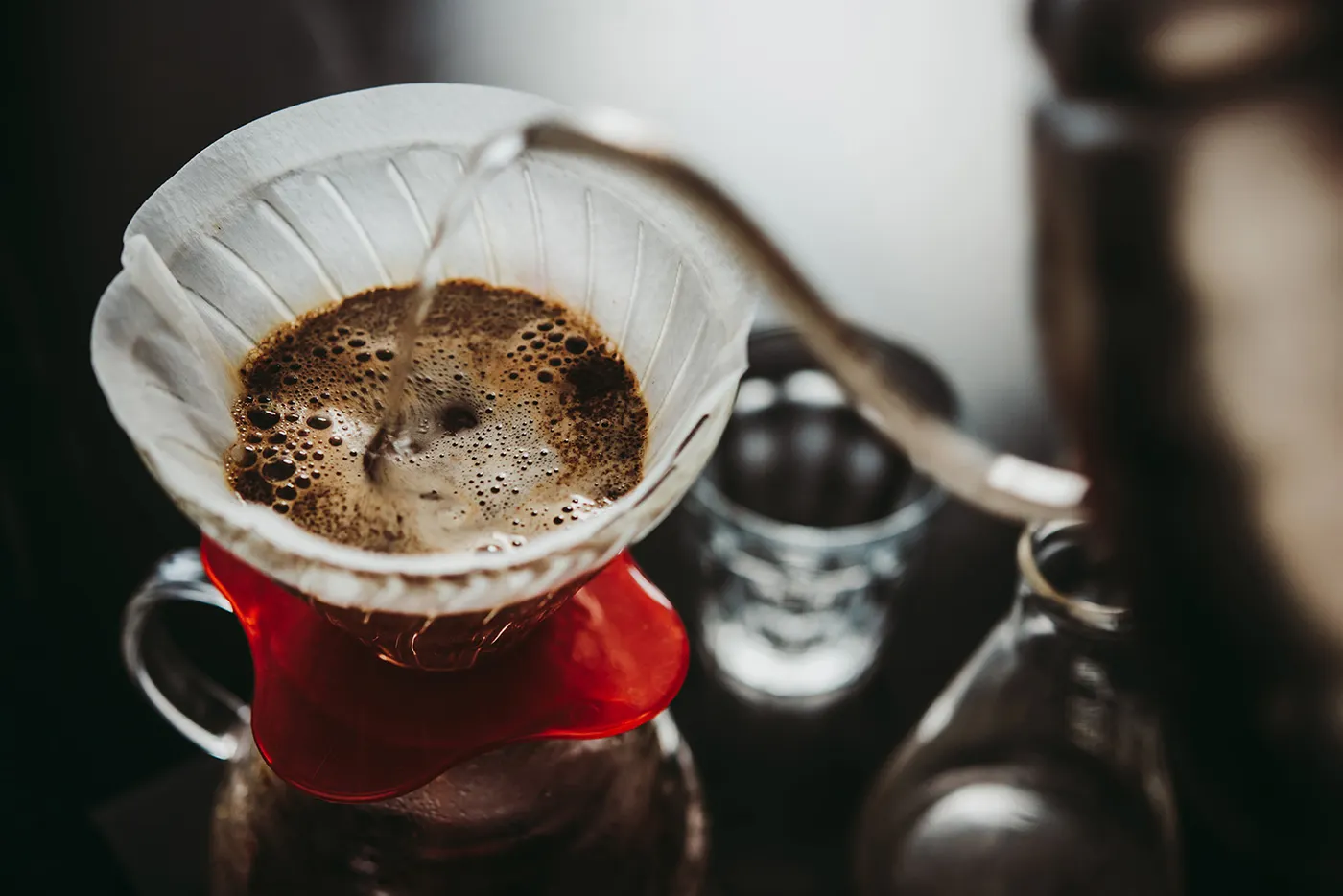
We've all stood in the kitchen at 6am wondering whether the slow, deliberate pour over is actually worth it, or whether the machine humming on the counter was fine all along. One side promises the kind of clean, bright cup where you can taste exactly where the coffee came from. The other promises a full pot waiting for you, no babysitting required. I brew pour over most mornings, but not for the reason you'd think, and I want to walk you through what each method actually gives you. Honestly.
Here's the thing most comparisons skip. Before you ask "pour over or drip," ask "which drip?" Nearly every head-to-head you'll read secretly pits a $30 dripper against a $30 budget machine, then declares the dripper the winner. That's a budget gap masquerading as a method gap. As Trade Coffee puts it, the two methods are "more similar than a lot of coffee lovers think." Both pour hot water through a bed of grounds and a paper filter. The split is whether you're steering, or the machine is.
And none of this was invented yesterday. The Chemex debuted in 1941, and Melitta's paper-filter pour over predates even that. This is an old argument with fresh anxiety attached. Let me settle the parts I can.
The short answer
We all want a better morning cup, and the honest truth is you can get one from either method. Pour over trades a few minutes of hands-on ritual for control. A good drip machine trades that ritual for a full pot you don't have to watch. Here's how to tell which one is yours.
- They're the same idea: hot water through grounds and a paper filter, split only by manual versus automated.
- The real quality gap is between a cheap drip machine and either a pour over or a certified drip machine, not pour over versus drip itself.
- Pour over's true edge is control and ritual. Good drip's edge is consistency and volume. Pick for your morning, not for status.
How they actually differ, side by side
Let's lay it flat. Even and honest, no thumb on the scale.
| Pour over | Drip machine | |
|---|---|---|
| Brew style | Manual | Automated |
| Active time | 2 to 4 min | Under a minute |
| Total time | ~5 min heat, then 2 to 4 min | 5 to 10 min, hands-off |
| Gear cost | $20 to $65 dripper | $25 to $200+ |
| Best for | 1 to 2 cups | A full pot for a crowd |
| Cleanup | Rinse and toss the filter | Rinse and toss the filter |
| Control | You own every variable | The machine owns them |
Look at that table for a second and you'll notice something. Every row collapses into one variable: who's making the decisions, you or the machine. Pour over hands you the wheel on bloom, pour rate, and temperature. That control is, as Trade Coffee says, "a blessing and a curse." When you nail it, the cup sings. When you're foggy and pre-caffeine, you can absolutely botch it. A drip machine never has a bad morning. It also never has a great one.
One myth to kill right here, because it shows up everywhere. People say pour over is "cleaner" because of the filter. Both methods use paper filters, and paper strips most of the oils out of either one. The clarity you taste in a good pour over comes from even extraction and your control over the water, not from some special filter the drip machine doesn't have. Same paper. Different hands.
Where drip actually wins

Volume. That's the headline. A drip machine brews a full pot for a houseful of people while you're still finding your other slipper, and pour over is a one-or-two-cup affair by design. If you're caffeinating a family, or a Sunday crowd, the button-and-walk-away workflow isn't a compromise. It's the whole point. Press start, go feed the dog, come back to a carafe.
From our coffee sommelier
Maryna's weekly picks
“I taste thousands of coffees a year — I’ll only send you the few worth brewing.”
Something went wrong — please try again.
Free · Weekly · Unsubscribe anytime
Now for the plot twist that competitors tiptoe around: a good drip machine is not the budget villain in this story. An SCA-certified machine holds water at the right 195 to 205 degrees Fahrenheit throughout the brew, and it pre-infuses the grounds, which is just a fancy way of saying it does a bloom, the same gentle first pour that wakes the coffee up and lets it off-gas. That's exactly what a careful pour over does by hand. According to Driftaway's rundown of the SCA-certified drip standards, a 30-to-40-second bloom and that temperature window are the markers of a machine doing real work. (Check the current SCA-certified list before you trust any specific model's badge, since it shifts.)
Here's the part that surprised me when I first read it. Research from the Specialty Coffee Association on brewing temperature found that when you hold the final brew strength and extraction yield steady, the exact temperature path barely changes the cup. Professor William Ristenpart, who ran the study, put it plainly: "it's the destination that matters, not the route you took to get there." In other words, a well-calibrated drip machine can land in the same delicious place a pour over does. The route looks different. The destination doesn't have to be.
Where most home drip coffee goes wrong, then, isn't the method. It's the gear. ESPRO notes that a lot of budget machines brew around 190 degrees, under that SCA window, with no bloom at all. THAT is the cup you're comparing your café pour over to. Not drip itself.
Where pour over actually wins

So why do I still reach for the dripper most mornings? Control, and ritual. I own the bloom timing, the pour rate, the temperature, and a single cup comes out cleaner and brighter for it. But the bigger reason is the few minutes themselves. I love smelling the coffee as it blooms, that first damp, bready exhale off the grounds, and the slow circling pour is the quiet part of my morning I don't want automated away. It's not that drip is broken. It's that I want my hands in it.
In the cup, that control flatters a specific kind of coffee. Pour over's clarity is a spotlight on delicate, washed, lighter-roasted single origins, where you can actually taste origin character, the terroir, the sense of place a coffee carries from where it grew. Breville's writers call this the home brewer's chance to "fully unlock the terroir of the bean," and that's the right frame. A bright Ethiopian with jasmine and lemon has nowhere to hide in a pour over, in the best way.
Our catalog backs this up. Of Bean Box's live coffees, 96 of 315 are single-origin, roughly 30%, and 45 of those are light-roast single origins: the delicate, clarity-forward lots a slow pour was practically built for. (Catalog figures vary monthly; verify before relying on the exact numbers.) If you want to lean into that sweet spot, browse our single-origin coffees and our light-roast coffees, the two profiles pour over shows off best. We go deeper on exactly which beans to buy for a slow pour.
And the bean is the cheap part of all this. A great single-origin runs around $25, small money next to the gear gap the whole "pour over vs drip" argument is really about. You're rarely choosing between good coffee and bad coffee. You're choosing how you want to spend ten minutes.
When to choose each
Here's the honest matrix, no chart required. Choose pour over when you brew one or two cups, you want control over the cup, and you genuinely enjoy the ritual. Choose drip when you need volume, speed, or consistency, or you're brewing for a household that wakes up cranky and wants coffee NOW. Stone Creek Coffee said it cleanly: choose pour over when flavor clarity and ritual matter, and choose drip when convenience, volume, and consistency win the day.
If you're just starting out, start with drip. It's the more forgiving thing to do day to day, and you can add a pour over setup later, once you want to slow down and tinker. The grind and the freshness of your beans will move your cup far more than the method you pick. A blade grinder and three-week-old beans will sabotage either one.
And let me restate the reframe so it sticks. If you're choosing between a budget drip machine and a pour over, the pour over probably wins. But that's a budget gap, not a method gap. Spend on a certified machine, or on a dripper-plus-grinder, and stop arguing the wrong question.
Where you land usually depends on your morning
The method is a lifestyle choice, not a quality verdict. Both can make a genuinely excellent cup, and the bigger levers, by a mile, are fresh, well-chosen beans and a consistent grind. Get those right and either method rewards you. Get them wrong and neither one will save you.
If pour over is your pick, here's the forgiving V60 recipe I actually use day to day. It takes the anxiety out of the slow pour.
And whichever method you land on, the cup only gets as good as the beans you put in it. That's the part we can hand you. Let us send fresh, curated coffee matched to how you brew, so the hard part is handled and all you do is press start or pour. Build your Coffee Plan and tell us your roast and origin preferences, or just start with our best-selling coffees and see what clicks.
Me? I'll keep choosing the slow pour for the morning quiet, the bloom under my nose, the few unhurried minutes before the day starts. But I won't judge the pot waiting on your counter. Some mornings, that's the smarter cup. Brew the one that fits your morning. Trust me.
We want to help you make better coffee at home. Our recommendations are our own, and never sponsored. If you see something you love and buy it through our links, we may receive an affiliate commission (thanks for that!).
From our coffee sommelier
Maryna's weekly picks
“I taste thousands of coffees a year — I’ll only send you the few worth brewing.”
Something went wrong — please try again.
Free · Weekly · Unsubscribe anytime