The Best Organic Coffee: Certified Beans That Are Actually Worth Drinking
 Maryna Gray
• August 04, 2026 — last updated August 04, 2026
Maryna Gray
• August 04, 2026 — last updated August 04, 2026
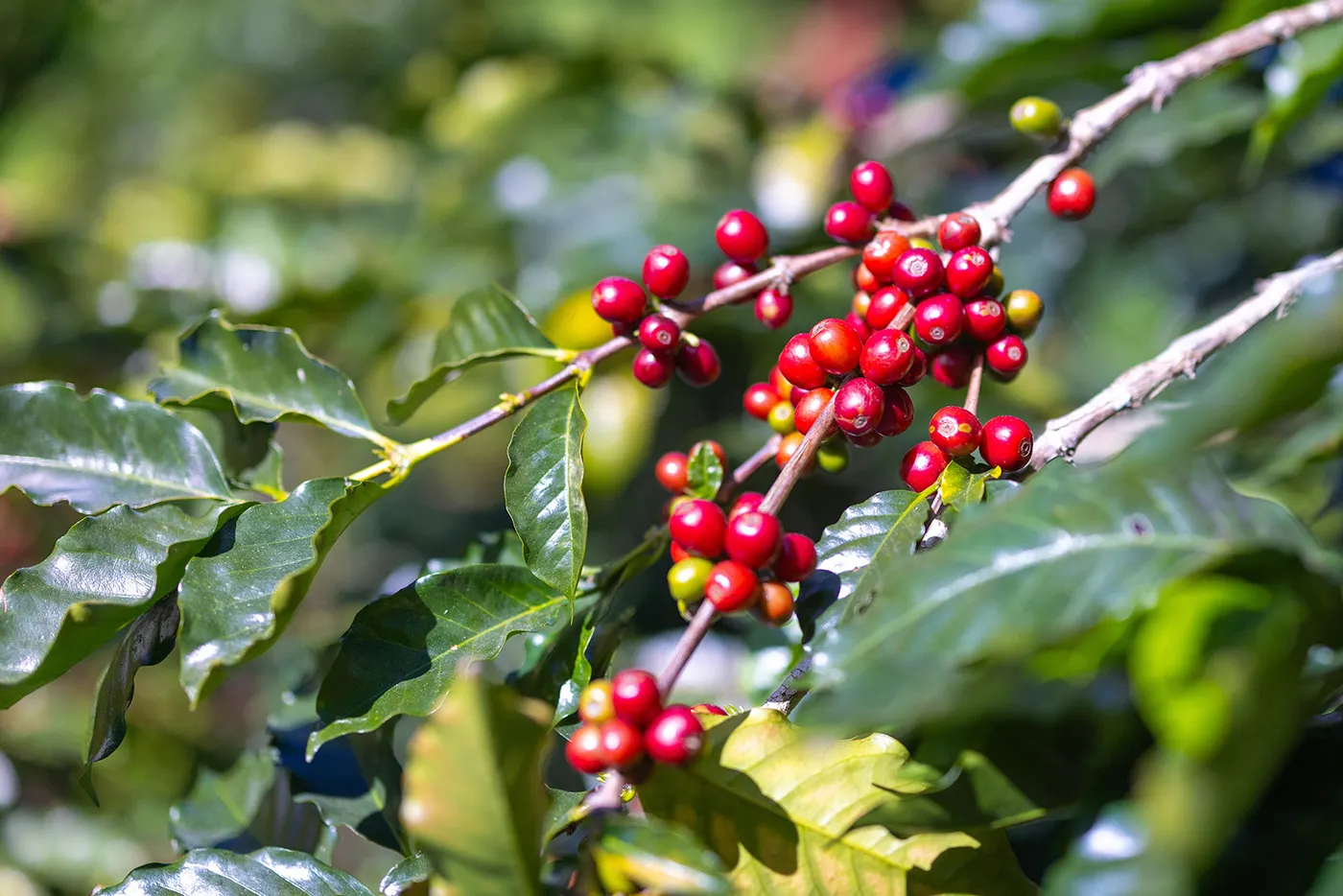
Most of us reach for the word "organic" as a shortcut for "the good stuff," and at the grocery store, that's usually a safe bet. We want a cup that's clean and sweet and easy to come back to morning after morning, without wondering what got sprayed to grow it. Fair enough. So let me show you what that little seal actually buys you, and which organic coffees I'd genuinely put in your mug.
Here's the honest setup. The USDA Organic seal is everywhere now, and it's a real promise, but it's a promise about how the coffee was farmed, not about how it tastes. Most "best organic" lists treat the logo like a flavor stamp. We won't, because it isn't one. A coffee can be certified organic and still taste flat, and a knockout specialty coffee can have zero certifications because the farmer simply couldn't afford the paperwork.
So I curate against a dual gate: certified AND worth drinking. Flavor is the first filter. The certification is the bonus you get for how the coffee was grown. That's the whole game, and it's why the picks below taste like coffee I'd actually serve, not just like a checklist someone ticked. Coffee shoppers say they'll pay roughly $1.36 more per pound for ethical certifications like this one, per the roaster's guide on Genuine Origin's blog, so it's worth knowing what that dollar-something actually buys you.
Here's the deal
We all want coffee that's grown clean, but the organic seal tells you how it was farmed, not how it tastes, so buy for the cup first and treat "certified organic" as the bonus. I'll point you to the ones that nail both.
- The seal governs farming inputs at the farm level: no synthetic pesticides, herbicides, or GMOs, and land kept clean for three-plus years. It says nothing about cup quality.
- Roasting burns off an estimated 92 to 100% of any residue, so the real benefit lands on farmworkers and the land, not your mug.
- Buy specialty-grade first, then filter to our organic coffees. That dual gate is exactly how every pick below got chosen.
What organic actually means (and what it doesn't)
Let's start at the farm, because that's where the whole thing happens. To earn the USDA Organic seal, a coffee has to be grown without synthetic pesticides, herbicides, or fertilizers, with no GMOs anywhere in the picture. The land itself has to have been free of prohibited substances for at least three years before the first certified harvest. That's a genuine commitment, and it's the part the seal really vouches for.
Now the part most lists skip. Organic isn't a single stamp the farmer earns and moves on. Every handler in the chain has to hold its own certification: the farm, the mill that processes the cherries, the importer who ships the green beans, and the roaster who finishes them. If any link in that chain isn't certified, the finished bag can't carry the seal, even if the coffee was grown perfectly clean. Trade Coffee's certified-organic guide lays this out well. It's the reason organic certification gets expensive fast, and the reason it quietly favors larger operations that can absorb the cost.

And here's the line I want you to remember. Roasting happens at temperatures north of 450°F, and at that heat, an estimated 92 to 100% of any residual chemicals get burned off. So the meaningful benefit of organic farming, the cleaner-inputs part, mostly accrues to the farmworkers and the land around the farm. Not to you, in your kitchen, drinking the cup. That's not a knock on organic. It's a reason to support it for what it genuinely does, and to stop expecting it to do something it can't.
Which brings us to the thesis. The seal addresses inputs. Cup quality comes from somewhere else entirely: the origin, the altitude the beans grew at, the variety, the processing, and the roast. Cafe Imports' breakdown of organic certification puts it plainly: the certification has little to do with what's in your mug. So if you've been picturing organic coffee as dark, earthy, health-food-aisle stuff, let me correct the record. Of our 53 certified-organic coffees, 37 are medium roast, 9 are dark, and only 7 are light. Organic skews to the everyday middle, the comforting and chocolaty end of the spectrum, not some austere wellness corner.
Organic vs. fair trade vs. Bird-Friendly
These three certifications get tossed around like synonyms, and they're not even close. They solve different problems.
From our coffee sommelier
Maryna's weekly picks
“I taste thousands of coffees a year — I’ll only send you the few worth brewing.”
Something went wrong — please try again.
Free · Weekly · Unsubscribe anytime
Organic, as we covered, is about chemical inputs and the land. Fair Trade is about money and people: minimum price floors for the farmer and a set of social standards. Bird-Friendly is about habitat. A coffee can carry one of these, all three, or none, because no single cert requires another. Coffee & Conservation's certification guide is the clearest source I've found on where the lines fall.
Bird-Friendly, from the Smithsonian, is the strict one. It's the only certification that requires underlying USDA Organic as a prerequisite, and then it piles on a 40% native-shade-canopy minimum: real trees, native species, actual forest structure over the coffee. So Bird-Friendly is a superset of organic, never a substitute for it. If you care about migrating songbirds along with clean farming, that's your seal.
Here's a pattern worth knowing when you go shopping. So many of the single-origin organics you'll find come from cooperatives, and there's a good reason. Certification runs from hundreds to thousands of dollars per entity, plus that three-year transition where the farmer eats organic costs without any organic premium yet. About 80% of the world's coffee comes from 25 million smallholders, and a huge number of them already farm organically out of habit and economics without ever paying for the label. Pooling under one co-op's certification is how they share the cost and finally earn the seal. (If you want the full fair-trade story, we've got a separate explainer on what fair trade coffee actually means that goes deep on the social-standards side.) For proof that these certs travel together more often than you'd guess: 12 of our 53 organic coffees are also certified fair trade.
What matters most when you buy organic
If you take one buying rule from this whole guide, take this priority order. It's how I'd shop, in order.
First, cup quality. Specialty grade, a roaster you trust, beans that are actually fresh. This is the dual gate restated as a rule: a coffee earns its spot in your cart on flavor before its certifications ever enter the conversation. A certified-organic bag that's been sitting on a shelf for four months is still a stale cup.
Second, match the cert to what you actually care about. Want clean inputs and protected land? Organic does that. Want price floors and social standards for the farmer? That's Fair Trade. Want habitat for birds? Bird-Friendly, which gives you organic plus the shade canopy in one seal. Buying the right certification means knowing which problem you're trying to solve.
Third, roast level and use case. Since organic spans the whole spectrum, buy to how you brew, not to the word "organic." Espresso person? Reach for a roast built for it. Pour-over devotee like me? A bright single origin will sing.
Fourth, price. The organic premium is real but modest, more of a fair surcharge than a luxury tax. (More on the actual numbers at the end.)
Worth sitting with: organic is only about 17% of our live catalog, 53 coffees out of 315. When flavor is your first filter, the certified-organic set that survives is naturally small and hand-picked. That's a feature, not a shortage.

If vetting every single bag yourself sounds like a part-time job, here's the shortcut I'd hand a friend: set up a Coffee Plan tuned to organic picks and let the rotation do the filtering for you. Prefer to browse and choose by hand? Filter straight to our organic coffees and pick your own. Either path clears the same dual gate.
Best organic coffee for espresso
Let me clear up the biggest myth first: there's no such thing as a magic "espresso bean." Any well-built coffee can pull a shot. For organic specifically, you're looking for either a dedicated organic espresso blend or a darker single origin built to hold up under pressure. Pick by roast level and freshness, not by the label on the bag.
A few I'd point you toward, availability permitting: the Leftist Espresso Blend from Gimme! Coffee, the Cuatro Espresso Blend from Zoka Coffee, and the Organic Fiore Espresso from Caffè Vita out of Seattle. What you're tasting for in an organic espresso is the same as any great one: weight on the tongue, a chocolate-and-caramel depth like the bottom of a brownie pan, and a finish with enough backbone to survive a splash of milk. That last part matters. A thin espresso disappears under steamed milk; a good one cuts right through it.
The Leftist is the one I'd flag for the dual-cert crowd, because it's both Fair Trade and Organic, which loops right back to the point that organic rarely travels alone. For the record, 13 of our 53 organic coffees are tagged espresso-suitable, so you've got real options here, not a token one or two. And for the full espresso-bean breakdown beyond just the organic set, we go deeper in our guide to the best espresso beans.

Want to see the wider lineup? Browse our coffees for espresso and filter from there.
Best organic single-origin and dark picks
This is where the dual gate really proves itself, because single-origin organics are the certified-AND-specialty unicorns, and they do exist.
A few favorites, stock permitting. The Ethiopia Yetatebe Shakisso from Sightglass is a medium-roast single origin with the kind of bright lemon-and-bergamot lift I'm always chasing in a pour-over. The Peru Sol y Café from Gimme! is a dual-certified Latin American single origin, exactly the co-op-sourced story we talked about earlier. And the one I keep recommending to anyone who likes their morning a little sweet: the Mexico Chiapas from Tony's Coffee, all almond, cocoa, and cream, the cozy kind of cup that drinks like dessert without trying too hard, and it's pulling a straight 5-star average so far. Twelve of our 53 organics are single origin, so this isn't a fluke. It's a real little category.
For the dark-roast crowd, the rule is simple: specialty dark means developed, not charred. You should still be able to taste where the coffee came from under all that roast. The Holy Ship! from Longshoreman's Daughter Coffee is a certified-organic dark blend that drinks like almond, brown sugar, and cocoa, deep and sweet without a hint of char (4.5 stars across 47 reviews). The French Roast Organic Blend from Blossom is the cozier, deeper-end pick. The first sip of a well-built dark roast like this is the difference between a campfire and a bonfire; you want warmth, not smoke.
For dark roast across the whole catalog, organic or not, there's a whole guide to the best dark roast coffee.

To explore beyond the named picks, here are our single-origin coffees and our dark-roast coffees.
Best overall organic: Cafe Carmelita, Tony's Coffee
An all-time bestseller, and the coziest coffee I know. I call it the drip that thinks it's a mocha: caramel-rich, cocoa-forward, with a toasty finish that lingers. It's just as happy hot, iced, or as cold brew, which is half of why I love it.
Tastes like: caramel, cocoa, buttery. Get Cafe Carmelita
Best chocolatey: Deja Vu Blend, Blossom Coffee Roasters
So good you'll do a double take, which is exactly the point of the name. Blossom built it from two organic, chocolaty single origins, a Colombian and a Sumatra, and the result is wall-to-wall chocolate. A perennial bestseller for good reason.
Tastes like: chocolate, sugar, cocoa. Get Deja Vu Blend
Best organic dark: Holy Ship!, Longshoreman's Daughter Coffee
A popular dark-roasted blend that goes all in on heavy dark chocolate. There's a plum-cake richness in the middle and a brown-sugar finish that tastes, no joke, like a Tootsie Roll. Dark and decadent without ever turning harsh.
Tastes like: almond, brown sugar, cocoa. Get Holy Ship!
Best fruity & fun: Party Wave Blend, Drink Coffee Do Stuff
This one is exactly as fun as the name promises. It's chocolate syrup poured over a bowl of raspberries and blueberries, playful and juicy and a little wild. From a roaster that clearly doesn't take itself too seriously, and bless them for it.
Tastes like: chocolate syrup, raspberry, blueberries. Get Party Wave Blend
Best fair trade + organic: Leftist Espresso Blend, Gimme! Coffee
Certified fair trade and organic, and as smooth and easygoing as a medium gets. I taste bright cherry up front, then it settles into toffee and chocolate, like a candy bar that learned some manners. The kind of cup you can drink all day.
Tastes like: cherry, toffee, chocolate. Get Leftist Espresso Blend
Don't overthink it
Here's where I land after all of it. Organic is a meaningful farming promise and a genuinely worthy thing to support. It's just a tie-breaker, not a flavor guarantee. So buy specialty-graded and fresh first, and let the seal be the bonus. Every pick above clears both bars, which is the only reason it's on the list.
Is it worth the extra cost? You're paying roughly a $1.36-per-pound premium for the certification, and if you value the farm practices and the protected land, yes, that's money well spent. For taste alone, organic isn't a reliable signal, so buy on grading and freshness. The good news is the premium stays modest in a specialty catalog: our organic coffees run $17.20 to $24.45, averaging $21.40, which is right in line with what you'd pay for great coffee, certified or not.
And if you'd rather have the vetting handled for you, a Coffee Plan set to organic keeps a rotating certified pick landing on your doorstep, no shelf-staring required. When you want to choose by hand instead, browse all our organic coffees and trust your own taste. Either way, you're covered.
Frequently asked questions
Is organic coffee actually better? Not inherently. USDA Organic governs farming inputs, not flavor. Cup quality comes from origin, altitude, variety, processing, and roasting. Plenty of specialty coffees aren't certified, and plenty of certified ones are commodity grade. Buy for the cup, treat the seal as a bonus.
What does USDA Organic mean for coffee? It was grown without synthetic pesticides, herbicides, fertilizers, or GMOs, on land kept free of prohibited substances for at least three years. And every handler in the chain, from farm to processor to importer to roaster, has to be certified separately for the finished coffee to carry the seal.
Does roasting destroy pesticide residue? Largely, yes. At temperatures above 450°F, roasting eliminates an estimated 92 to 100% of any residue. The meaningful health benefit of organic accrues to the farmworkers and the surrounding land, not to the person drinking the cup.
Why can't small farmers afford organic certification? Fees run from hundreds to thousands of dollars per entity, per year, and the three-year transition has to be funded before any premium can be earned. About 80% of the world's coffee comes from 25 million smallholders, and many farm organically without the label or pool the cost under a cooperative's single certification.
What's the difference between organic and fair trade coffee? Different certifications solving different problems. Organic addresses chemical inputs and land management. Fair Trade addresses minimum price floors and social standards. Neither one requires the other, so a coffee can be one, both, or neither.
Is Bird-Friendly the same as organic? No. Bird-Friendly, from the Smithsonian Migratory Bird Center, is the only certification that requires USDA Organic as a prerequisite and then adds a 40% native-shade-canopy minimum on top. It's a superset, not a synonym.
What's the best organic coffee for espresso? Look for an organic espresso blend, or a darker single origin built to stand up to pressure. Any specialty bean can pull a shot, so pick by roast level and freshness rather than the organic label alone. Our Leftist Espresso Blend from Gimme! Coffee is a strong dual-certified place to start.
We want to help you make better coffee at home. Our recommendations are our own, and never sponsored. If you see something you love and buy it through our links, we may receive an affiliate commission (thanks for that!).
From our coffee sommelier
Maryna's weekly picks
“I taste thousands of coffees a year — I’ll only send you the few worth brewing.”
Something went wrong — please try again.
Free · Weekly · Unsubscribe anytime