How to Use a Moka Pot (Stovetop Espresso, Done Right)
 Maryna Gray
• October 13, 2021 — last updated June 15, 2026
Maryna Gray
• October 13, 2021 — last updated June 15, 2026
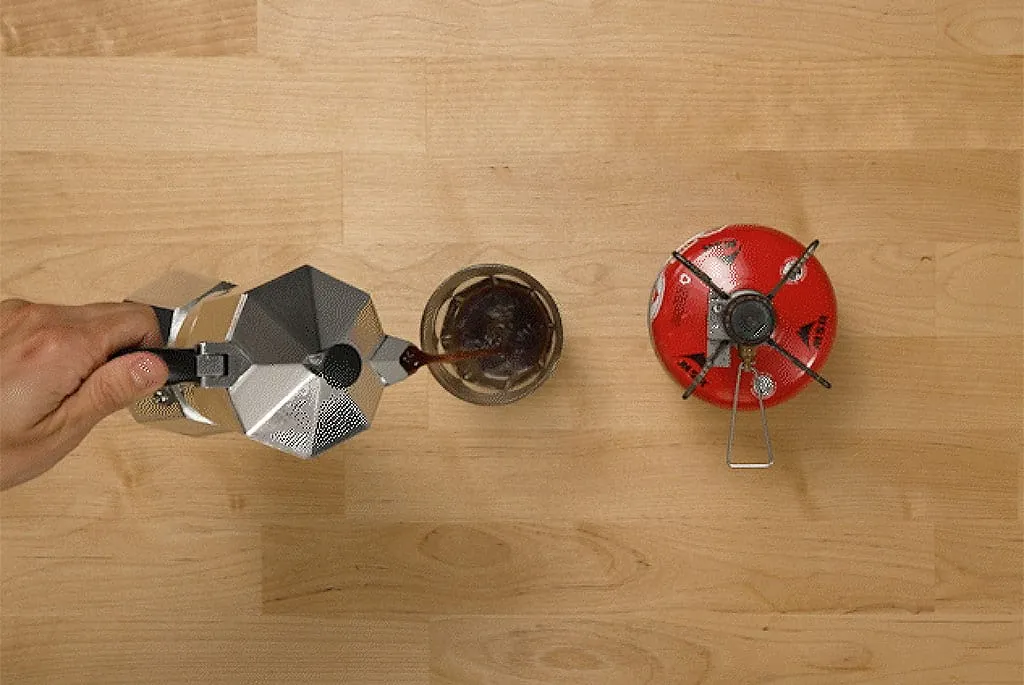
The moka pot is the little stovetop workhorse that's been making strong, rich coffee in kitchens for almost a century, and most of us have one that either makes a gorgeous cup or a bitter, scorched one with no in-between. The difference is almost never the pot. It's the grind and the heat. Get those two right and a moka pot gives you a deeply satisfying, espresso-adjacent cup for the price of a nice dinner out, once. Here's how to use one properly, the ratio for every pot size, and the one move that fixes bitter coffee for good.
The short answer
Most of us have made a scorched, bitter pot and blamed the moka pot, but it's almost always the heat, and I'll walk you through getting it right.
- Grind: medium-fine, between drip and espresso, like fine sand. Don't tamp.
- Water: fill the base to just below the safety valve, ideally with hot water.
- Heat: medium-low, lid open.
- The one rule: pull it off the heat the second it gurgles, and cool the base. That's the bitterness fix.
What you'll need
- A moka pot sized to how much you drink (they're sold by 1, 3, 6, and 9 "cup," meaning small Italian cups).
- A burr grinder for an even, medium-fine grind. Uneven grounds are a top cause of a disappointing pot.
- Fresh, medium-roast coffee. The moka concentrates flavor, so a stale bag shows.
- A scale (optional) if you want to dial the ratio in exactly.
What a moka pot actually does
A moka pot brews in three stacked chambers. Water sits in the bottom, ground coffee fills a funnel basket in the middle, and the brewed coffee collects up top. As the base heats, steam pressure pushes the water up through the grounds and into the top chamber. It runs at about 1 to 2 bars of pressure, which is real pressure but well short of the 9 bars a true espresso machine uses. So the cup is strong, rich, and a little foamy, but it isn't a crema-topped espresso shot. Think of it as its own wonderful thing: stovetop coffee with espresso's intensity and body.
How to use a moka pot, step by step
- Fill the base with hot water to just below the safety valve (the little metal nub inside). Starting with hot water means the pot heats faster, so the grounds spend less time stewing.
- Fill the basket. Add medium-fine grounds, level them off with a finger, and leave them loose. Do not tamp.
- Assemble and heat. Screw the top on firmly and set it on medium-low heat with the lid open so you can watch.
- Watch and listen. The coffee will rise into the top chamber in a steady, honey-colored stream. When it lightens and you hear a gurgling, sputtering sound, it's done.
- Pull it at the gurgle. Take it off the heat immediately and run the base under cold water for a few seconds to stop the extraction. This is the single most important step.
- Swirl and serve. Give it a quick stir to even out the brew and pour.
Moka pot ratio by size
Moka pots are sold by "cup" size (small Italian cups, not mugs), and the basket plus the water line do most of the measuring. As a starting point by weight:
| Pot size | Coffee | Water |
|---|---|---|
| 1-cup | ~7 g | ~60 g |
| 3-cup | ~17 g | ~150 g |
| 6-cup | ~30 g | ~300 g |
| 9-cup | ~45 g | ~450 g |
Fill the basket level and the water to just below the valve, and you'll land close to these without a scale. A scale just makes it repeatable.
Grind size: the make-or-break
Grind is where most moka pots go wrong. You want medium-fine: finer than drip coffee, coarser than espresso, roughly the texture of fine sand or table salt. Too coarse and the water races through weak and sour. Too fine (espresso-fine) and the grounds pack down, clog the basket, and build up pressure that pushes out bitter, over-extracted coffee. If you're grinding fresh, our guide to grinding coffee beans covers the textures.
Why is my moka pot coffee bitter?
This is the question everyone asks, and the answer is usually heat, not the pot or the beans. Three fixes, in order:
- Lower the flame. Medium-low, not high. A roaring burner scorches the grounds and rushes the brew.
- Pull it at the gurgle. The moment it sputters, it's done. Every extra second on the heat adds bitterness. Cooling the base under the tap stops it cold.
- Check your grind. Too fine over-extracts. Back off toward fine sand.
Fix the heat first. It solves the bitterness for most people on the very next pot.
Moka pot vs. espresso
They get lumped together, but they're different drinks. A moka pot uses steam pressure (about 1 to 2 bars) for a strong, rich, lightly-foamy coffee. True espresso uses about 9 bars of pump pressure for a syrupy, crema-topped shot. If you want the full espresso picture, including the no-machine methods, our guide to making espresso at home covers it. For most milk drinks and americanos, a moka pot stands in beautifully.
Moka pot milk drinks
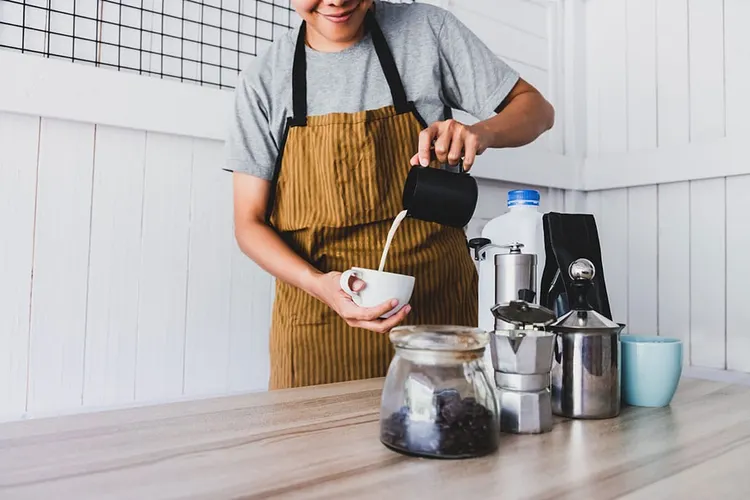
Because a moka pot makes a strong, concentrated coffee, it stands in for espresso in most milk drinks. Pull a moka shot and add steamed or frothed milk for a moka-pot latte or cappuccino, or top it with hot water for a quick americano. It won't have true crema, but once the milk goes in, the difference all but disappears. It's how a lot of the world has made its morning latte for decades, no machine required.
The best coffee for a moka pot
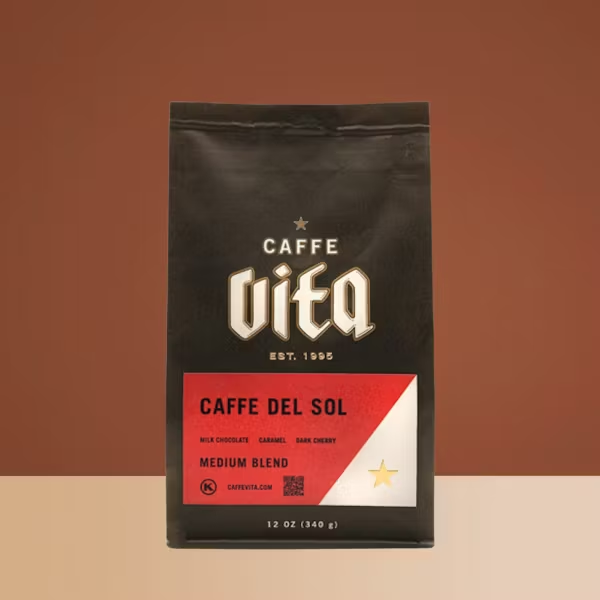
The moka pot brews intense, so it flatters coffees that can take the volume: fresh, chocolaty, balanced medium-roast coffees and medium-darks are the sweet spot, giving you that cocoa-and-caramel richness people love from a moka. Very light roasts can read a little sharp brewed this way. And because the moka concentrates flavor, freshness shows: a stale bag tastes flat and ashy no matter how careful your technique.
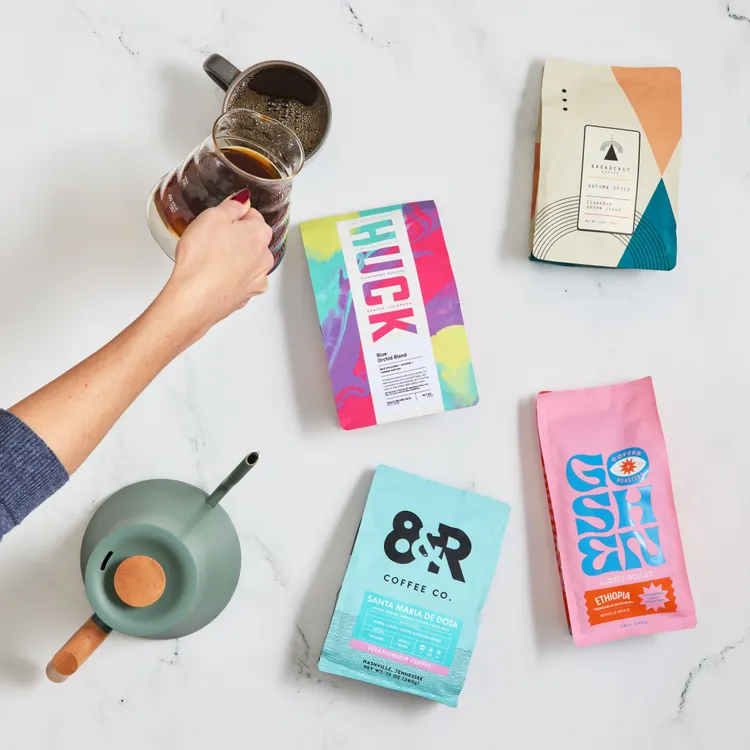
That's the whole reason I keep a rotation of freshly roasted bags around. If you'd like that handled, you can build a coffee subscription around your taste, and we'll send fresh-roasted coffee from dozens of independent US roasters, so your moka always has something good to work with.
Frequently asked questions
Why is my moka pot coffee bitter? Usually heat. Use medium-low, pull it off at the gurgle, and cool the base. Then check your grind isn't too fine.
What grind? Medium-fine, like fine sand. Finer than drip, coarser than espresso.
How much coffee and water? Fill the basket level and the base to just below the valve; see the by-size table for grams.
Is it the same as espresso? No, it's lower-pressure, so strong and rich but without true crema. Great in milk drinks.
Do I tamp? Never. Fill level and leave loose.
Best coffee? A fresh medium or medium-dark roast.
One last pour
A moka pot is one of the best values in coffee, and it asks almost nothing of you: a medium-fine grind, a low flame, and the discipline to pull it at the gurgle. Do that with a fresh, chocolaty bag and you'll get a cup with real body and depth. Burn it once and you'll never forget the gurgle again.
We want to help you make better coffee at home. Our recommendations are our own, and never sponsored. If you see something you love and buy it through our links, we may receive an affiliate commission (thanks for that!).