How to Use a Chemex: Ratio, Grind, and the Beans That Make It Sing
 Maryna Gray
• October 12, 2021 — last updated June 15, 2026
Maryna Gray
• October 12, 2021 — last updated June 15, 2026
Pour-over is my daily ritual, and most mornings it happens in a Chemex. There's something about the slow pour and the smell of the coffee blooming that wakes me up before the caffeine does. The Chemex looks like a science experiment and a little intimidating the first time, but it's genuinely one of the most forgiving ways to brew a clean, bright cup at home. The whole thing comes down to three numbers and one habit. Here's the ratio, the grind, the pour, and the kind of bean that turns a Chemex into the best cup on your counter.
The short answer
We all want café coffee at home without the café prices, and a Chemex gets you there with a ratio, a grind, and a slow pour, which I'll walk you through.
- Ratio: 1:16 by weight. About 42 g coffee to 680 g water for a full carafe (scale it down to 30 g / 500 g for less).
- Grind: medium-coarse, like table salt.
- Water: about 200°F, just off the boil.
- Time: a 4 to 5 minute total brew, across a bloom plus 3 to 4 pours.
- The bean: the thick filter rewards clean, bright coffees, so reach for a washed light or medium single origin.
What is a Chemex?
A Chemex is a one-piece glass pour-over brewer, invented in 1941 by a chemist named Peter Schlumbohm who modeled it on a lab funnel and flask. Its trick is the filter: Chemex paper is noticeably thicker than most, so it traps more of the oils and fine sediment that muddy a cup. What lands in the carafe is clean, crisp, and almost tea-like, which is exactly why people fall for it. It also happens to look gorgeous on a counter, which never hurts.
What you'll need
- A Chemex and its filters. The thick bonded filters are the whole point; thin generic filters give up the clean cup.
- A burr grinder. Consistent grounds are the single biggest upgrade to any pour-over. If you're grinding fresh (you should), our guide to grinding coffee beans covers the textures.
- A gooseneck kettle. The narrow spout gives you the slow, controlled pour the Chemex wants. Worth it.
- A scale. Brewing by weight instead of scoops is what makes your cup repeatable. A cheap kitchen scale is plenty.
- Fresh coffee. A Chemex shows off a good bean and exposes a stale one, so start with something freshly roasted.
How to brew with a Chemex, step by step
This makes a full 6-cup carafe (about 680 g of water). The whole brew runs four to five minutes.
- Heat the water to about 200°F. If your kettle only boils, take it off the heat and wait 30 seconds, because rolling-boil water scorches the grounds.
- Rinse the filter. Open it so three layers sit against the spout, set it in the Chemex, and pour hot water through to rinse out the papery taste and warm the glass. Pour that rinse water out.
- Add and weigh your coffee. Grind 42 g medium-coarse and add it to the filter. Give it a little shake to level the bed, and zero your scale.
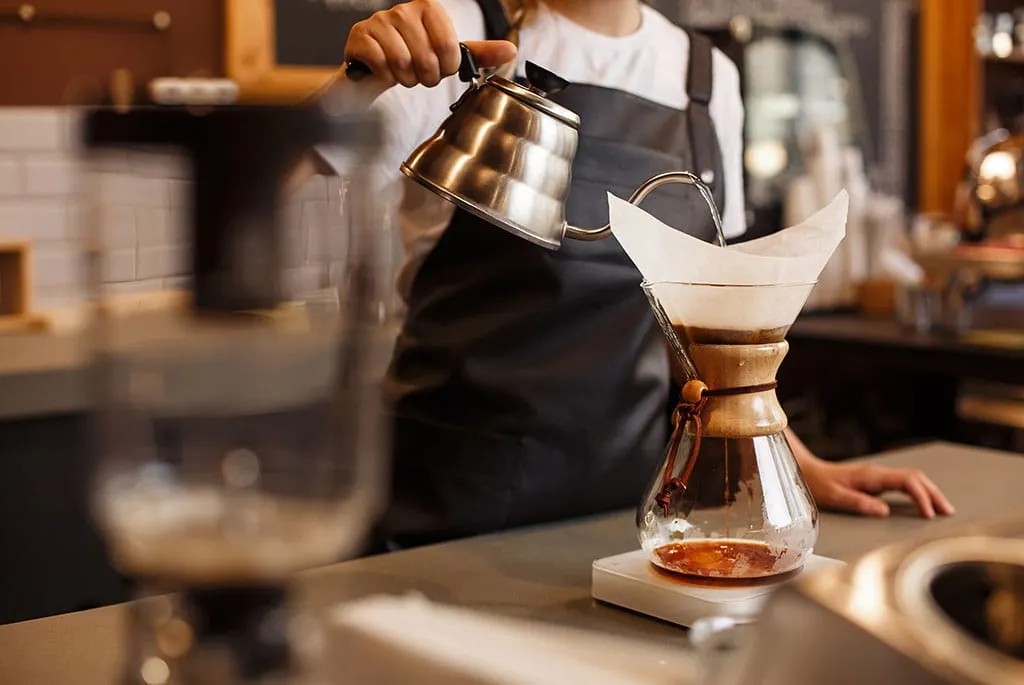
- Bloom. Start your timer and pour about 80 g of water (roughly twice the coffee's weight) in slow circles from the center out, wetting every ground. The bed will puff and bubble as it releases carbon dioxide. The fresher the coffee, the more it blooms. Give it 30 to 45 seconds, and enjoy the smell.
- Pour in stages. Pour the rest in two or three slow, concentric pours, keeping the water about an inch above the grounds and never letting the bed drain dry. Take it to 680 g total. Aim to finish around 4:30 to 5:00.
- Serve. Once it stops dripping, lift out the filter, give the carafe a gentle swirl to even out the brew, and pour.
Chemex ratio by size
Skip the math at the counter: lock the 1:16 ratio and scale to your carafe.
| Brew size | Coffee | Water |
|---|---|---|
| Small batch | 25 g | 400 g |
| Half carafe | 30 g | 500 g |
| Full 6-cup | 42 g | 680 g |
| Large 8-cup | 55 g | 880 g |
Want any ratio for any amount, in grams, tablespoons, or scoops? Our coffee-to-water ratio calculator does the conversion for you.
The pour is the technique
If there's one skill worth practicing, it's the pour. Keep the stream thin and slow, and move in steady concentric circles from the center out toward the edge and back. Don't pour straight down the sides: water that runs down the filter slips past the coffee and weakens the cup. The goal is to keep every ground evenly saturated and gently moving the whole time. Get the pour slow and even and almost everything else falls into place, which is why a gooseneck kettle is worth owning: it turns the pour from a guess into something you control. Filtered water helps too, since hard tap can leave even a clean cup tasting a little flat or chalky.
Dialing it in
The beauty of brewing by weight is that when something's off, the fix is usually one variable. Here's the quick map.
| Problem | Likely cause | Fix |
|---|---|---|
| Bitter, and slow to drain | Grind too fine (the thick filter chokes) | Grind coarser |
| Weak or sour, drains fast | Grind too coarse, or pour too fast | Grind finer, pour slower |
| Papery taste | Filter not rinsed | Always rinse before brewing |
| Inconsistent cup to cup | Brewing by scoops | Use a scale and a timer |
If you change one thing at a time, you'll land your recipe within a couple of brews. I keep mine a touch coarser than table salt for a faster, brighter cup.
Chemex vs. V60
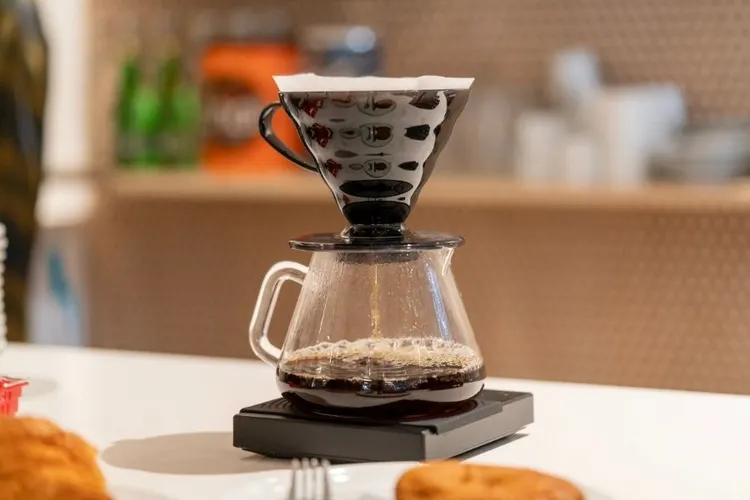
Both are pour-overs, so the moves are similar, but the cup is not. The Chemex's thick filter makes the cleanest, brightest, most tea-like coffee of the two. The Hario V60's thinner, ridged filter lets more oils and body through, for a rounder, fuller cup. Neither is better; they're different moods. If you're deciding what to buy, our roundup of pour-over coffee makers compares them side by side. (The folks at Chemex and the National Coffee Association's brewing guide are both good references if you want to go deeper on the fundamentals.)
The best coffee for a Chemex
Here's where the Chemex earns its keep. That thick filter strips out oils and sediment, which means it flatters the coffees with the most to say up high: bright, fruit-forward, washed coffees where clarity is the whole point. A dark, oily roast can taste a little thin and hollow brewed this way, because the filter takes out the very body it leans on.
So for a Chemex, I reach for:
- A washed light-roast coffee when I want the cup to sparkle. An Ethiopian or Kenyan brews up like jasmine and citrus, almost like a fine tea.
- A clean medium single origin when I want a little more sweetness and body while keeping that crisp finish.
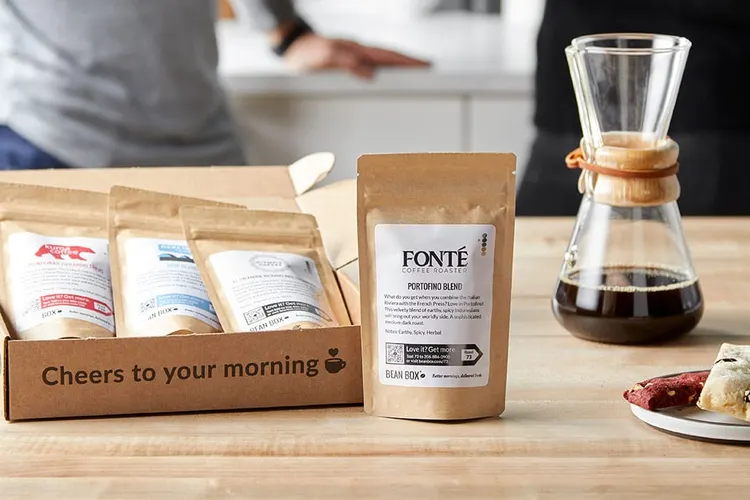
And freshness matters more than any gear. The Chemex is honest: a bag that's been open for a month tastes flat no matter how perfect your pour. That's why I keep a rotation of freshly roasted single origins going. If you'd like that handled, you can build a coffee subscription around your taste, and we'll send fresh-roasted coffee from dozens of independent US roasters, so there's always a Chemex-worthy bag on hand.
Keeping your Chemex clean
Wash the carafe with warm water and a soft brush after every use, and skip the scented soap unless you want your next cup to taste faintly of dish detergent. A monthly deeper clean with a coffee-safe cleaner keeps oils from building up in the glass. The filters compost beautifully, grounds and all.
Is a Chemex worth it?
If you like a clean, bright, nuanced cup and you enjoy a few minutes of slow ritual in the morning, yes. The Chemex rewards good beans and a little patience, and it brews enough for two in one go. If you want a fast, hands-off cup or a big thermal carafe for a crowd, an automatic brewer fits better. But for a single thoughtful cup or a shared pot on a slow weekend, it's hard to beat, and it earns its counter space on looks alone.
Frequently asked questions
What's the best ratio for a Chemex? Start at 1:16 by weight (about 42 g coffee to 680 g water), then nudge to 1:15 for stronger or 1:17 for lighter.
What grind size? Medium-coarse, like table salt. Too fine clogs the thick filter and turns bitter; too coarse runs fast and weak.
How much coffee for a full Chemex? Around 42 g (about 7 tablespoons) to 680 g of water; halve it for a small batch.
Why rinse the filter? It rinses out the papery taste and preheats the carafe so the brew temperature holds.
Chemex or V60? Chemex for the cleanest, brightest cup; V60 for more body. Both are excellent.
Why is my coffee bitter? Usually too fine a grind choking the filter. Grind coarser and pour a little slower.
One last pour
A Chemex looks fussy and behaves simply: rinse, bloom, pour slow, mind one number at a time. Get the ratio and grind right, pour with a little patience, and start with a bright, fresh bean worthy of that clean cup. Then stand there a minute and smell it brew. That part's not optional.
We want to help you make better coffee at home. Our recommendations are our own, and never sponsored. If you see something you love and buy it through our links, we may receive an affiliate commission (thanks for that!).