The Best Coffee of the Month Clubs for Gifts: What Actually Makes a Good One
 Maryna Gray
• July 23, 2026 — last updated July 21, 2026
Maryna Gray
• July 23, 2026 — last updated July 21, 2026
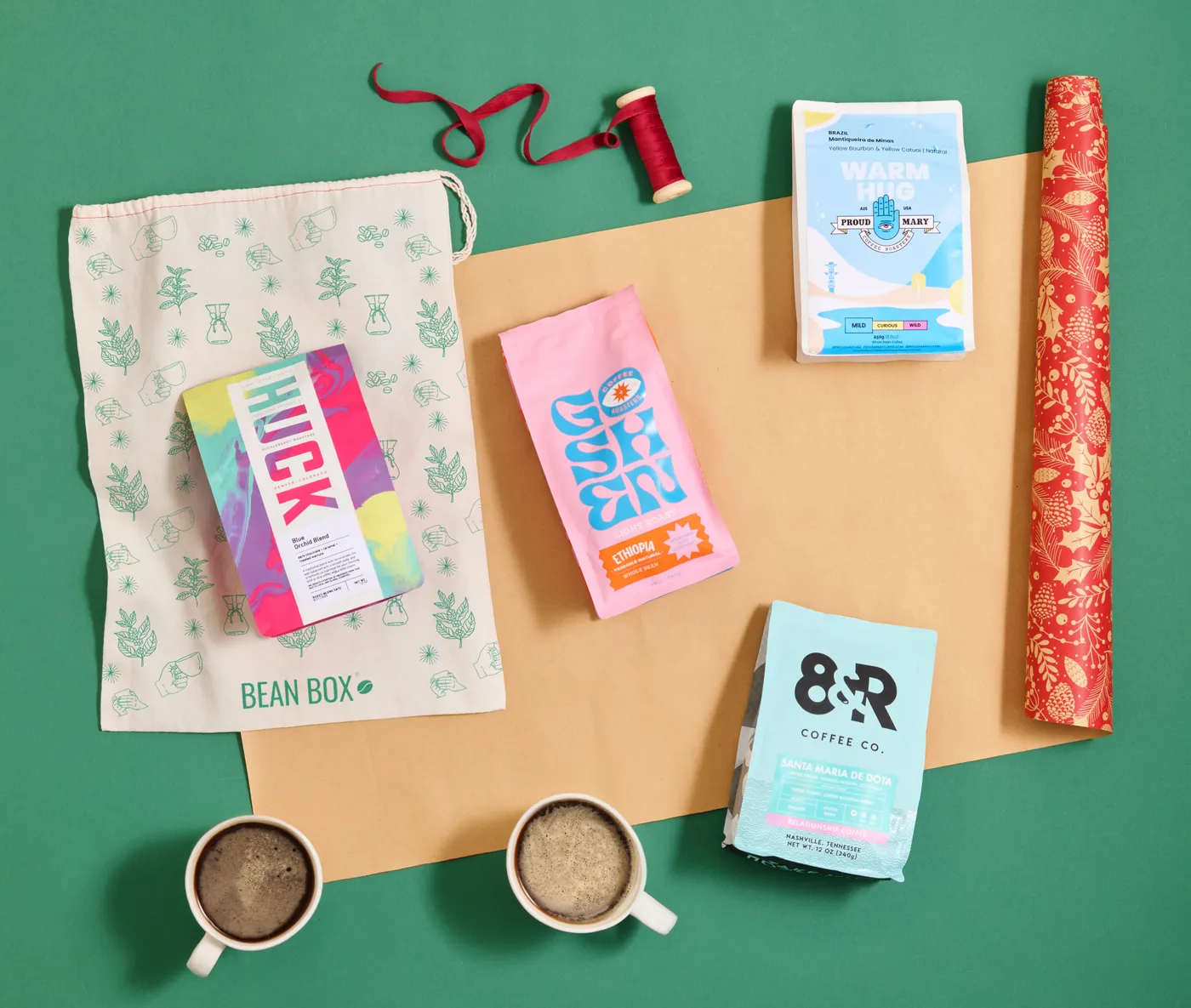
We've all stood in the gift aisle holding a bag of beans, turning it over, wondering if it's enough. It's a nice thought. It's also gone in two weeks, and muted long before that. Meanwhile the version of this gift that actually lands is the one nobody's holding in that aisle: a fresh, fragrant bag showing up on someone's doorstep every month, the kind of bloom you only get from coffee roasted days ago, not a brick that's been sitting on a shelf since spring.
That's the promise of a coffee of the month club, and it's a genuinely lovely thing to give. Roughly 83% of US adults drink coffee regularly, per a figure USA Today has reported, so the odds that your person wakes up reaching for a cup are very, very good. The trouble is that not every club is worth giving. Some are thoughtfully curated. Some are a single warehouse shipping you whatever moved slowest last week. The difference is the whole gift.
I curate coffee for the Bean Box family, and I've tasted more bags than I can count, so I'll show you exactly what separates a club worth gifting from one that just shows up. A month club is one wonderful way to give coffee, and it isn't the only one. If a subscription isn't quite the move, you can browse our full lineup of coffee gifts instead. But if it IS the move, here's how to pick a good one.
Here's the short version
We all want to give a gift that lasts longer than a week, and a great coffee of the month club does exactly that: fresh, curated coffee arriving on schedule, so let me walk you through the five things that separate a real one from a glorified gift box.
- A good club ships fresh-roasted coffee inside its peak window, not a shelf-stale brick.
- The five separators are a printed roast date, a network of independent roasters, human curation, educational packaging, and gift-friendly terms with no surprise auto-renew.
- Match the plan to who's getting it (an explorer, a creature of habit, someone just getting into specialty coffee) and the length, 3, 6, or 12 months, to the occasion.
What makes a coffee club gift different from a bag of coffee
Let me make the case, because the difference is bigger than it looks.
A single bag is a single moment. They open it, they brew it, and roughly two weeks later it's gone, the last few cups already tasting tired. A club is an experience that unfolds across months. There's the anticipation, the doorstep arrival, the little ritual of tearing open a fresh bag and pressing your nose to it. One bag is a snack. A club is a standing reservation.
Then there's freshness, which is the part most gift-givers never think about. Coffee hits its stride roughly 7 to 21 days after it's roasted, and within a couple of months it goes flat and muted, even the extraordinary stuff. (This window is specialty-coffee consensus more than peer-reviewed science, but it's widely repeated by roasters for good reason.) A grocery brick has often sailed past that window before it ever reaches the shelf. A roast-to-order club ships inside it, so the bag your recipient opens still smells like something. We go deeper on why fresh-roasted coffee tastes different, but for gifting purposes, this is the headline: freshness is the cleanest line between a real club and a supermarket-adjacent one.

And then there's discovery, which is the gift a single bag simply cannot be. A good club introduces your person to roasters and origins they'd never have pulled off a shelf themselves. The Guatemalan washed lot. The natural Ethiopian that tastes like strawberry jam. The tiny roaster two states over they'll be telling their friends about by month three. You're not giving them coffee. You're giving them a guided tour of coffee, with someone else doing the picking.
What matters most: the five things that separate a great club
When I'm evaluating any club as a gift, these are the five things I look for, in order.
From our coffee sommelier
Maryna's weekly picks
“I taste thousands of coffees a year — I’ll only send you the few worth brewing.”
Something went wrong — please try again.
Free · Weekly · Unsubscribe anytime
A printed roast date. This is the single clearest quality tell there is. It says the roaster has nothing to hide and that the coffee was made for you, not pulled from a pallet. Roast-to-order plus ship-within-days beats a vague "best by" stamp every time. If a club won't show you when the coffee was roasted, that tells you something too.
An independent-roaster network. Breadth of small roasters is where discovery and quality both live. A club built on a single mega-roaster's warehouse feels like a lottery, the same handful of beans rotating past you. The opposite is curation with range. We curate from 61 independent roasters across the country, which is what lets a Nashville roaster, a Seattle roaster, and a tiny outfit you've never heard of all land in the same year of shipments. Podium Coffee Club puts it well when they say to favor curation over chaos and skip the clubs that feel like a lottery.
Human curation over algorithmic. This is the one I care about most, and it's where I'll be honest about my own bias. I'm a juror with the Cup of Excellence, which means I sit at cupping tables scoring coffees against each other, and a human palate catches things a quiz never will: the texture that's all wrong on paper but gorgeous in the mug, the lot that's technically "fruity" but actually tastes like a Sour Patch Kid, the sleeper that scores quietly and drinks like a dream. An algorithm matches keywords. A person tastes. If this framework is the kind of curation you want for yourself or your person, our Coffee Plan is built on exactly it, and you can set up a coffee subscription in a couple of minutes. For a sense of what a human palate actually surfaces, our award-winning coffees are a good window in, and credentials like the Good Food Awards are the kind I trust on a roaster's bag.
Educational packaging. Tasting notes, an origin story, a brewing tip or two: these turn a bag into a small experience instead of a grocery transaction. Atlas Coffee Club, for instance, tucks a postcard from the origin country into every shipment, which is a lovely example of the category. The packaging is part of the gift. When your person reads that the coffee they're holding came from a specific farm at a specific elevation, the cup tastes more like a story.
Gift-friendly flexibility. A real gift subscription is prepaid, fixed-term, and ends on schedule, with no surprise charge waiting for your recipient three months in. Wirecutter has called flexibility a hallmark of a quality subscription, and that tracks. The best clubs make the terms obvious. The worst bury an auto-renew in the fine print and let your thoughtful gift turn into a billing surprise. (If it's a club for yourself rather than a gift, here's the best coffee subscription for every type of drinker.)

Match the club to who's getting it
A great gift isn't the most expensive plan. It's the one that fits the person. Three quick portraits.
For the explorer
You know this one. They order the weird thing on the menu on purpose. They want variety, origins they've never tried, the thrill of a coffee they'd never have picked for themselves. For them, look for a club with single-origin rotation and a broad roaster network, the kind that leans into surprise rather than "pick your usual." A natural Colombian one month, a washed Kenyan the next, something tropical and a little wild after that. Our single-origin coffees are the explorer's playground: one farm, one region, one personality per bag, no blending to round off the edges. Give them a plan that keeps the surprises coming and let them chase the flavors down.
For the creature of habit
The opposite person, and just as lovable. They want the same great cup, reliably, not a science project on the counter at 6 a.m. For them, the win is roast-level matching and the option to set preferences, a club that lets you lock in their lane and keep the quality high inside it. If they live in a bright morning cup, point the plan toward our light-roast coffees. If they want it bold and chocolatey, set it to dark-roast coffees and let them relax. The gift here isn't novelty. It's the relief of never running out of the good stuff they already love.
For the new-to-specialty
Maybe they've only ever known the can, or the pods, and you want to gently open a door. For this person, educational packaging earns its keep: tasting notes that tell them what to expect, brewing tips that don't assume a chemistry degree, no jargon wall to climb. Steer them toward gentle, approachable medium roasts to start, the crowd-pleasers, and let the little cards in each shipment do the teaching. The first time they catch the cherry note the bag promised, something clicks. That's the moment you're giving them.

The Bean Box angle, and why curation is the whole game
So where do we land on our own five criteria? Honestly, that's the test I'd want any club to pass before I recommended it.
We're built on independent US roasters and hands-on curation, which is the human-palate criterion made concrete. I taste these coffees. As a Cup of Excellence juror, I'm scoring lots against each other often enough that "is this actually good" isn't a marketing question for me, it's the day job. That's the difference between a club that picks for you and a quiz that guesses.
On the practical side: 12oz bags, tasting notes and brewing tips in every shipment, free US shipping, and 3-, 6-, and 12-month gift plans that don't auto-renew. The curation pool is the part I'm proudest of. We keep 657 coffees from 61 independent roasters in the rotation, with 12oz bags running about $19.50 to $21.50, which is what makes "no two months taste the same" a fact rather than a slogan. Your person could drink Bean Box for a full year and never repeat a coffee. That range is the gift.
Don't overthink it: how long, whole bean or ground, and the no-auto-renew promise
A few quick answers to the questions that actually slow gift-buyers down at checkout.
How long? Three months is plenty for a first-timer, a real taste of the experience without a big commitment. Six months is the sweet spot most people land on: long enough to be memorable, not so long it feels open-ended. Twelve months is the best value and the right call for a committed coffee drinker who's going to brew daily regardless. Match the length to the occasion and your budget, not to some rule.
Whole bean or ground? Whole bean if they own a grinder, full stop, because grinding right before brewing keeps the aroma and flavor at their peak. If they don't own a grinder, or you're not sure, send it ground, the open, brew, enjoy route. A great coffee they can actually make beats a fussier one sitting unground in the cabinet.
Will they get surprised by a charge? No, not with a real gift plan. Prepaid gift subscriptions are paid once, up front, and end on schedule. The recipient never sees a bill. For context, most specialty clubs run about $15 to $25 a bag, and our 12oz bags run about $19.50 to $21.50, with larger 2lb and multi-bag options into the mid-$40s, so you can match the plan to your budget without guessing.
The right gift is the one matched to the person and the occasion, and the five criteria get you there: a roast date you can see, real roasters behind it, a human doing the picking, packaging that teaches a little, and terms that won't surprise anybody. Get those right and you're not handing over a bag of beans. You're handing over months of good mornings. Still browsing? Here are more coffee gift ideas to round out the list.
We want to help you make better coffee at home. Our recommendations are our own, and never sponsored. If you see something you love and buy it through our links, we may receive an affiliate commission (thanks for that!).
From our coffee sommelier
Maryna's weekly picks
“I taste thousands of coffees a year — I’ll only send you the few worth brewing.”
Something went wrong — please try again.
Free · Weekly · Unsubscribe anytime
Coffees You Might Like

Ethiopia Sidamo Oromia Natural - Light
Blueberries, Stone Fruit, Chocolate
$20.21

Colombia, Willow
Stone Fruit, Chocolate, Berries
$26.65

Guatemala FECCEG Joyabaj Natural - Certified Organic, Fairtrade
Blueberries, Black Currant, Chocolate
$21.20

Colombia La Pelota
Stone Fruit, Chocolate, Citrus
$21.45