The Best Coffee Subscription for Every Type of Drinker
 Maryna Gray
• June 04, 2026 — last updated June 05, 2026
Maryna Gray
• June 04, 2026 — last updated June 05, 2026
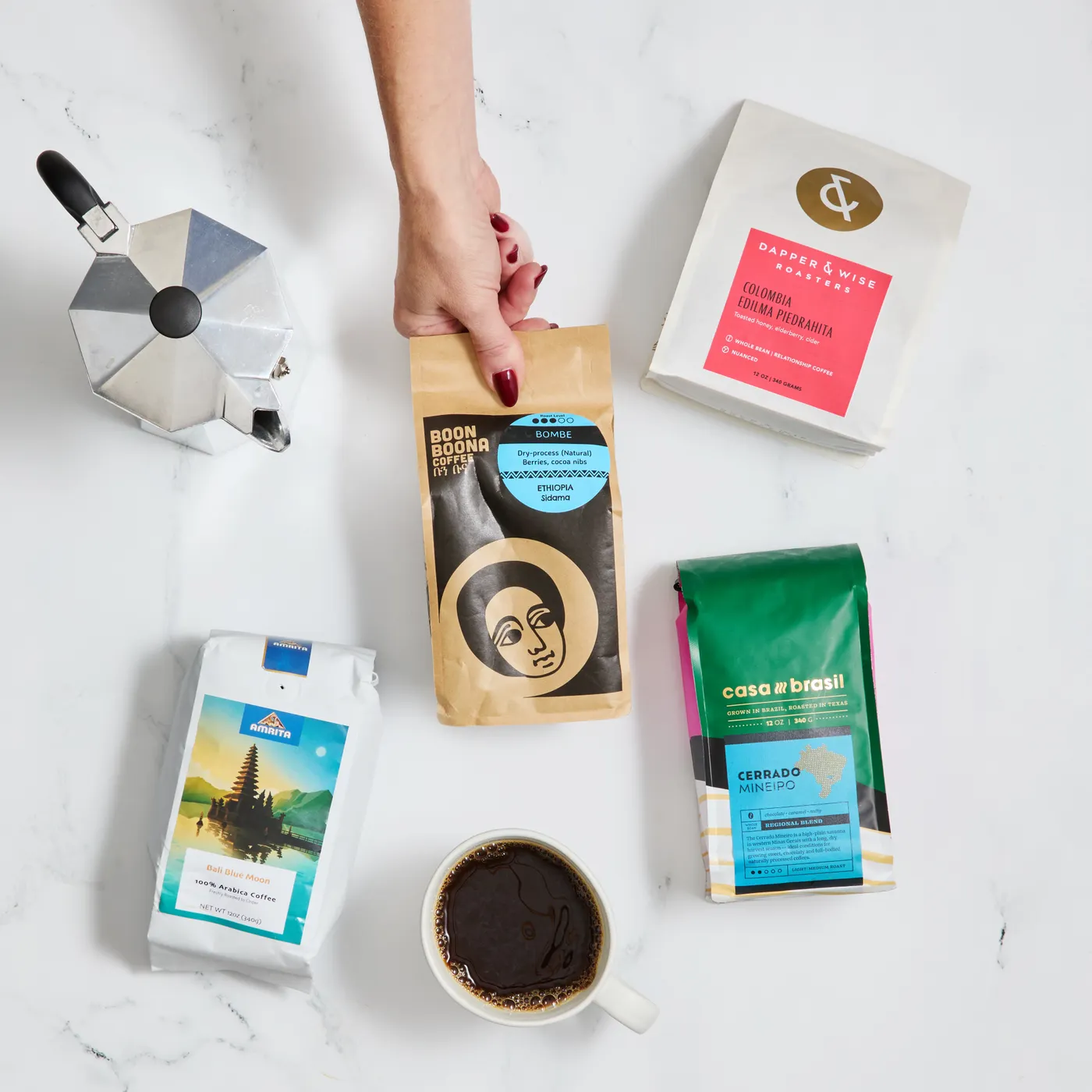
We've all stood in front of the same list. Trade, Bean Box, Atlas, MistoBox, Driftaway, Cometeer, Counter Culture, Equator, and eight more — every coffee subscription page in the SERP promises the same thing in slightly different words, and none of them tells you which one is right for you. One blog calls Trade the obvious pick. The next swears by a single-roaster only your favorite barista has heard of. And then there's me, telling you Bean Box, but I'd say that, wouldn't I?
I want you to walk away from this knowing which subscription fits the way you actually drink — a velvety milk drink before work, a quiet pour-over while the kettle still steams, or a decaf you don't have to apologize for at four in the afternoon. The right service is the one that matches your morning, not the one with the loudest marketing.
I curate Bean Box's catalog, I've judged coffee for Cup of Excellence, and I'll walk you through six honest archetypes plus a short framework for picking between them — the same framework I use at the COE juror table, adapted for your kitchen. I'll tell you when a competitor is the right answer — Swiss Water for hardcore decaf devotees, Atlas for the literal-passport explorer, an espresso-specialist single roaster if you only want one roaster's voice. That's the curator's job.
The short answer
We all want a coffee subscription that ships beans we'll actually drink — not bags that gather dust on the counter — and the trick is matching the service to how you brew, not how the marketing reads.
- Match the service to the drink. Espresso, pour-over, milk drinks, and decaf each ask different things of a subscription.
- Multi-roaster is for variety; single-roaster is for depth. Pick multi if you want to explore (Bean Box, Trade, Atlas, MistoBox). Pick single-roaster if you've already found a roaster you trust (Equator, Onyx, Counter Culture, Verve).
- Pause, skip, and cancel should be one click. Anything else is an old-internet artifact.
What to look for before any pick gets named
Four things decide whether a subscription is worth your counter space.
Single roaster or multi roaster. Single-roaster (Equator, Onyx, Counter Culture, Verve) sends one company's coffees in one company's voice. Predictable, deep. Multi-roaster (Bean Box, Trade, Atlas, MistoBox) rotates across dozens of independent roasters. Exploratory, built for variety. Multi wins for first-time subscribers — you don't yet know what you like, and you can't find that out by drinking the same roaster every week. Sprudge's taste-and-budget breakdown frames the same fork as discovery engine versus daily driver.
Freshness measured from roast date. Coffee loses roughly 40 percent of its volatile aromatics within the first two weeks of roast. Grocery bags typically sit three to six months between roast and cup. A real subscription ships within days of roasting. If the service can't tell you the roast date on the bag, it's a grocery service in nicer clothes. The why-fresh-roasted-matters deep-dive is its own piece if you want the full version.
Flex you can use in one click. Pause, skip, change roast type, change frequency, cancel — all of it should live in your dashboard, not in a chat queue. Table stakes in 2026. If a service makes you email support to pause, that tells you how they think about customers.
Fit to how you actually drink. An espresso drinker on a single-boiler machine should not be subscribing to a light-roast filter rotation. A pour-over explorer should not be on an all-blends plan. Match the curation lane to the brew method that owns your mornings, and the bags get drunk instead of stockpiled.
Is it worth the money? If you drink one bag of specialty coffee every one to two weeks, a subscription typically lands at $0.58 to $0.71 per cup. The median cafe drip clocks in around $3.65. Worth it. If you mostly buy $8-a-pound grocery coffee and don't notice freshness, no — the math doesn't move yet. The full $1,500-a-year coffee-habit math is its own piece if you want to run your numbers.
If your reading says "multi-roaster, fresh, flexible, configured to my brew," our Coffee Plan runs that lane. I curate it, you tell it what you drink, it adjusts. My bias is plain. I'll still tell you when a competitor is the right call.
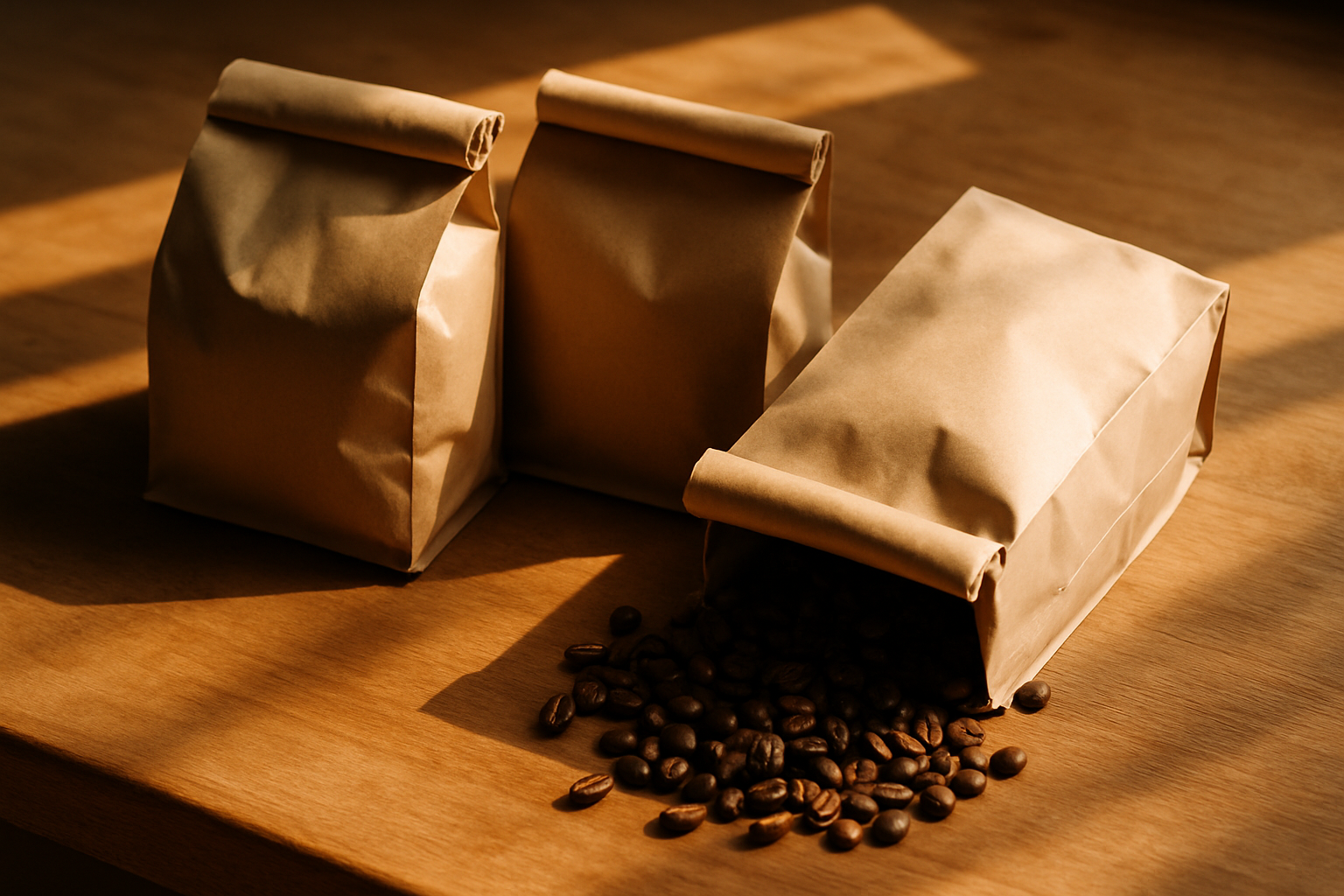
The beginner — "I want one bag I'll love"
You drink coffee daily. You've poked around enough to know grocery beans aren't quite right. You're not yet committed to a brew method or a roaster — you want curation, not configuration.
From our coffee sommelier
Maryna's weekly picks
“I taste thousands of coffees a year — I’ll only send you the few worth brewing.”
Something went wrong — please try again.
Free · Weekly · Unsubscribe anytime
A curator-led pick is the move. Multi-roaster services that send "whatever's best this week" from across their network. Bean Box's Curator's Choice plan and Trade's curated plan both fit. Atlas's international rotation is a fine variant if your question is really "show me coffee from somewhere I've never been."
Honest call. If you're a beginner and don't want to think, Bean Box's curator-led plan is what I'd hand you. That's my bias. Trade is a strong second if you want algorithmic recommendation rather than a single curator's voice — their moat. Atlas if your beginner question is really a curiosity question.
When NOT to pick this lane. If you already own a brew method — a Bambino, a V60, an AeroPress — skip ahead to the espresso or pour-over section. If you'd rather sample what other readers have loved first, our best-selling coffees is a good first crawl.
The espresso pull — "I want espresso-suited beans"
You pull shots at home. Bambino, Gaggia, Lelit — the machine doesn't matter for this section. You want bags that were chosen with espresso in mind, not light filter roasts retrofitted into a portafilter.
An espresso-specific lane is the move. Bean Box's Espresso plan rotates espresso-suited coffees across our partner roasters. Most of them medium-roast, which surprises drinkers who still associate espresso with very dark beans. If you want depth from one roaster, Equator's espresso subscription around $17.50 per 12oz is the consensus single-roaster pick. La Marzocco Home's subscription is the higher-end equivalent.
Honest call. Multi-roaster if you want to explore where modern espresso has gone — chocolate-and-caramel blends, fruit-driven Ethiopian washeds, natural Colombians that taste like blueberry pancakes. Single-roaster if your morning shot has one voice. Don't subscribe to a generic filter plan and try to pull espresso from it — those beans weren't chosen for the brew.
When NOT to pick this lane. If you only make milk drinks with classic dark-roast espresso, a single-roaster traditionalist (Counter Culture's Big Trouble, for instance) might serve you better than a rotation. Coffees for espresso is where the espresso-suited bags live in our catalog.
The pour-over explorer — "I want different single origins"
You brew V60, Kalita, Chemex, AeroPress — any method that lets a single coffee's character come through without the cover of milk or blend. You want clarity, and you want a different origin every couple of weeks.
A multi-roaster service with a single-origin filter, or a single-roaster who specializes in single origins (Onyx, Verve, Counter Culture). Atlas Coffee Club is the canonical passport-around-the-world pick — Q-grader Erika Vonie's framing in Saveur's Q-grader-led roundup is fair. Bean Box's Single Origin plan is the multi-roaster version of the same idea.
Honest call. Atlas if your priority is geographic variety — country named on the box, one origin per shipment. Bean Box's Single Origin plan if your priority is curatorial variety — a different roaster's take each shipment, often with processing variety baked in (a washed Ethiopian, then a natural Colombian, then a honey-processed Costa Rican).
When NOT to pick this lane. If you mostly drink blends or milk drinks, single origins are the wrong choice — they shine in clear filter brews, not in flat whites. Single-origin coffees is the multi-roaster lane in our catalog.
The decaf devotee — "Don't make me settle on flavor"
You drink decaf in the afternoons, or you've quit caffeine entirely, or you alternate. Either way, you're tired of decaf that tastes like cardboard. You just want better decaf to keep arriving.
A subscription that treats decaf as a real curation problem, not an afterthought toggle. The genre leader for hardcore decaf devotees is Swiss Water Decaf Curated — chemical-free Swiss Water Process decaf, and they only do decaf. The specialist pick. Bean Box's Decaf plan rotates decaf coffees from across our partner roasters, giving you variety across origins while staying decaf throughout.
Honest call. If decaf is what you drink, period, Swiss Water deserves the slot. If decaf is most of what you drink but you want roaster and origin variety, a multi-roaster decaf rotation (ours, honestly, but Trade and MistoBox both filter to decaf) gives you a wider catalog.
When NOT to pick this lane. If you only drink decaf occasionally, a regular plan with decaf flexibility is enough. Decaf coffees is our full decaf catalog.

The gift buyer — "I'm buying this for someone else"
You're not the drinker. You're buying for a sibling, a parent, your team. You don't know their roast preference, and they don't want to fill out a quiz to start.
A pre-paid 3, 6, or 12-month plan with a welcome card. The recipient can adjust roast level or frequency once it starts, but no account setup is required from them on day one. Most major services — Bean Box, Trade, Atlas, MistoBox — all offer this format. It's the standard 2026 gift framing.
Honest call. Pre-paid gift plans are nearly identical across services on the mechanics. Choose on curation lane — variety versus depth, filter versus espresso — and on whether the recipient already knows a roaster they love. If they don't, multi-roaster always wins for a gift. They get to taste several before deciding, which is the whole point of a gift you're not the drinker for.
When NOT to pick this lane. If your recipient owns a specific brew setup — a Bambino, a Chemex, a moka pot — buy them beans that fit it. A curator-led plan that might miss the brew is a worse gift than one bag of the right beans.
Don't overthink it — what to actually pick
If you're a beginner, take a curator-led multi-roaster plan. If you pull espresso, take an espresso-specific plan. If you brew pour-over and want variety, take a single-origin plan. If decaf is what you drink, take a decaf plan — Swiss Water if you want a specialist, multi-roaster if you want variety inside decaf. If you're buying a gift, pre-paid multi-roaster wins by default. Hands down.
I curate Bean Box, so my picks lean to the Bean Box plan that matches your archetype. I've also told you which competitors win where — Swiss Water for hardcore decaf, Atlas for the international tour, Equator or Counter Culture for single-roaster espresso. The honest curator's job is to know when somebody else is the right answer. The category is growing fast — Daily Coffee News on specialty's 2025 milestone reported that 46 percent of US adults drank specialty coffee in the past day, surpassing traditional for the first time. Use the framework, not the brand names.
If multi-roaster, fresh, flexible, and configured to your brew method is the right answer for you, our Coffee Plan is three questions and you're done. Roast type, frequency, grind. The rest is curation. Hop on.
We want to help you make better coffee at home. Our recommendations are our own, and never sponsored. If you see something you love and buy it through our links, we may receive an affiliate commission (thanks for that!).
From our coffee sommelier
Maryna's weekly picks
“I taste thousands of coffees a year — I’ll only send you the few worth brewing.”
Something went wrong — please try again.
Free · Weekly · Unsubscribe anytime