How to Read a Specialty Coffee Bag Without Pretending to Be a Pro
 Maryna Gray
• July 21, 2026 — last updated July 21, 2026
Maryna Gray
• July 21, 2026 — last updated July 21, 2026
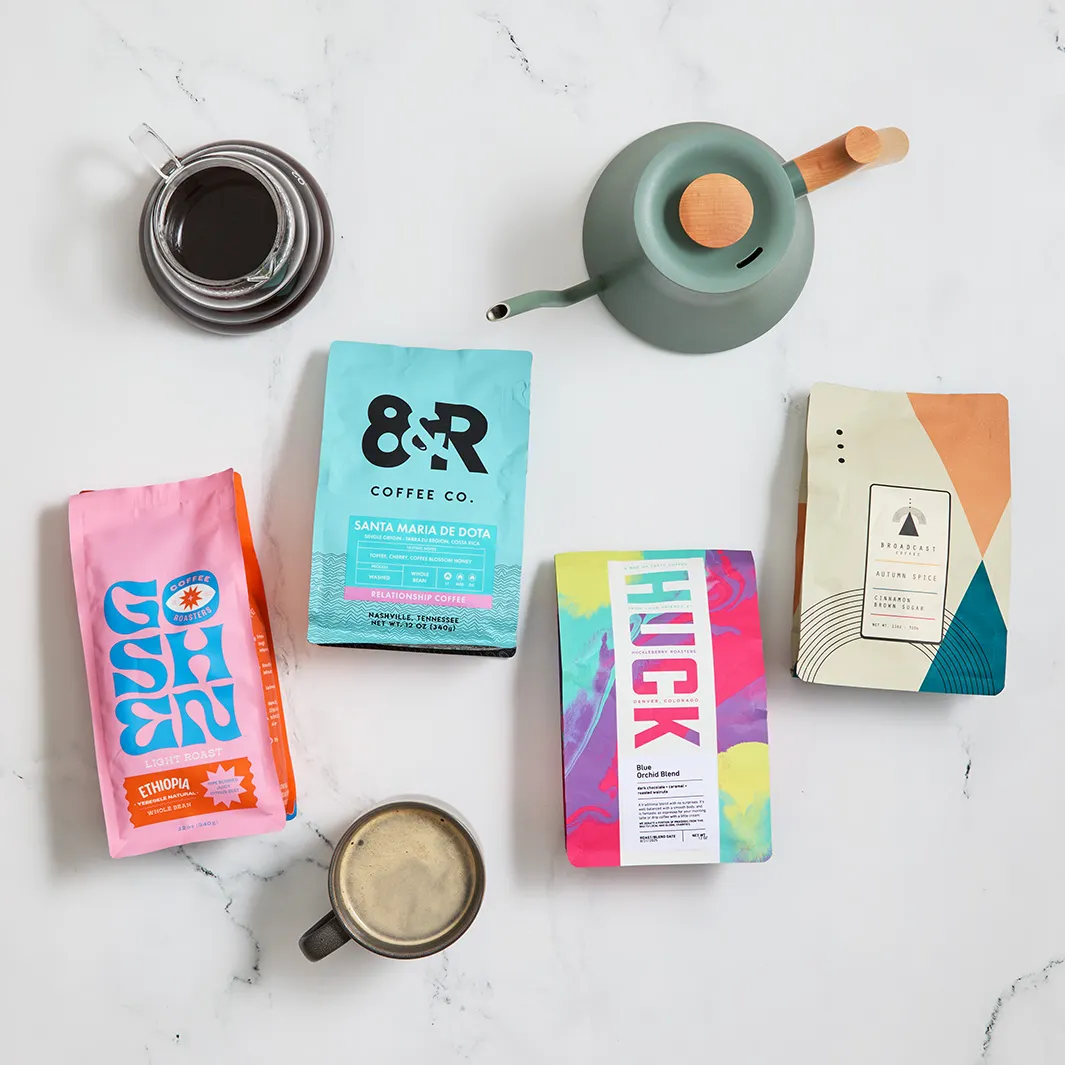
Most of us have stood in a coffee aisle holding a bag covered in words we half-recognize. Washed, Caturra, 1,750 m.a.s.l., Huila. Wondering which of those actually predict what's in the cup, and which are coffee-nerd Latin for "trust us." The bag is a tiny dossier. The question is which fields are doing real work, and which are decoration.
What you're really trying to buy is the cup. The chocolate or the citrus, the syrupy weight or the clean finish, the bright Sunday-morning lift or the Saturday-night cocoa. So let me walk you through the six things on a specialty bag, in the order of how much they actually tell you, and the two you can safely ignore.
Every specialty bag is a description of what's about to be in your mug. Six fields are doing real work; the rest is decoration. Most label guides hand you the fields alphabetically, in the order they happen to sit on the bag. This one hands them to you ranked. Roast date first. Then origin, process, variety, altitude. Then the legacy codes and seals that get a glance and not much more.
I read coffee bags for a living, and the first thing my eyes land on is the roast date. Not because I'm a freshness purist. Because freshness is the only field that, if it's wrong, makes every other field on the bag irrelevant. A ten-day-old single origin smells like jasmine and stone fruit even in the grind. A three-month-old single origin smells like cardboard. Same bag. Same words. Different coffee.
The short answer
We all love a beautifully designed coffee bag, but you can read a specialty label in about ten seconds once you know which six fields are doing the work and which two you can ignore, and I'll walk you through it.
- The freshness check comes first. A printed roast date, ideally 7 to 21 days back, is the single most-load-bearing field on the bag. A "best by" date alone is a red flag.
- The taste predictors come next, in order. Origin tells you the most about what to expect, processing is the loudest knob the bean has ever turned, variety nudges the flavor potential without determining it, altitude rounds out the picture.
- The decorative fields come last. Grade codes (SHG, SHB, AA) are legacy. Certifications signal sourcing intent but aren't a quality guarantee.
Field one — roast date: the only field that, if it's wrong, breaks the rest
A specialty coffee bag's most-important printed field isn't anything about origin or variety. It's the roast date. Haiku Brew has called it "the single most important piece of information on any coffee bag", and the rest of the specialty world tends to agree.
The roast date is the day the beans came out of the roaster. Not the day the bag was packed, not the day it shipped. The day of the roast itself.
Peak flavor lands roughly 7 to 21 days after roast. Beans noticeably fade after 4 to 6 weeks, per Driven Coffee's decoder and Bean Box's own freshness piece. A bag inside that window will deliver the cup the label is describing. Outside it, the flavors get muddier and the cup runs flatter. The why-fresh-roasted-matters deep-dive is its own piece on what "fresh" actually means and how to make sure you're getting it.
A "best by" or "use by" date alone is a shelf-life claim, not a flavor claim. A specialty roaster who cares about the cup prints the roast date. Treat the absence of one as a small red flag. Not a deal-breaker, but a signal that the roaster is selling on a different axis than freshness.
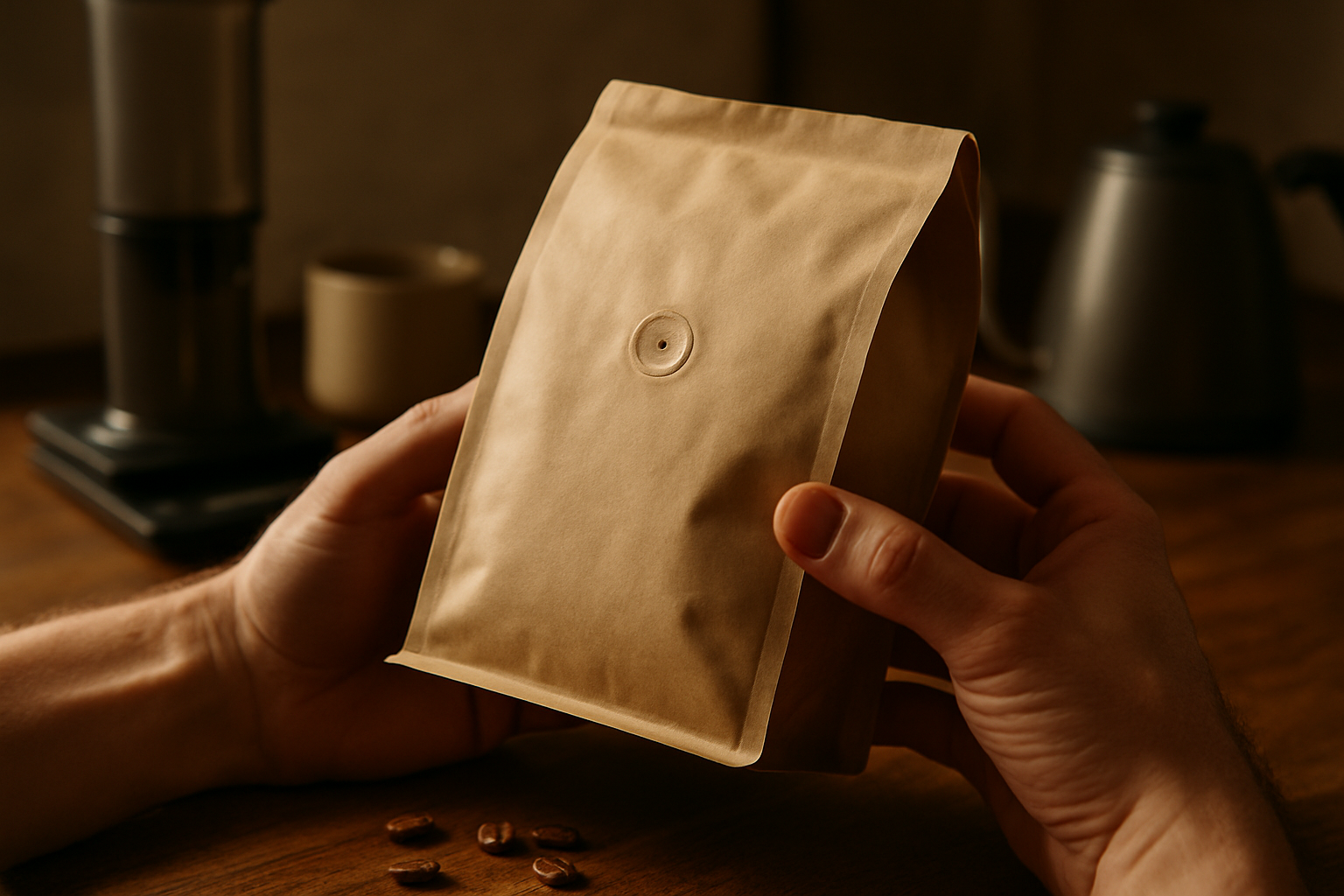
One more packaging cue worth knowing: the little plastic disc on the side of the bag is a one-way valve. It lets carbon dioxide off-gas from fresh-roasted beans without letting oxygen in. A valved bag is a small but real sign the roaster is taking offgassing, and freshness, seriously.
Field two — origin: where the cup's accent comes from
Origin is the field that tells you the most about what the cup will taste like. Country, region, sometimes farm or estate. The more granular the origin on the label, the better the roaster's traceability tends to be, and the more honest the description of the cup tends to be, per Atlas Coffee's single-origin primer.
From our coffee sommelier
Maryna's weekly picks
“I taste thousands of coffees a year — I’ll only send you the few worth brewing.”
Something went wrong — please try again.
Free · Weekly · Unsubscribe anytime
Single origin on the label means beans from one country, region, farm, or estate, not blended with coffee from anywhere else. Single origins tend to carry the country's signature: bright citrus and tea-like florals from Ethiopia, balanced caramel and cocoa from Colombia, deep cocoa and brown sugar from Brazil, herbaceous earth from Sumatra. Reach for single-origin coffees when you want the bag to point at one specific place on the map.
Blend on the label means two or more origins combined to a target flavor profile the roaster is building toward. Blends are tuned for consistency and balance, often built to play nice with milk. Reach for coffee blends when you want a reliable house cup rather than a postcard from one farm.
Bean Box catalog runs roasts from across the global coffee belt, with sixty-plus origin sub-regions showing up across our live lineup. The breadth shows up on labels as the difference between "Ethiopia" and "Ethiopia Guji Hambela Suke Quto." That granularity is doing real work. It's how a roaster signals the level of traceability they've actually achieved, all the way down to a co-op, a washing station, or a single farmer's lot.
When I see "Ethiopia Guji" on a bag, my brain pre-loads peach, jasmine, a tea-like body, a finish that lifts off the palate. When I see "Brazil Cerrado," my brain pre-loads chocolate, brown sugar, a heavier weight. Single-origin pour-over is what I drink most mornings. This is where the bag really starts predicting the cup.
One honest caveat: origin is necessary, not sufficient. A Colombian processed naturally and roasted to a French dark won't taste like the Colombian washed light you had last month. Origin is the accent. The next three fields are the syntax.
Field three — process: the loudest knob
Of every field on the bag, process is the one that changes the cup the most for a given origin. Same farm, same variety, same altitude: wash the cherry or dry it inside the cherry, and you get two genuinely different coffees.
Washed. Fruit and mucilage stripped off the bean before drying. Clean, bright cups with the flavor of the bean itself and the noise of the fruit removed, per Perfect Daily Grind's label guide.
Natural (sometimes "dry" or "sun-dried"). Bean dried inside the cherry. Fruit-forward, sometimes tangy or boozy from the fermentation that happens during the drying. Berries, tropical fruit, a noticeable winey sweetness in the best of them.
Honey (sometimes "pulped natural"). The mucilage, the sticky sweet middle layer, stays on the bean during drying. Sweet, syrupy, in between washed and natural. The clean precision of washed plus some of the fruit lift of natural, per Bean Box's processing explainer.
Anaerobic. A newer category. Cherries fermented in a sealed, oxygen-free environment before drying. Wild, often funky, tropical, sometimes with a fermented-pineapple or jackfruit lift. Polarizing on purpose.
Roughly four in ten of the roasts in the live Bean Box catalog are washed. Naturals run about one in six. Honey is a smaller bench. Anaerobic is rare-by-design. Washed is the specialty default for a reason: clean cups, predictable cups, the truest version of the bean. The washed, natural, honey deep-dive is the companion piece on which process points at which cup.
Field four — variety: a nudge, not a verdict
Variety is the genetic baseline of the bean: Bourbon, Caturra, Typica, Geisha, SL28, Pacamara. It nudges the flavor potential. It doesn't determine it.
World Coffee Research's variety catalog lists fifty-five arabica varieties from fifteen producing countries. WCR's own multi-location variety trial work shows that variety interacts with where it's grown, what plant scientists call genotype-environment, or GxE, interaction. A SL28 grown in Kenya tastes nothing like the same variety grown somewhere it doesn't thrive. The variety opens a door. Soil, climate, processing, and roast walk through it.
More than fifty distinct arabica varieties show up across the Bean Box live catalog. The most common ones on the labels: Bourbon (the sweet baseline), Caturra (clean, citrus-leaning), Typica (mild and balanced), Castillo and Catuai (Colombian workhorses), Heirloom (an Ethiopian umbrella term for wild and local varieties). Geisha, the celebrity, is rare by design.
Use it as a hint, not a forecast. "Geisha" on a label says "expect floral and tea-like, in the right roaster's hands." It doesn't promise the cup will taste like a forty-dollar-per-cup competition lot.
Field five — altitude: the field that tells you the least by itself
Specialty arabica is typically grown above 1,200 m, in a band that runs up to about 2,000 m and sometimes higher. The number on the label, usually "m.a.s.l." for meters above sea level, is a genuine signal. It's also the field on this list that, by itself, tells you the least about how the coffee will actually taste.
Altitude correlates with slower cherry maturation, more time for the bean's sugars and acids to develop, and a brighter cup, per Perfect Daily Grind. PDG's own framing is careful: the slower a coffee plant grows, generally speaking, the more time the sugars have to develop. That's correlation, not guarantee.
A poorly processed 2,000 m coffee tastes worse than a well-processed 1,400 m coffee. The number is context, not a prediction. Treat altitude as confirmation rather than the headline: if origin, process, and variety already point at a cup you want, an altitude in the specialty band reinforces the picture. If they don't, altitude alone won't rescue the bag.
Fields six and beyond — what to safely ignore
The fields below this point still appear on some specialty bags. Most of them are doing less work than the marketing implies.
Legacy grade codes (SHG, SHB, AA). SHG ("Strictly High Grown," 1,200 m+) and SHB ("Strictly Hard Bean," 1,350 m+) are Latin American altitude grades. AA is an East African screen-size grade for the largest beans, per Royal NY's grading primer. Most specialty roasters use farm-level or producer-level traceability instead. When you see SHG or AA on a specialty bag, treat it as "the roaster wanted to include the historical grade," not "this is the field that explains the cup."
Certifications. Organic, Fair Trade, Direct Trade, Rainforest Alliance, Bird Friendly. They signal sourcing intent. None of them is a quality guarantee, and Fair Trade in particular doesn't promise the producer earned a living wage. The most material one in the Bean Box catalog by volume is organic, and if it matters to you, our organic coffees are a clean place to start. For the rest, a trustworthy roaster's sourcing page tells you more than the seal does.
Tasting notes. A genuine help. Tasting notes describe inherent flavors that come from origin, variety, processing, and roast, per Bean & Bean's primer. Nothing is added.
Where to start if a label still feels like a wall of jargon
The field order in this post is the read I do in about ten seconds when I pick up a bag. Roast date first, then origin, then process, then variety, then altitude as confirmation. Grade codes and certifications get a glance and not much more.
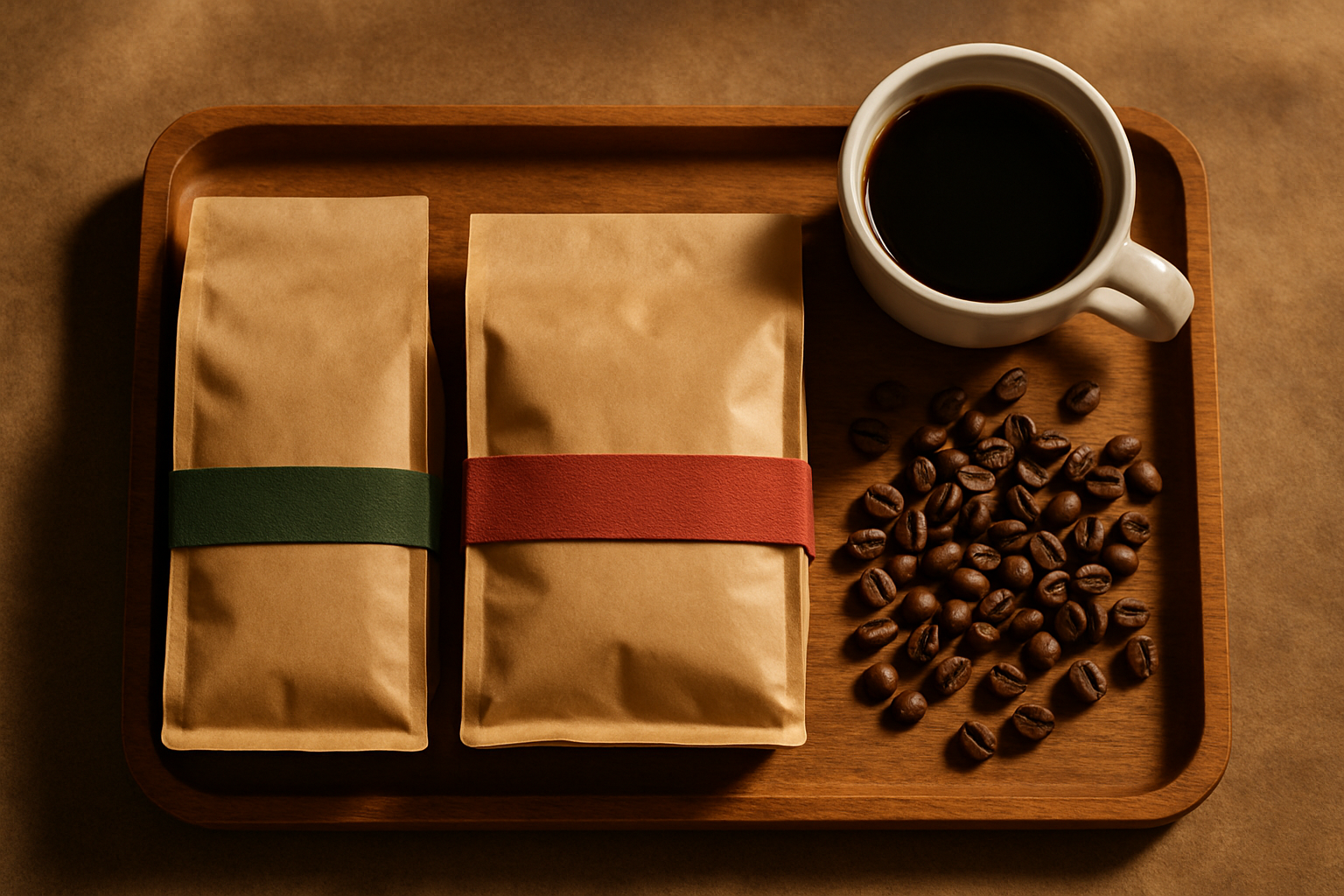
If you'd like a curated path through this, we have fresh-roasted specialty coffees showing up at your door with the roast date, origin, process, and variety already chosen by people who read labels for a living. Someone's already done the label work for you.
But the real win is the moment the bag's description and the cup in your hand line up. The first sip lands the way the label said it would. Peach where peach was promised, chocolate where chocolate was promised. The bag stops looking like a wall of jargon. It's just a description. And you can read it.
Tags: Specialty Coffee
We want to help you make better coffee at home. Our recommendations are our own, and never sponsored. If you see something you love and buy it through our links, we may receive an affiliate commission (thanks for that!).
From our coffee sommelier
Maryna's weekly picks
“I taste thousands of coffees a year — I’ll only send you the few worth brewing.”
Something went wrong — please try again.
Free · Weekly · Unsubscribe anytime