Single Origin vs. Blend: When Each One Is Actually the Better Buy
 Maryna Gray
• September 03, 2026 — last updated September 10, 2026
Maryna Gray
• September 03, 2026 — last updated September 10, 2026
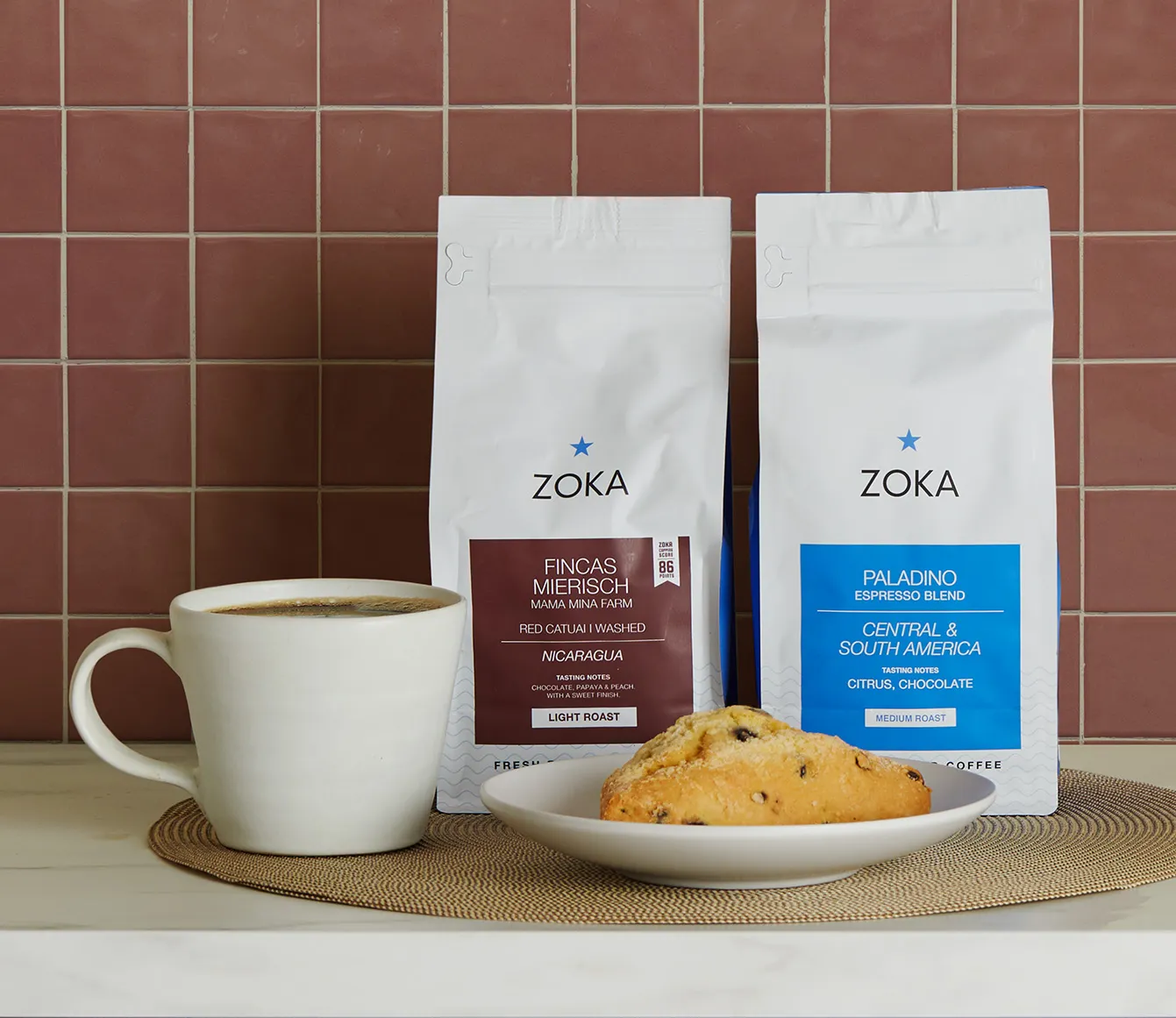
We've all stood in front of a coffee shelf, or squinted at a checkout page, reading "single origin" on one bag and "house blend" on the next, quietly wondering which word means better. Here's the honest answer: one of those bags is built to surprise you, a bright, fruit-forward cup that tastes like one specific hillside, and the other is built to comfort you, the same chocolatey, even-keeled morning cup every single time. Neither one is the "right" one. The right one is whichever fits what you're brewing and what you actually want out of the mug, and I'll walk you through exactly how to tell which is which.
Because here's the thing the labels do to us: "single origin" sounds premium, "blend" sounds like a downgrade, and that instinct is mostly wrong. So I'm not going to hand you the usual "it's not a competition" shrug and leave you there. You're getting a decision table and a clear buy-this-when fork, so the next time you're squinting at that shelf, you already know which hand to reach with.
The short answer
We all want to grab the "better" bag, but better isn't a category. You get a cup that actually fits your morning by matching the style to your brew method and your mood, and here's how that shakes out:
- Single origin is coffee traced to one place: a country, a farm, sometimes a single lot. It shows off character and variety, and it shifts a little vintage to vintage, because it's an agricultural product and weather is real.
- A blend is two or more coffees built together on purpose, engineered for balance and a signature flavor that holds steady cup to cup, season to season.
- Neither is higher quality by definition. Pick single origin to explore (especially in pour over or drip, and as black coffee) and a blend to relax (the forgiving default for espresso, milk drinks, and everyday brewing).
And this isn't a fringe-versus-mainstream thing. Most of our roasters carry both. Of our roughly 44 live partner roasters, around 32 keep at least one single origin on the shelf (a figure we re-check before publishing), so you're choosing between two everyday options, not a normal one and a fancy one.
What "single origin" and "blend" actually mean, side by side
Lead with the cheat sheet, then I'll fill in the nuance:
| Single origin | Blend | |
|---|---|---|
| What it is | Coffee from one identified place | Two or more coffees combined on purpose |
| Why it exists | To show off the character of one place | To build a balanced, repeatable signature flavor |
| Flavor it leans toward | Bright, fruity, floral, citrusy (about 3 in 5 carry those notes) | Chocolate, caramel, nutty (about 6 in 7 carry those notes) |
| Roast level it skews to | Lighter, to preserve origin character (roughly 6x more likely light than dark) | Darker and medium (roughly 2x more likely dark than light) |
| Best brew home | Pour over and drip, brewed black | Espresso, milk drinks, big batch everyday |
| Consistency year to year | Shifts with the season's crop | Held steady on purpose |
| Typical price | A touch higher (about $2 / ~11% more per 12 oz in our catalog) | A touch lower |
Those skews come from our own catalog, and I'm keeping them approximate on purpose; the category labels in any catalog are fuzzy, and we re-verify these numbers before a post goes live. But the shape is real and useful: single origins lean light and bright, blends lean darker and chocolatey. If you want our light-roast coffees, single origins are where they cluster; if you want dark-roast coffees, blends are.
One thing the table flattens: "single origin" is a ladder, not a single rung. At one end it can mean a whole country. At the other, a single micro-lot, one small distinct plot on one farm, processed and sold on its own. Hermanos Coffee Roasters has a good breakdown of the single-origin ladder running from country all the way down to nano-lot. The label signals traceability intent. It does not, on its own, promise a quality tier.
And a blend isn't just "we mixed some leftover beans." It's beans combined on purpose to hit a target profile, and it doesn't have to cross oceans to qualify. Two Ethiopians processed differently, one washed and clean, one natural and jammy, can absolutely be a blend; Trade Coffee has a nice note on blends built from one country. Think of a blend the way a baker thinks about a layer cake: each layer is chosen so the whole thing tastes the way it's supposed to, on purpose, every time.

When single origin is the better buy
You reach for single origin when you want to taste one place. The floral lift of an Ethiopian. The syrupy berry of a natural. The clean structure of a washed Colombian. Brewed black, in a pour over or drip, where there's nowhere for a single note to hide. That's the whole pitch: this cup tastes like one specific hillside in one specific season, and you get to meet it. Pour over is my own daily method for exactly this reason; I like to stand there and smell a single origin as it brews, the bloom puffing up its fruit before the first drop even lands.
From our coffee sommelier
Maryna's weekly picks
“I taste thousands of coffees a year — I’ll only send you the few worth brewing.”
Something went wrong — please try again.
Free · Weekly · Unsubscribe anytime
Now the honest tradeoff. A single origin shifts vintage to vintage. Weather is real, and this season's lot won't taste identical to last year's. For explorers, that variability is the point: you're tasting an agricultural product the way you'd taste a vintage of wine. For the "same cup every day" crowd, it's a liability, and that's fine. Know which one you are before you buy.
It usually costs a little more, too. Smaller lots, more selective sourcing, limited seasonal runs, and at the rare top end, the micro-lots and gesha-tier lots that stretch the single-origin average above blends. In our catalog the gap runs roughly $2, about 11% more per 12 oz (a figure we re-verify before publishing). Worth saying plainly, though: the word on the bag doesn't guarantee the cup. Sourcing and roast move flavor at least as much as the single-origin label does, and processing is its own lever entirely. (I get into how processing shapes flavor if you want to go a level deeper.) If you've decided you want to explore one place, our single-origin coffees are the place to start browsing.

When a blend is the better buy
You reach for a blend when you want the same good cup every morning, or when you're pulling espresso and making milk drinks. Blends are engineered for balance. A Brazilian natural brings body and chocolate, an Ethiopian washed brings brightness and fruit, and together they build a shot that holds up under milk instead of disappearing into it. (Pure Earth Coffee lays out exactly that pairing.) That's deliberate craft.
The consistency is the quiet genius part. A roaster holds a signature flavor steady across the year by swapping in an alternate origin when one component crop is off, so the blend tastes the same even as the coffees underneath it shift; Will & Co has a clear explainer on how blends stay consistent across seasons. That's a feature. Your favorite house blend tasting like itself in February and again in August is somebody's careful work, not an accident.
So let's bust the stigma while we're here. Blends once masked cheap commodity beans (think arabica cut with cheap robusta), and that's where the "blends are inferior" reputation came from. Modern specialty blends are deliberate flavor experiments, the opposite of corner-cutting. And remember, the single-origin label doesn't guarantee quality either. Honestly, roast level moves the cup more than the single-origin-versus-blend question does, which is a rabbit hole worth its own post. If you want the dependable everyday cup, our coffee blends are built for exactly that.

Espresso, the one place this decision really bites
Espresso concentrates everything, including mistakes. A bright, berry-forward Kenyan single origin can taste heavenly as a pour over and then turn sharp, even sour, as a shot; Volcanica Coffee makes the same point about bright single origins in espresso. The acidity that reads as sparkly in a gentle brew gets amplified, and not always in the direction you wanted.
That's why a blend is the forgiving espresso default. It holds its character through milk and shrugs off small extraction wobbles, so a slightly-off shot still tastes good. Single-origin espresso can be spectacular, genuinely some of the best shots I've tasted, but it rewards a dialed-in setup and an experienced palate. So the fork is simple: blend if you want a safe, reliable shot, single origin if you've got the gear and the patience to chase something special. Either way, our coffees for espresso are pulled together with the shot in mind.
Where you land usually depends on the brew, not the label
So it's not better versus worse. It's explore versus relax. Match the style to your brew method and your mood, and you'll buy the right bag far more often than you'll regret one.
The simple fork, one last time: pour over, black coffee, curious palate? Single origin. Espresso, milk drinks, same cup every day? Blend. And if you're just getting started and don't want to overthink it, begin with a balanced medium-roast blend, then reach for a single origin the day you want to taste one specific place. There's no wrong order. There's just the cup in front of you.
If you'd rather not make this call bag by bag, that's exactly what a curated Coffee Plan is for. Tell us your taste and your brew method, and we'll rotate single origins and blends to fit, so the right style shows up at your door without the shelf-squinting. You can build your Coffee Plan in our subscription configurator and let the right bag find you.
We want to help you make better coffee at home. Our recommendations are our own, and never sponsored. If you see something you love and buy it through our links, we may receive an affiliate commission (thanks for that!).
From our coffee sommelier
Maryna's weekly picks
“I taste thousands of coffees a year — I’ll only send you the few worth brewing.”
Something went wrong — please try again.
Free · Weekly · Unsubscribe anytime