Guide to Indonesian Coffee
 Maryna Gray
• March 24, 2021 — last updated June 24, 2026
Maryna Gray
• March 24, 2021 — last updated June 24, 2026
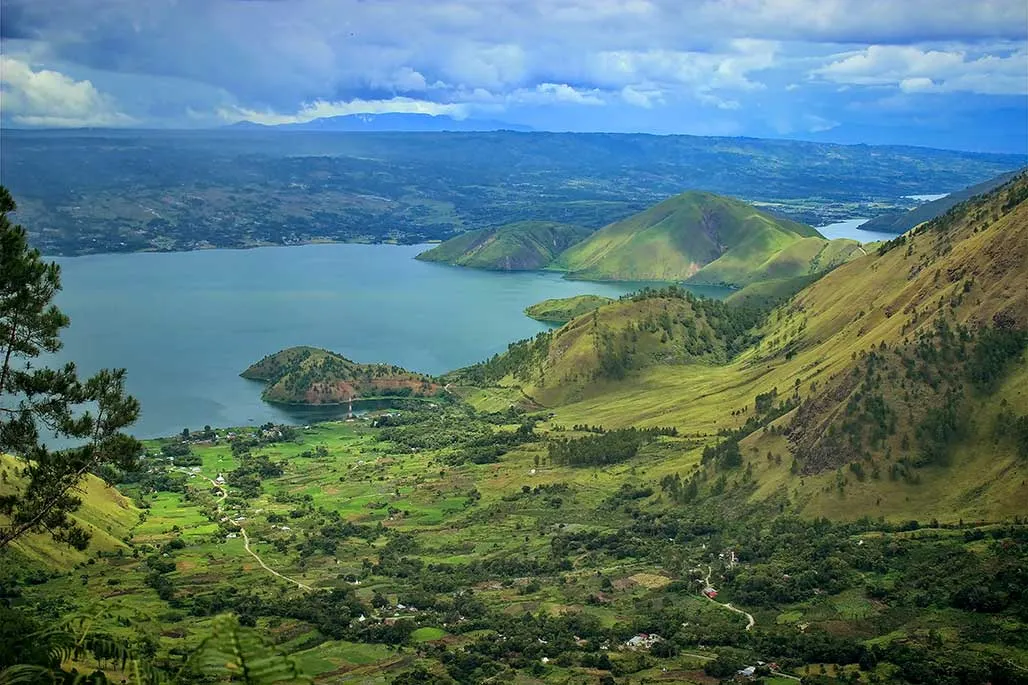
If you've ever had a coffee that tasted like cedar, dark chocolate, and a forest floor after rain, odds are it came from Indonesia. These are some of the most distinctive, polarizing, downright moody coffees in the world: low in acidity, heavy in body, and unmistakably earthy. I love them with a stubborn loyalty. Here's what makes Indonesian coffee taste the way it does, where it comes from, and how to brew it.
A quick history
Coffee isn't native to Indonesia. The Dutch East India Company brought Arabica plants over in the 17th century, hoping to crack the Arab world's hold on the coffee trade, and planted them across Java near Batavia (today's Jakarta), then through East, West, and Central Java and into Sulawesi and Sumatra. Whole railways and roads were built to haul beans from the island interiors to the ports. That history is why, for a long time, "Java" was practically slang for coffee itself.
The processing secret: giling basah
Here's the thing that explains the whole flavor. Most of the world dries coffee down to about 11 or 12 percent moisture before hulling. Indonesia famously does it differently, with a wet-hulled method called giling basah. The cherries are pulped, dried only briefly, then hulled while still quite wet, around 30 to 40 percent moisture, and dried again afterward. Stripping the parchment off such damp beans is what gives Indonesian coffee its trademark low acidity, heavy body, and those deep, savory, earthy notes. It's a fingerprint you can taste.
What Indonesian coffee tastes like
Bold, dark, and grounding. Expect earthiness first, then spice, cedar, tobacco, leather, and a long finish that reads like unsweetened dark cocoa. There's almost none of the bright fruit you'd find in an Ethiopian or a Kenyan; this is the other end of the spectrum entirely. These coffees are gorgeously full-bodied and a little wild, which is exactly why some drinkers are obsessed and others find them too much. (I'm firmly in the obsessed camp, for what it's worth.)
The three regions worth knowing
Sumatra. The headliner, and the one that takes beautifully to a darker roast. Sumatran Mandheling and Ankola are world-famous for big body and that signature earthy, herbal, sometimes smoky depth. If you've ever loved a rich, syrupy dark roast, there's a good chance Sumatra was behind it.
Sulawesi. A touch cleaner and more refined than Sumatra, with the same full body but often a little more sweetness and warm baking spice, think dark chocolate and clove.
Java. The historic heart, and the most productive. Java's better Arabicas can actually run brighter and cleaner than their neighbors, with a fruitier edge. Most of Indonesia's volume today is Robusta grown for commercial coffee, but the specialty Java Arabicas are worth seeking out.
How to brew it
Indonesian coffee is built for a bold cup, so lean into that. A medium-dark to dark roast plays to its strengths. Brew methods that emphasize body are your friends: a French press gives you that full, syrupy texture, and it makes a deep, rich moka pot or espresso shot. Because the acidity is naturally low, Indonesian coffee is also a kind choice if bright, tangy coffees tend to bother your stomach.
Where to start
If you want to taste those earthy, cedar-and-cocoa notes for yourself, dig into our single-origin selection, or take the scenic route with our World Coffee Tour box, which sets an Indonesian coffee right beside beans from across the globe so you can taste exactly what makes it different. Build a coffee plan and I'll get a proper Sumatra into your mug. Trust me on this one.
We want to help you make better coffee at home. Our recommendations are our own, and never sponsored. If you see something you love and buy it through our links, we may receive an affiliate commission (thanks for that!).