How to Make an Americano at Home (Hot, Iced, and the Ratio That Makes It Sing)
 Maryna Gray
• November 04, 2021 — last updated June 15, 2026
Maryna Gray
• November 04, 2021 — last updated June 15, 2026
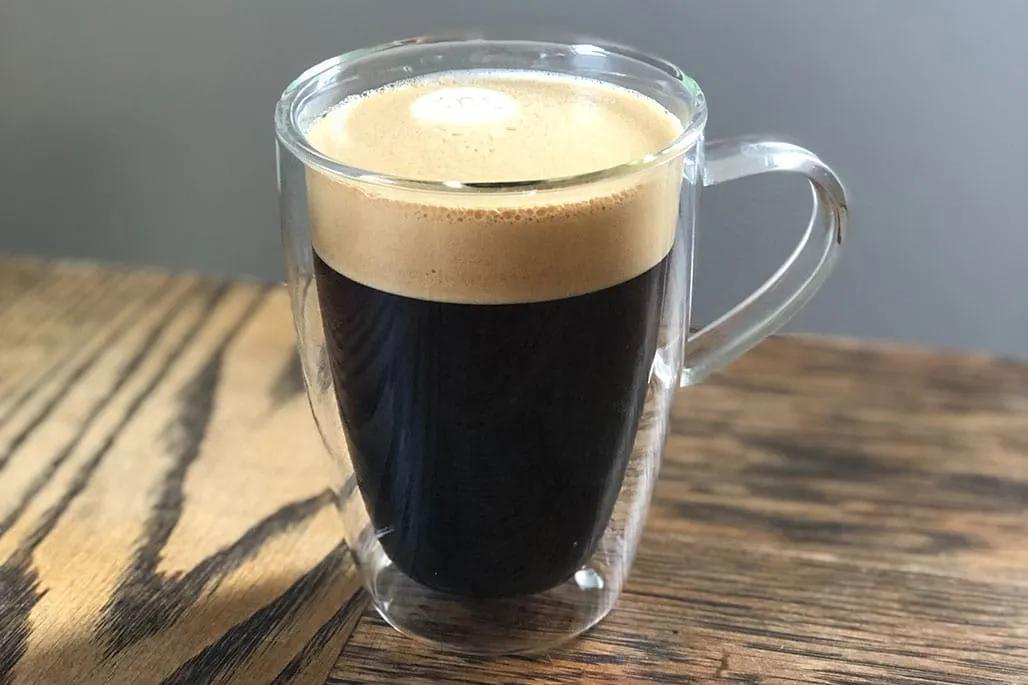
We've all ordered an americano, watched the barista pull a shot and top it with hot water, and thought: that's the whole drink? It is. And that plainness is exactly the point. There's no milk, no syrup, no foam art to dress it up, which means there's NOWHERE for a mediocre bean to hide. Done right, an americano is espresso with its shoulders relaxed: the same deep, bittersweet flavor, stretched into something you can actually sip for ten minutes instead of knocking back in one go. I'll show you how to make one at home that tastes like the café version, hot or iced, the ratio I keep coming back to, and how to pick a bean worth pouring water over.
The short answer
Most of us assume a café-quality americano needs a café machine, but it's really just espresso and hot water in the right ratio, and I'll walk you through it.
- The ratio: 1 part espresso to 3 or 4 parts water. A double shot (2 oz) plus 6 to 8 oz of hot water is the everyday sweet spot.
- The order matters: water first, espresso on top, if you want to keep the crema (the golden foam that floats on a fresh shot).
- Hot or iced, same ratio: swap hot water for cold water and ice, and pour the espresso in last so it cascades down through the glass.
- The bean is the whole game: no milk means the coffee is the flavor, start to finish. A fresh, well-roasted espresso bean is the difference between "rich and chocolaty" and "sharp and ashy."
What is an americano, exactly?
An americano is espresso diluted with hot water. That's the entire definition, and it's worth saying plainly because the drink gets overcomplicated all the time.
The name has a good story behind it. The "caffè americano" is widely believed to date to World War II, when American soldiers stationed in Italy found the local espresso too intense and stretched it with hot water to land closer to the drip coffee they drank back home. The Italians, the story goes, named the watered-down version after them. Whether or not every detail holds up, the drink that resulted is a genuinely lovely thing: espresso's body and depth, dialed down to a volume and strength you can linger over.
A quick word on crema, since I'll keep mentioning it. Crema is the thin, caramel-colored layer of foam that sits on top of a freshly pulled espresso shot. It carries a lot of aroma, and a few people find it pleasantly bitter on its own. Keeping it or losing it is one of the only real decisions you'll make with an americano, and it comes down to pour order, which we'll get to.
Hot americano, step by step
Here's the recipe I'd run on a normal morning. It takes about three minutes once your espresso is ready.
What you'll need
- Fresh coffee. Reach for whole beans roasted for espresso, and grind them right before you brew. Browse coffees for espresso if you're restocking.
- An espresso maker. A machine is ideal, but you can also use a moka pot for an espresso-like shot and get most of the way there.
- A kettle. Anything that boils water works; I find a gooseneck easiest for a controlled pour.
Ingredients
- 6 to 8 ounces of off-boil water (about 200°F)
- A double shot (about 2 ounces) of espresso
Directions
- Heat your water to just off the boil. Rolling-boil water scorches the coffee and pulls out a flat, harsh bitterness, so let it settle for thirty seconds after it boils.
- Pull a double shot of espresso, the standard for most specialty drinks. If you've never pulled one before, our step-by-step guide to making espresso at home covers the whole thing.
- Combine. To keep the crema, pour the hot water into your mug first and gently pour the espresso over the top, so the crema settles on the surface instead of breaking apart. Prefer it the other way? Espresso first, water on top is perfectly fine, you'll just lose a bit of that foam.
- Taste. Too strong, add a splash more water. Too thin, pull back next time. Your mug, your call.
The americano ratio cheat sheet
The 1:3 to 1:4 ratio is your home base, but the americano has a small family of cousins that are really just the same drink at different dilutions. Once you know the ratio, you can order (or build) any of them on purpose.
| Drink | Espresso : water | What it tastes like |
|---|---|---|
| Italiano | 1 : 1 | Intense and short, barely diluted, closest to straight espresso |
| Long black | 1 : 2 | Bold and bright, more crema (water first, espresso poured over) |
| Standard americano | 1 : 3 to 1 : 4 | The everyday cup, rounded and mellow with espresso depth intact |
| Long americano | 1 : 5 and up | Tall, gentle, closest to a mug of black drip coffee |
None of these is more "correct" than the others. I drink mine on the tighter end of standard, around 1:3, because I want to taste the espresso, not be reminded it's in there somewhere.
Iced americano (and a summer variation worth trying)
An iced americano is the same drink over ice, and it's one of the best ways to taste exactly what a bean is doing, because the cold sharpens the fruit and tames the bitterness.
Fill a tall glass with ice. Pour cold, filtered water over the ice until the glass is about half full. Pull your double shot and pour it in last, over the top. The espresso will float and swirl down through the cold water in slow ribbons. (It's genuinely pretty. Snap a photo before you stir it.) Good ice made from good water matters more than people expect here, since melting ice becomes part of the drink.
If you want to play, there's a variation that took off in the summer of 2025: the iced coconut water americano, espresso poured over coconut water and ice instead of plain water. Food & Wine went so far as to call it a coffee drink of the summer. The coconut water adds a soft, salty-sweet roundness that flatters a fruity single origin. I was skeptical, then I wasn't.
Americano vs. long black vs. drip vs. red eye
These four get mixed up constantly, and the differences are small but real. Here's the quick map.
| Drink | How it's made | The gist |
|---|---|---|
| Americano | Espresso added to hot water | Rounded, mellow, espresso depth at an easy volume |
| Long black | Hot water, then espresso poured over | Bolder and brighter, more crema; the long black differs from an americano mostly in pour order |
| Drip coffee | Hot water passed through a bed of grounds once | Lighter body, cleaner cup, no espresso; see the difference between an americano and drip coffee |
| Red eye | A cup of drip coffee with a shot of espresso added | The strongest of the bunch, and the most caffeine |
The short version: americano and long black are espresso drinks separated by pour order. Drip is a different brewing method altogether. And a red eye is what you order when the morning is not negotiable.
If your americano tastes off
Espresso has nowhere to hide in an americano, so when something's wrong, you taste it right away. Three culprits cover almost every bad cup.
Sour or sharp. That puckering, under-ripe-lemon edge usually means the shot ran too fast and under-extracted. Grind a little finer so the water spends more time pulling flavor from the grounds. Sour can also just mean the beans are very lightly roasted, in which case it's a feature, not a flaw.
Bitter or ashy. A harsh, scorched finish points two places: a shot that ran too slow and over-extracted (grind coarser), or water that's too hot. Boiling water is the quiet villain. Let it rest thirty seconds off the boil before it touches the coffee.
Flat and papery. No sourness, no bitterness, just nothing. This is almost always stale beans. Coffee roasted weeks ago has given up most of its aromatics, and no ratio rescues it. It's also why the bag that's been open in the back of the pantry makes such a sad americano.
Watery and thin is the easy one: tighten the ratio and pull back on the water until the body comes back.
One habit worth keeping: every so often, taste the espresso shot on its own before you add water. If the shot is good, the americano will be good. If the shot is sour or bitter straight, water only spreads the problem around.
Choosing a bean for your americano
This is where an americano is won or lost. Strip away the milk and the syrup and you're left with coffee and water, so the coffee has nowhere to hide and everything to gain.
A couple of directions, depending on what you want in the mug:
- For the classic café americano, reach for a chocolaty, balanced espresso roast. You'll get that familiar deep, slightly sweet, cocoa-and-toast cup that plays beautifully diluted.
- For something brighter and more surprising, pull a single-origin coffee as your shot. An Ethiopian or a Kenyan americano can taste like citrus and stone fruit, especially iced. It's a completely different drink from the same recipe.
Either way, freshness is the lever that matters most. Espresso falls off fast after roasting, and a stale bag tastes flat and papery no matter how dialed-in your shot is. That's the whole reason I keep a rotation of freshly roasted bags going rather than one big sack from the grocery shelf.
If you want that rotation handled for you, you can build a coffee subscription around your taste, and we'll send fresh-roasted coffee from dozens of independent US roasters straight to your door, so there's always a good shot waiting. An americano is only ever as good as the bean underneath it.
Frequently asked questions
Does an americano have milk? No. A classic americano is only espresso and hot water. Add a splash of milk and you've wandered toward a different drink, closer to a café au lait or a flat white.
Is an americano the same as drip coffee? No. An americano starts with espresso and dilutes it, so it keeps espresso's syrupy body and bittersweet depth. Drip passes water through grounds once, for a lighter, cleaner cup.
How much caffeine is in an americano? A double-shot americano lands around 120 to 150 mg, depending on the beans and the shot, roughly the same as a standard mug of drip.
What's the difference between an americano and a long black? Pour order. An americano is espresso added to water; a long black is water with the espresso poured over, which keeps more crema and reads a little bolder.
Can I make an americano without an espresso machine? Yes. A moka pot or an AeroPress pulls a concentrated shot you can stretch with hot water. No true crema, but the flavor gets most of the way there.
What's the best ratio? Start at 1:3 to 1:4, then adjust to your mug. Tighter for bolder, looser for milder.
One last pour
The americano is proof that the simplest drinks ask the most of the coffee. No milk to soften a rough edge, no syrup to paper over a stale bag, just espresso and water doing their honest work. Get the ratio right, mind your pour order, and start with a bean worth the trouble. Then sit with it for ten minutes. That's the whole point.
We want to help you make better coffee at home. Our recommendations are our own, and never sponsored. If you see something you love and buy it through our links, we may receive an affiliate commission (thanks for that!).
Coffees You Might Like
Caffe Del Sol Espresso
Caramel, Cherry, Chocolate
$21.80
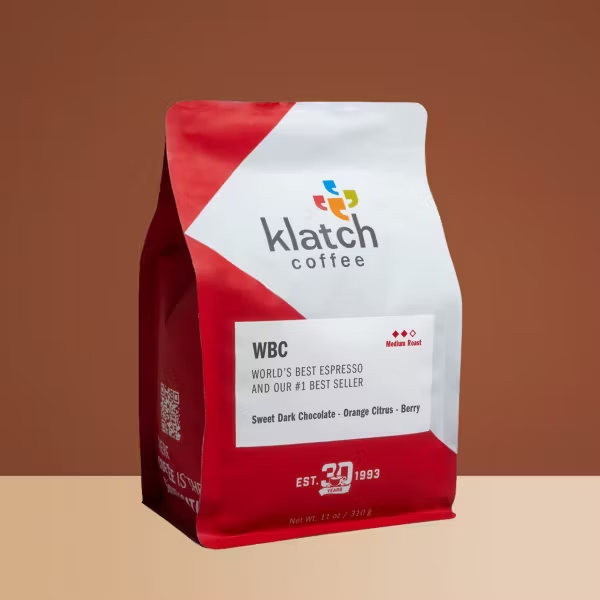
WBC World's Best Espresso
Spice, Berry, Orange Citrus
$23.25
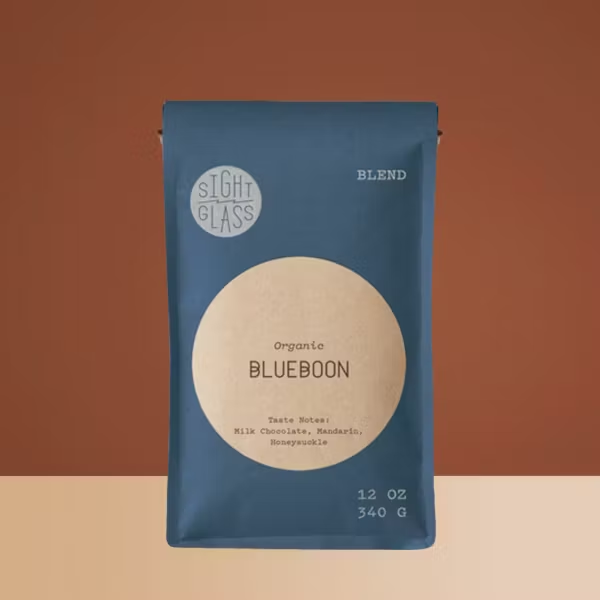
Blueboon - Certified Organic
Honeysuckle, Milk Chocolate, Mandarin
$21.45

Brown Sugar Bourbon Barrel Aged Colombia - Fathers Day Release
Spice, Toasted Oak, Brown Sugar
$26.45