How to Buy Specialty Coffee Without Getting Burned (Literally and Figuratively)
 Maryna Gray
• June 03, 2026 — last updated June 05, 2026
Maryna Gray
• June 03, 2026 — last updated June 05, 2026
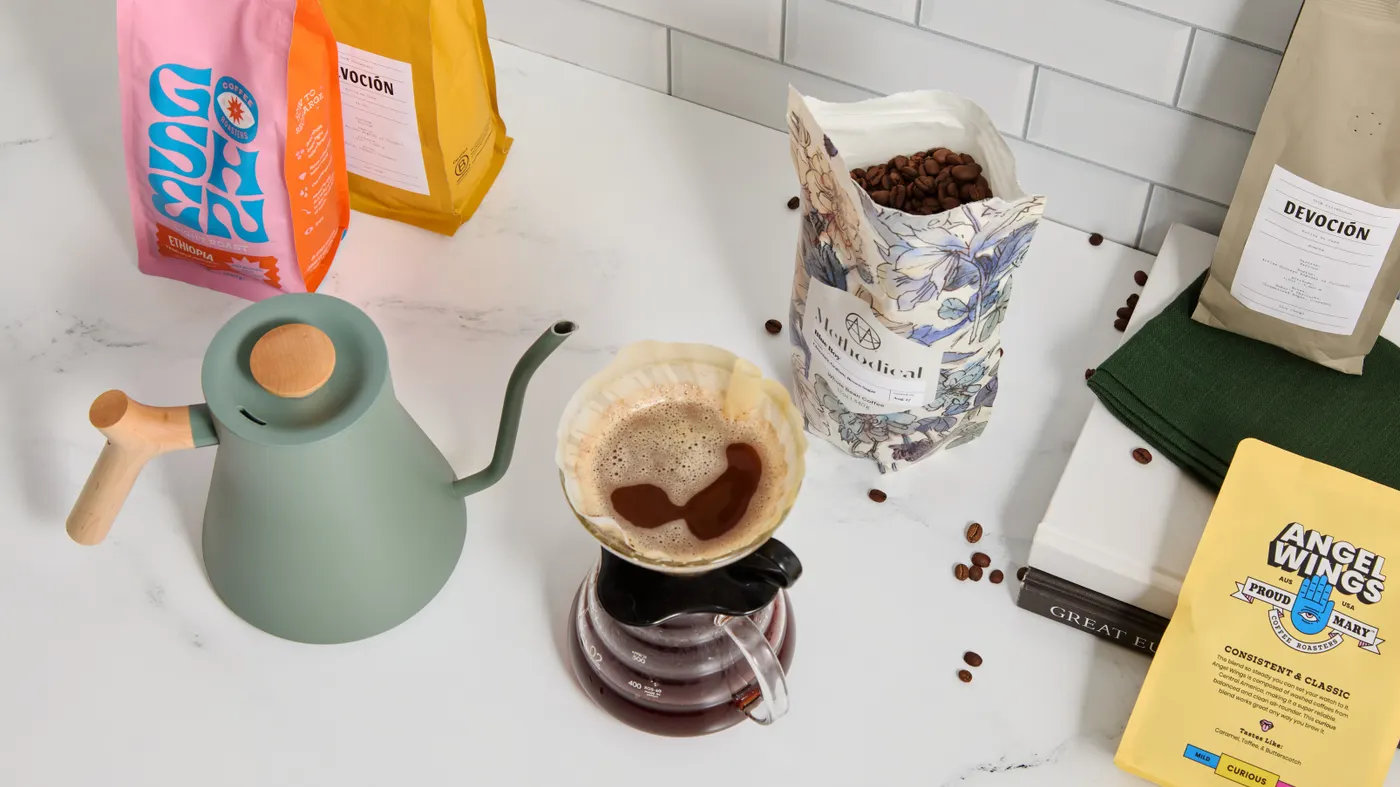
We've all stood in the coffee aisle, or on a specialty roaster's website at 11 PM, staring at words like natural process, single estate, anaerobic, 87 cupping score, and quietly wondering whether the $22 bag is going to taste like $22, or like coffee. There's no easy way to tell from the outside.
I want you to be able to walk into any roaster, online or in person, and pick a bag that lands in your cup as a clean, sweet, alive coffee that makes you want a second sip. Specialty coffee is honestly the most rewarding thing you can spend $20 on for your kitchen when you buy it right. It's also the easiest thing to overpay for when you buy it wrong.
I've spent the last decade as a Cup of Excellence international juror, cupping coffees from every continent that grows them. There are three questions I ask before I buy a bag, mine or anyone else's, and they cut through the noise. Most guides only cover half the problem: they tell you what to check, not what to ignore. This one handles both. Buckle up.
The short answer
We all want to skip the part where we spend $22 on a bag that tastes flat, and you can do it with three questions a Cup of Excellence juror asks every time she buys coffee. I'll walk you through them.
- Check the roast date, not the "best by" date. Two to four weeks past roast is the window you want.
- Look for specifics. Country plus region (or farm), process method, varietal, and tasting notes. Generic bags hide generic coffee.
- Buy from a roaster who tells you the story. Roast date posted, sourcing relationships named, willing to recommend a starter. A good subscription works the same way — it's the curator answering all three questions for you.
What matters most: my three-question framework
Buying a bag of specialty coffee comes down to three questions, in this order.
Is it fresh? Coffee is a fresh product, like bread. The roast date is the single most useful number on the bag. Almost everything that separates a great cup from a sad one happens in the two-to-four week window after roasting. Past six weeks, flavor fades. Not bad, just quieter. Stale coffee tastes flat, papery, vaguely like cardboard with a bitter edge, even when the beans were great to start with.
Is it specific? Vague labels almost always mean blended commodity beans. "Colombian Coffee" without a region. "Ethiopian Blend" without naming what was blended. "Espresso Roast" with no origin at all. Specificity (country, region, process, varietal, tasting notes) is the roaster signaling, "we know what's in this bag, and we want you to know too." The more granular the label, the more confident the roaster is, which usually correlates with more careful sourcing upstream.
Is it from someone who'll tell you the story? Roasters who source thoughtfully will explain how they source. Direct trade relationships, named producers, return-visit details, photographs from origin trips. If the bag won't say where the coffee came from, the roaster usually won't either. Roasters who hide the supply chain usually have something to hide.
If you'd rather not interview every bag yourself, a curated subscription is the shortcut. You're outsourcing all three questions to a curator who's already done the work. I'm Bean Box's curator, so my bias is that yes, our Coffee Plan is built around this exact framework. The framework works whether you use us, another curator, or shop direct with the three questions in mind. We partner with dozens of independent roasters across the US, and once you start applying these filters, you'll be surprised how many shelf-fillers fall away.
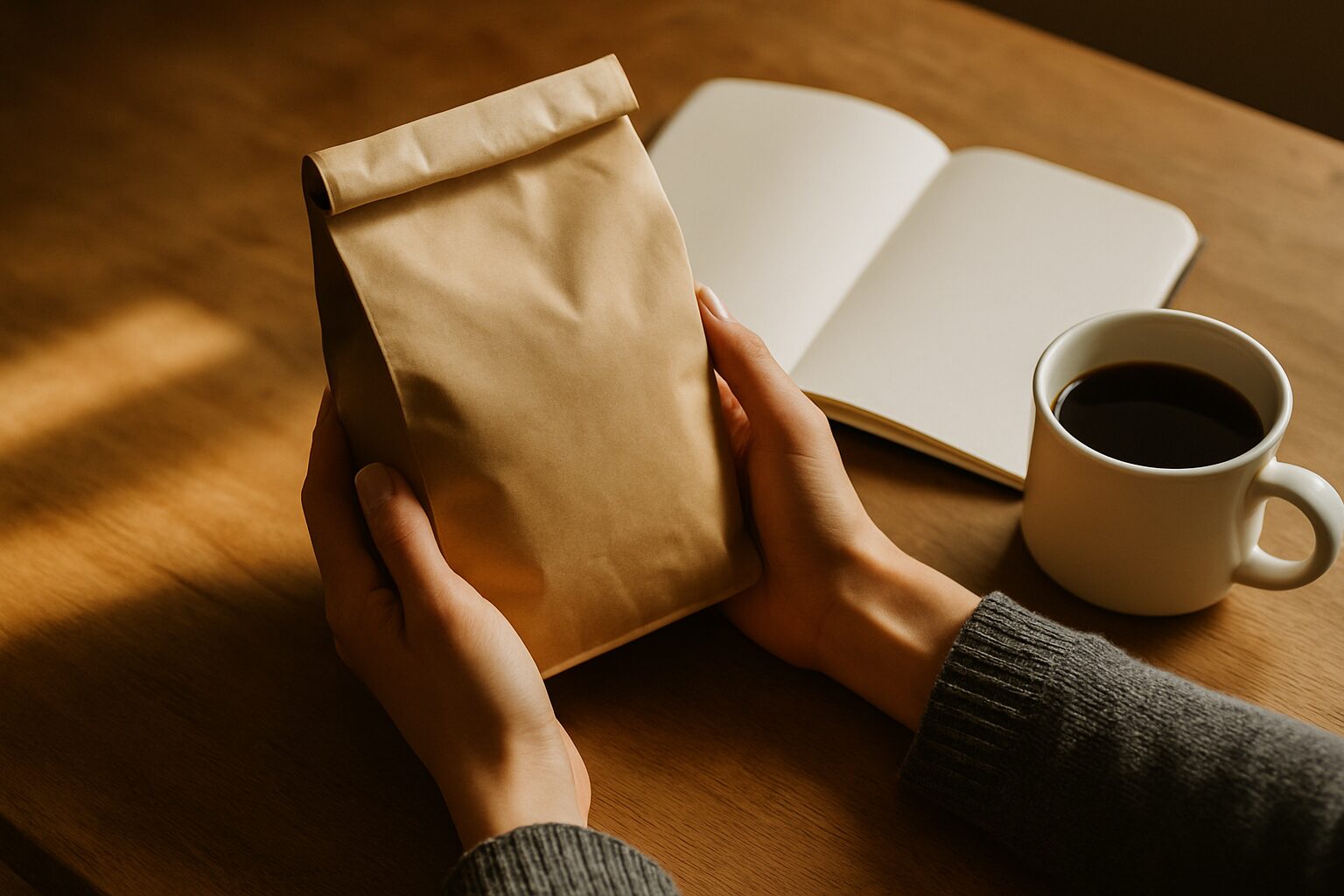
Check 1: is it fresh?
The roast date should be printed on the bag. Date, not month. Not "best by." Two to four weeks past roast is the peak window for filter coffees. Espresso likes a little longer because it benefits from extra degassing time. Past six weeks, the bright, juicy character of a fresh roast goes quiet.
From our coffee sommelier
Maryna's weekly picks
“I taste thousands of coffees a year — I’ll only send you the few worth brewing.”
Something went wrong — please try again.
Free · Weekly · Unsubscribe anytime
Here's the trap. Big-brand grocery coffee shows a "best by" date 18 to 24 months out. Reassuring number, useless information. Best-by dates are buying logic that works for crackers, not coffee. If a bag has a best-by date and no roast date, the roaster is treating the coffee like a shelf-stable commodity. HARD pass.
Next, look for the one-way valve on the bag. That small disc lets carbon dioxide escape as fresh beans degas without letting oxygen back in. A baseline quality signal: the roaster is treating the coffee like a fresh product. Bags without a valve aren't always bad, but bags with one are almost always more carefully packaged.
If a roaster claims "roasted to order," verify the date on what arrives. It should show a roast date inside the last week. If the date is three weeks old, that's roasted, shelved, then shipped.
Curated services like ours receive coffee within days of roasting from partner roasters who often roast to ship. That closes the gap grocery shelves can't. By the time a bag hits a store shelf in Akron, it's been a month or more since the roast. The full freshness deep-dive lives in its own piece. For the technical definition of specialty quality, the Specialty Coffee Association has set the standard since the 1980s: coffees scoring 80 or higher on a 100-point cupping scale, evaluated by certified Q Graders. About 10% of world coffee production qualifies.
Check 2: is it specific?
A specialty bag tells you country and region. Ethiopia Yirgacheffe. Colombia Huila. Guatemala Antigua. A bag that just says "Colombia" or "Ethiopian Blend" without a region is doing the bare minimum, and the bare minimum usually shows up in the cup.
The process (washed, natural, or honey) should be named somewhere on the bag. Washed coffees are clean and bright (lemon, green apple, black tea). Naturals are sweet and fruit-forward (strawberry jam, blueberry, ripe fruit). Honey process lands between them. If the bag doesn't name a process, the roaster is either blending commodity beans or not bothering to tell you. Either way, yellow flag.
The varietal is the coffee equivalent of a grape variety on a wine label. Geisha, Bourbon, Caturra, SL28, Pacamara. Specialty bags name them when they can. "Arabica" by itself isn't a varietal. It's the species, and 99% of specialty coffee is arabica, so "100% Arabica" on a bag with no other detail is a non-statement.
Tasting notes are two or three flavor anchors, like "stone fruit, milk chocolate, brown sugar." A roadmap for what to expect. Read them as the roaster's calibration, not a guarantee. If the bag says "rich and bold" and nothing else, the roaster hasn't sat down with a flavor wheel. Specific notes mean someone cupped this with intent.
None of these are required for a coffee to be enjoyable. But the more specifics present, the more carefully the coffee was sourced. For the field-by-field walkthrough of every bag detail, see how to read a coffee bag. The clearest examples of origin specificity in our catalog are single-origin coffees, where every label spells out country, region, process, and notes.
What to safely ignore
Half the advice you'll read online tells you to optimize on things that don't move the cup. Here's the ignore list.
The "best by" date. Already covered, worth repeating. Best-by is buying logic that works for crackers. Months in the future, irrelevant to flavor. Skip it. Find the roast date.
Roast level as a quality signal. Light, medium, dark: none is better than the others. A dark roast can be a phenomenal Colombian lot; a light roast can be a thin, sour disappointment. Roast level is a preference filter, not a quality filter. Pick the roast you enjoy drinking, not the one that sounds more sophisticated.
Most certifications. Fair Trade and Organic seals are real things, but most specialty roasters pay above Fair Trade prices through direct-trade relationships without paying for the certification logo. Direct trade can be more impactful than the certification, but it doesn't always wear a sticker. Look for traceability ("we source from this farm, visited last fall, paid this price") rather than just the seal.
Country-of-origin without region. A bag that just says "Brazil" or "African Blend" without region or farm is rounding off the specificity. Polite assumption: blended commodity beans where the roaster doesn't want to commit. If a single country can't be narrowed to a region, the bag isn't a single origin in any meaningful sense.
Marketing language. Bold. Smooth. Rich. Robust. World's best. Hand-crafted. Adjectives are not information. The bag should tell you the coffee, not how the coffee feels about itself.
Where to actually buy it
Three lanes work. Pick whichever fits your life.
Direct from a roaster. Any independent roastery website with a publish-the-roast-date culture is a safe lane. Look at the homepage. If they show roast dates, talk about roast-to-ship, and name their producers, you're in the right place. The trade-off is committing to one roaster's house style.
A curated subscription. This lets you sample across roasters without doing the research yourself. You outsource the three-question framework to a curator. Bean Box is one option (mine, obviously biased). Find one that sources from multiple roasters and posts roast dates on every bag.
Local cafe retail. If you have a cafe you trust, ask for their house bag. Cafes that roast their own, or carry a roaster they love, will sell you a fresh bag and point you at the right roast. The baristas know how the coffee tastes, and they'll be excited to talk about it.
I've personally cupped through hundreds of bags from dozens of roasters across the US. Our partners have featured 400+ distinct roasts over the catalog's lifetime, and the freshness gap between direct-from-roaster and grocery shelf is real. It's the biggest single variable in whether your home brew tastes like a cafe or a hotel-lobby drip station.
What to avoid: the grocery shelf, large branded commodity bags, anything without a roast date. The convenience trade-off doesn't survive a side-by-side cup test against fresh-roasted specialty. Every roaster has different starter picks; our best-selling coffees are the ones we send to first-time drinkers most often, if you want a launching point.
Don't overthink your first bag
If this is your first specialty bag, don't optimize for everything at once. Pick a single-origin from a country whose flavor profile you already enjoy. Colombian, Brazilian, or Guatemalan for chocolatey-nutty cups (chocolate-chip cookie, brown sugar, roasted hazelnut). Ethiopian for fruity-floral cups (strawberry jam on toast, jasmine tea). Sumatran for earthy, heavy-bodied cups. That's the most forgiving first move.
A medium roast is the most universally approachable starting point. It shows you both origin character and traditional roastiness without leaning hard in either direction. Plenty of our medium-roast coffees are exactly this: familiar and revealing at the same time.
On price, most specialty bags run $15 to $25 from direct roasters. Sub-$15 from a non-roaster is usually not specialty grade. If budget is a factor, plenty of coffees under $20 still meet the three-question framework.
If you'd rather have someone send you a starter bag instead of running the framework yourself, our Coffee Plan exists for exactly that. Pick a roast preference, tell us how you brew, and we send you fresh-roasted coffee that fits. For the long-form home brewing primer, James Hoffmann's book How to Make the Best Coffee at Home (linked from his site) is the canonical reference. And if you want to go deep on producers, Cup of Excellence publishes its annual auction results, one of the best ways to discover farms whose coffees roasters worldwide compete to source.
Don't let the language scare you off. A fresh, specific, well-sourced bag will do most of the work for you. Trust the bag. Trust the roaster. Trust your tongue.
Happy brewing.
Posted in: Beginner's Coffee Series
Tags: Buying Coffee, Beginner, Roast Date, Single Origin, Online Roasters
We want to help you make better coffee at home. Our recommendations are our own, and never sponsored. If you see something you love and buy it through our links, we may receive an affiliate commission (thanks for that!).
From our coffee sommelier
Maryna's weekly picks
“I taste thousands of coffees a year — I’ll only send you the few worth brewing.”
Something went wrong — please try again.
Free · Weekly · Unsubscribe anytime